




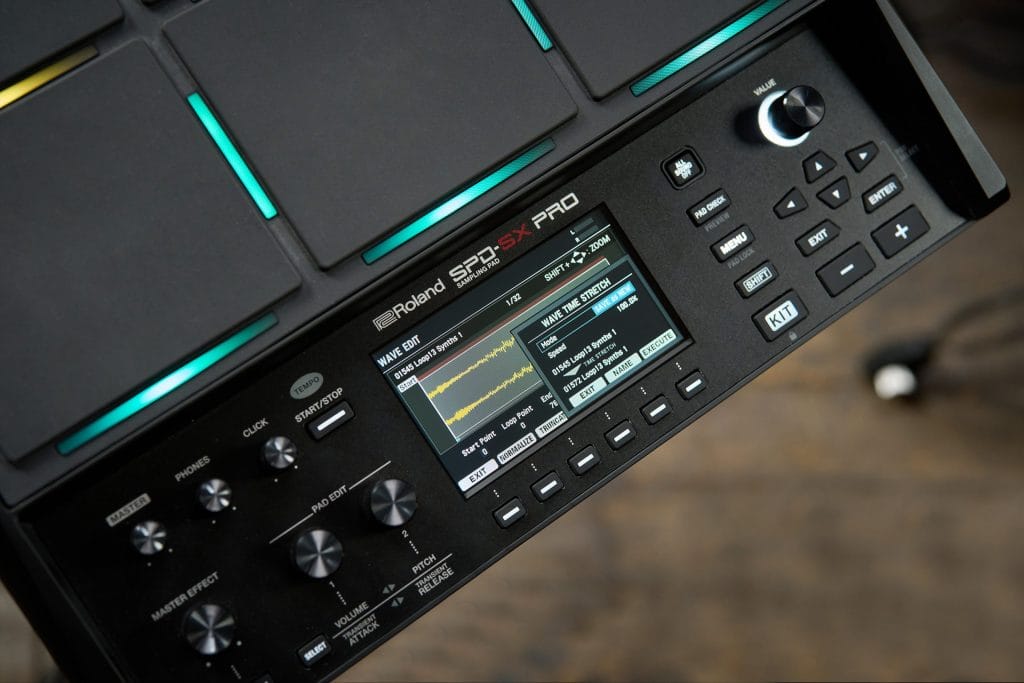
Roland’s SPD-SX PRO has already been one of those pieces of gear that shows up in a lot of different setups for a reason. Drummers use it to tighten up hybrid kits, live electronic acts use it to trigger stems and textures, and plenty of players end up leaning on it as the center of a performance rig as the set gets more complex. That is why the new Version 2.0 update matters. This is not a cosmetic refresh or a minor maintenance patch. Roland actually added features that make the unit more useful in real-world performance situations, especially for players who need speed, flexibility, and fewer workarounds once on stage.
The biggest thing here is that Roland seems to understand how the SPD-SX PRO is actually being used now. It is no longer sitting off to the side as a simple sample trigger. It is part of a larger system, often carrying backing tracks, transitions, visual cues, trigger duties, and arrangement control within a single performance. Version 2.0 pushes further into that reality by making the unit easier to adapt mid-set and easier to personalize from song to song.
Roland adds the kind of features that actually help on stage
One of the smarter additions is support for SPD-SX backup files, which makes it easier for older SPD-SX users to move their setups over to the PRO model. That is a practical update, and it removes one of the more annoying barriers for players who have already spent years building kits and performance layouts.
The new time-stretching options also stand out. Roland is giving users a way to tempo-match sounds more like they would inside a DAW, with both real-time and offline options depending on how much precision they need. For performers dealing with loops, backing parts, or samples that need to sit tightly inside changing arrangements, that is a meaningful improvement.
Another strong addition is a kit-based master effects assignment. Instead of handling master effects globally, users can now tie them to specific kits, making the SPD-SX PRO feel more performance-ready and responsive to setlist-based workflows. You can move between songs and have those bigger tonal changes come with the kit itself, instead of stopping to rethink the signal path every time.
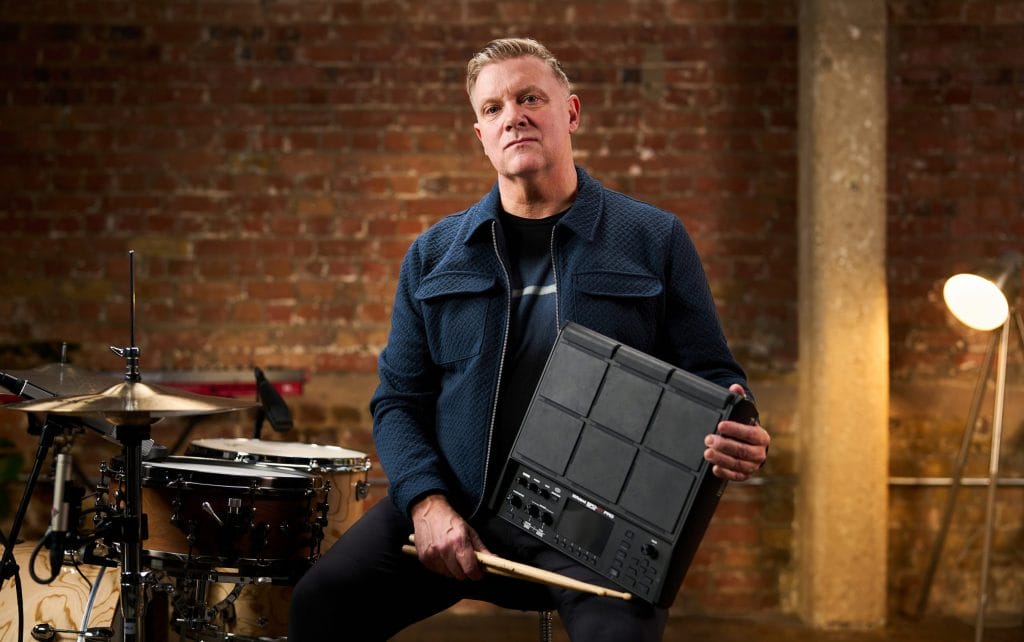
The SPD-SX PRO keeps moving beyond a drum pad
The DJ-style muting function is another interesting move because it reflects how fluid performance roles have become. Backing tracks are no longer treated as static playback. They are part of a live arrangement, and being able to mute them in performance adds another layer of control that feels current and useful.
Trigger muting also looks especially valuable for players running larger hybrid setups. Being able to mute connected acoustic drum triggers and external devices with a single pad strike opens up a much faster way to reconfigure a kit mid-song or set. That is exactly the kind of thing that saves time and cuts down on mistakes when a live rig gets complicated.
Then there are the smaller workflow additions, like adjustable panel brightness, a kit list display, MIDI monitoring on the main screen, stronger copy functions, and the ability to set parameters for all pads at once. None of those sounds dramatic on their own, but together they make the SPD-SX PRO feel more mature and better thought through.
Version 2.0 does what a good update should do. It tightens the experience, adds functions players will actually use, and makes the SPD-SX PRO feel less like a static product and more like a platform Roland plans to keep building out.
To learn more about the SPD-SX PRO and the Version 2.0 update, visit Roland.com.
The post Roland Expands the SPD-SX PRO With a Strong Version 2.0 Update appeared first on Magnetic Magazine.