


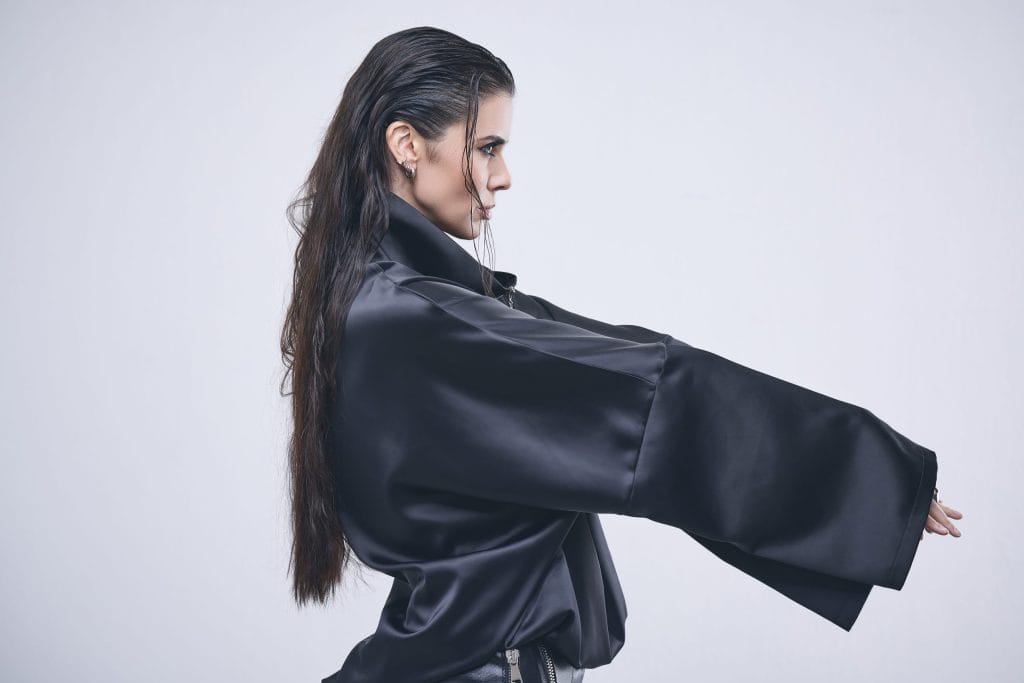
Fiona Kraft returns to Non Merci Music with “You Know,” a new single that keeps her sound focused while opening up plenty of space inside the arrangement. Built around synth work, light vocal touches, and a stripped-back rhythmic frame, the track moves between Afro House, Deep House, and Tech House without locking itself too tightly to any one lane. That approach has become central to how Kraft writes, DJs, and curates her label, where stylistic movement is part of the point rather than something to smooth over.
That wider mindset also shapes the way she talks about success at this stage. For Kraft, the priority is freedom: freedom to release on her own terms, freedom to protect her taste, and freedom to keep her output aligned with the bigger artistic picture she has in mind. It is a practical view, and it comes through clearly in the way she speaks about saying no, stepping away from noise, and returning to the piano or the club floor when she needs to reset her relationship with music.
The result is an artist feature that frames “You Know” as part of a larger direction instead of a standalone drop. Kraft is still interested in shaping energy in a room and guiding people through a set, though she is equally clear-eyed about the distractions that now surround the job. In the middle of a culture increasingly shaped by algorithms, visibility, and constant output, her answers point back to something simpler: taste, discipline, and a direct connection to the records themselves.
Interview With Fiona Kraft
How do you personally define success in DJing at this stage?
Freedom. That’s really the word that defines everything for me right now.
Freedom to say no, actually… freedom in general. I release when I want, I play what I want, and I work with people who allow me to stay true to my vision. You know “No” is my favorite answer, because it protects that space, it protects me. To me, the success is not about numbers or status, it’s about being able to play the music I believe in and connect with people without compromising who I am.
And this goes beyond DJing, because I don’t see myself only as a DJ. It’s about my life as an artist. Of course, this kind of freedom comes with sacrifices, sometimes big ones. But honestly, does it bother me? No. Not at all.
What keeps your attention anchored in the music itself?
It’s the emotion. It’s something spiritual but also very physical at the same time.
It’s almost an obsession. I don’t really know how to do anything else except music. If one day I couldn’t play, DJ, or produce, I think I would still find a way to stay close to it, maybe through photography or designing for artists. But the truth is, when I hear music, no matter where I am, something in me reacts instantly, and I start to vibrate. If I feel something, I stay with it.
That connection is what keeps me grounded. At the same time, I have to be honest, sometimes the biggest enemy of that love is actually my career. Being independent means dealing with the business side, social media, promotion, travel, and all the noise around it. And that can take away a part of the pure pleasure.
When the surrounding noise increases, how do you return to the fundamentals?
I step away. I stop touring and go back home, and I sit and play the piano.
I return to simplicity. I listen again to the albums I grew up with, especially progressive rock, and reconnect with the reasons I started making music in the first place. That always resets everything for me. Then, at some point, I go out again, not as an artist but as a clubber, just to feel the energy without any responsibility. And suddenly, it hits me again, like a train.
That feeling reminds me of why I do this. This cycle has been repeating for the past few years, and honestly, it has become one of the most important periods for me. I’m actually just coming out of one of those moments now. I feel ready again, ready to push.
How do you stay aligned with your priorities as opportunities expand?
To me, it’s all very clear. Protecting my artistic vision comes before anything else. I don’t struggle with focus because I only see one direction; everything else becomes noise. I don’t chase hype, quick attention, or this idea of becoming some kind of social media personality. That naturally removes a lot of distractions and unnecessary situations. I think when you know what you want, it becomes easier to stay aligned. Opportunities can be tempting, but not all of them are right for you. So again, it comes back to that word: no. Saying no is what allows me to stay on my path and not lose myself.
Have you observed shifts in how artists balance visibility and musicianship?
Of course, very clearly.
Today, there is much more focus on visibility; everyone is expected to be visible all the time, and most artists have become influencers.
They need to cook, they need to model, they need to tell jokes. It takes a lot to stay loved by an algorithm. I think this often comes at the expense of the music. When I started, even if it’s not that long ago, it felt more balanced, but now it’s something very different. It shifted so fast in the past few years. We are living in a world of a 2sec attention span. At the same time, this shift has also opened doors; it’s easier than ever to become an artist and to share your work, which is a positive thing. But with so much content and constant promotion, everything becomes more diluted. Instead of a few major cultural moments, we now have many smaller ones reaching different audiences. It’s a very complex system. I don’t fully belong to the old world, but I don’t completely relate to this new one either.
I often ask myself, “Would TOTO do that?” But then again, look what STING is doing now to be relevant in 2026, so I can safely say that this is all one big mess.
What still excites you about digging, programming, and shaping a set?
That feeling has never changed for me. Even before I knew how to DJ technically, I had this desire to guide people through music, to take them somewhere. It’s about controlling the energy in the room and telling a story. I never felt connected to playing obvious tracks or big hits; I prefer to explore and take risks. Maybe being independent helps me avoid that kind of pressure.
When you approach it like that, digging becomes a real pleasure. And what excites me today is also the diversity on the dancefloor. Sometimes I have a crowd in front of me, hundreds of people who have been clubbing for decades, and other times it’s thousands of younger generations discovering deeper sounds, just moved from a more commercial sound a few years ago, who still have to develop their tastes, and the attitude on the dance floor overall.
I love navigating between those worlds and finding those unexpected moments that change everything in a set. It’s really exciting to DJ for cross-generational crowds.
If you could preserve one core value within DJ culture, what would it be?
I think sometimes people overcomplicate things or become a bit too elitist about music.
For me, the core values are actually very simple and universal.
If you look at any musical culture, whether it’s blues, punk, reggae, or techno, it always starts from small and often struggling communities expressing something real. But over time, it grows, spreads, becomes a source of wealth, and inevitably changes. So it’s impossible to compare what DJ culture was in Detroit or Manchester to what it is today globally. I mean, what is the difference between how it was Studio54 and Black Coffee’s Saturdays in Ibiza or between Space Miami and whatever cheesy club in Riviera that books the same DJs?
At the heart of it all, the essence should remain the same: go out, have fun, and make sure that everyone has as much fun as possible.
The post Fiona Kraft Returns With New Non Merci Music Release “You Know” appeared first on Magnetic Magazine.