


Los Angeles-born producer and DJ Swanya has been steadily carving out her own lane in modern house music, grounding everything she does in a clear connection to the dance floor.
Raised on late-night warehouse energy and West Coast warmth, she builds tracks that feel intentional and groove-focused, balancing deep, tech, and soulful elements without overcomplicating the core idea. Her catalog across labels like Alliwant Music, Katchuli, Collective Music, and Dad Bod Records reflects that steady refinement.
“Postcards from the Club,” made in collaboration with Magnetic Magazine Recording artist LARSa, captures that identity in a direct way. The record leans into tactile drum programming, analog-leaning synth work, and a vocal that feels personal rather than ornamental, tying the track back to the real-life moments that inspired it. There is a sense of movement baked into the arrangement, where each element earns its place and supports the forward momentum instead of fighting for attention.
In this How It Was Made breakdown, Swanya walks through the exact tools and decisions behind the record, from hands-on drum machine sequencing to vocal processing choices that shape the track’s late-night tone. It is a clear look at how she translates instinct into structure, and how a focused studio process can turn a simple idea into a record that holds its weight on a crowded floor.
Roland TR-8S drum machine
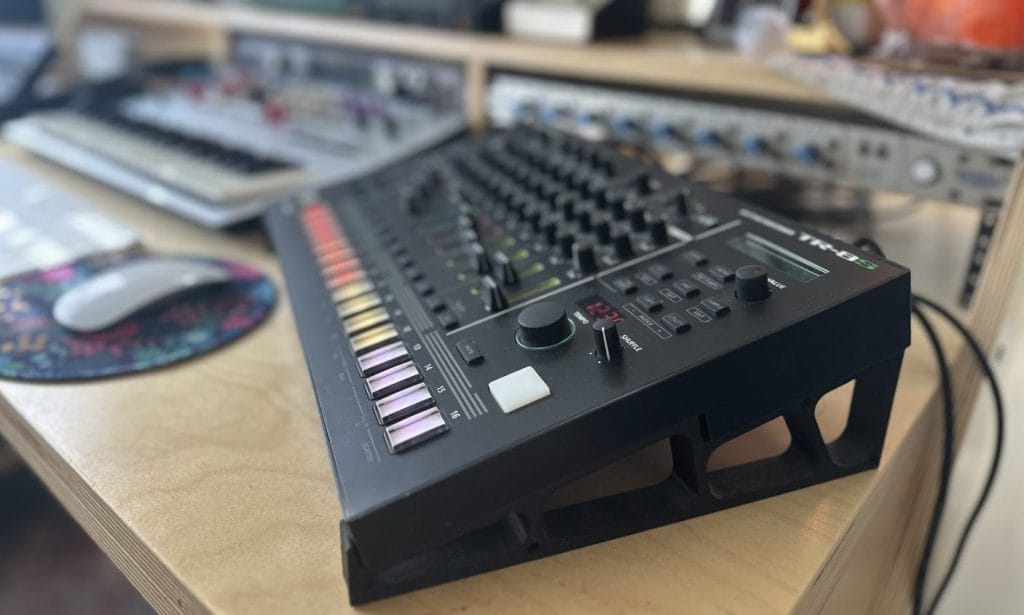
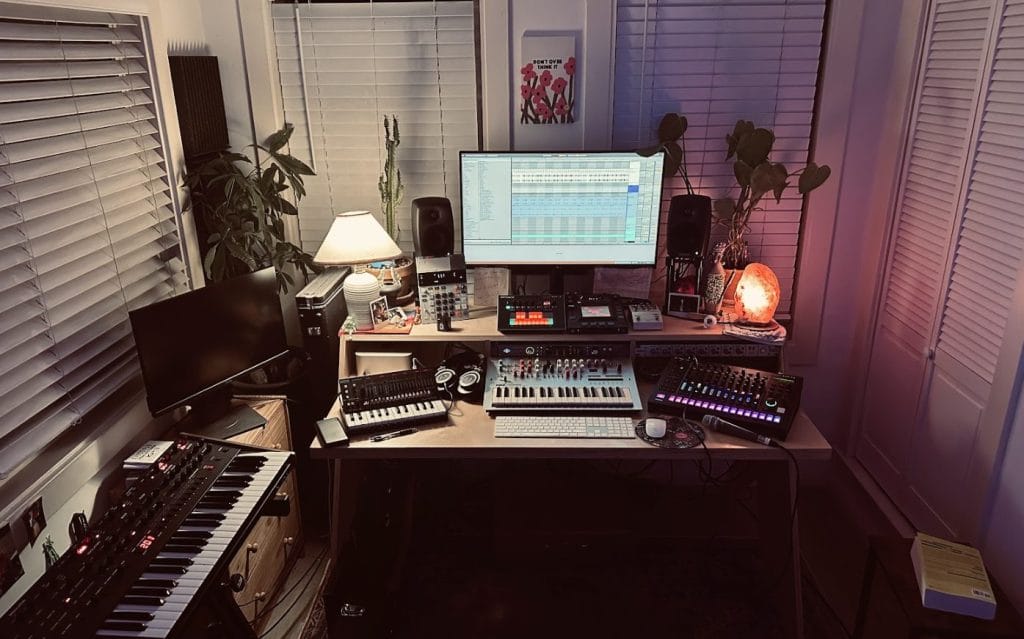
For “Postcards from the Club,” I used the Roland TR-8S drum machine extensively. The TR-8S features a bunch of classic Roland drum machine sounds (including the 808, 909, 707, 727, etc.). The TR-8S, however, goes far beyond just drum hits. There are synth one-shots, vocal chops, FX, and more. You can also load in some of your favorite samples. This machine has a super intuitive sequencer that you can chain together to form longer patterns as well. I love how easy and accessible it is to jam on and get some ideas out.
A lot of the drum sounds that you hear in “Postcards” came from the TR-8S including the hi-hats, ride, clap, and a bunch of the perc sounds. Usually, I’ll program a bunch of drum sounds together, and once I have something that works, we’ll record each instrument separately into the DAW so we have more control once we start arranging. I love using this machine for non-drum sounds, too, and we got some of the glitchy, one-shot synths from the TR-8S. The sequencer makes it super easy to demo different ideas in real time. When Lars and I make music, I usually start with the TR-8S to get lay out some foundational drums we can build melodies on.
The TR-8S just makes production more fun. It’s so easy to do real-time, hands-on automation just by opening and closing the decay knob on a hi-hat sequence or running a conga hit through the onboard delay unit or manipulating the time and feedback knobs. This machine allows me to be more efficient and move quickly, especially in the beginning stages of making a track where you just want ideas to flow.
Repro-5
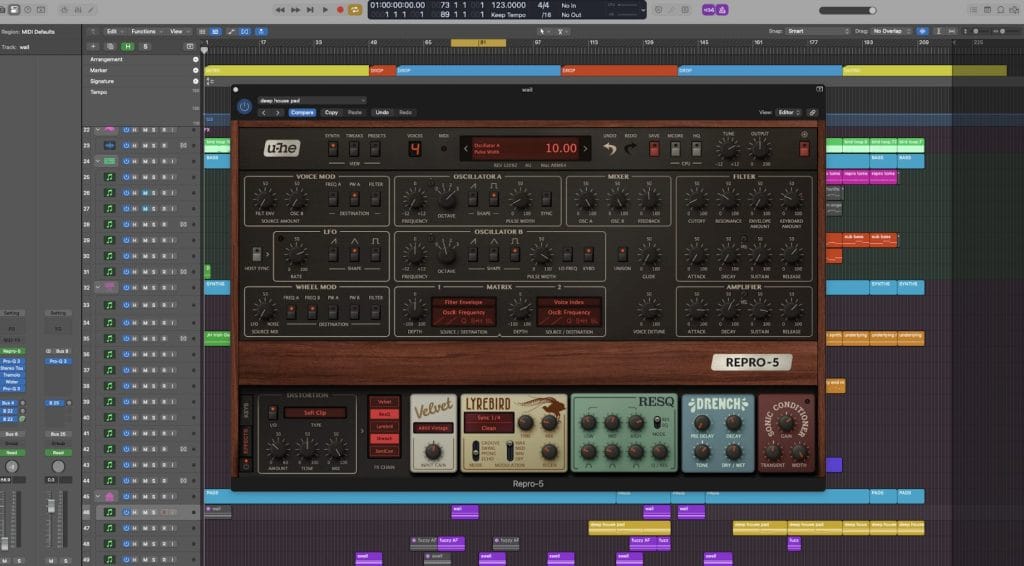
Another instrument that I used in “Postcards” is u-he’s synth Repro-5, which is a polyphonic software synth that emulates the Prophet 5. This synth sounds beautiful and it’s always easy for me to get usable sounds from it. It covers a lot of ground sonically.
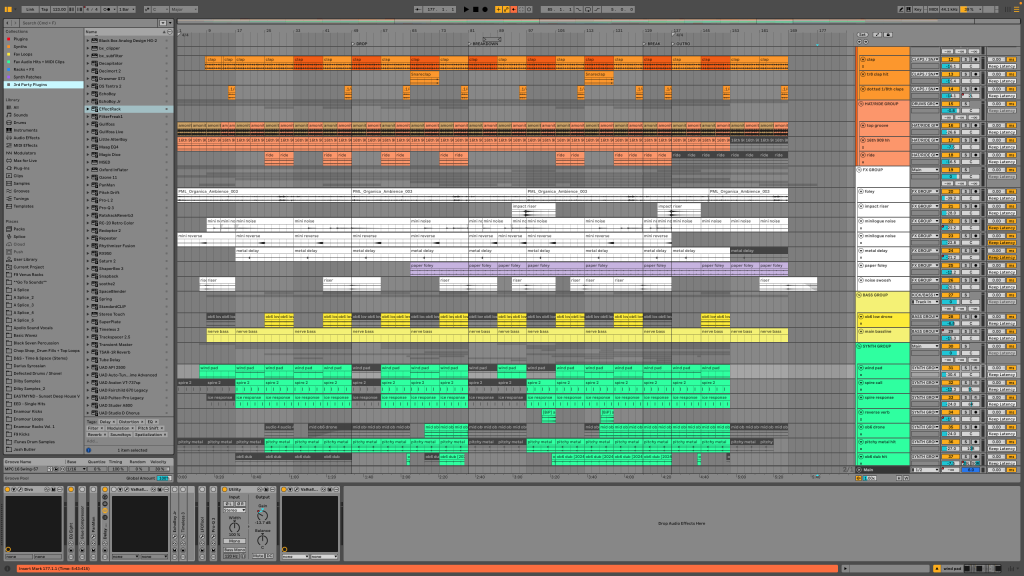
Lars and I have a somewhat unique way of collaborating: typically, we’ll start tracks in his studio on his DAW, which is Ableton. After we cook up an initial sketch that has potential, we’ll do a rough arrangement and then bounce it to audio. I prefer making music on my laptop with Logic Pro. It’s just how I’ve been producing forever and I can take it anywhere. In this case, once we bounced the rough idea for “Postcards,” I loaded the WAV file into Logic, and started trying out ideas. Using Repro-5, I was able to write some pad parts as well as some of the call & response synth hits that’s you hear throughout the track. With a lot of the Repro-5 patches, there is a sweet spot for the filter, so I am always tweaking and automating the cutoff to find the tone that works the best in the context of the track.
I love using Repro-5 for pads, leads, and chord hits. This synth has a natural, organic quality to it, which I think makes it work with this type of house music. It’s not overpowering or metallic. One trick to make it even more unpredictable and analogue sounding is playing with the “voice detune” knob. The onboard distorting unit can also really help sounds cut through the mix. The “corrode” setting can act as a sweet bit crusher, too.
My voice
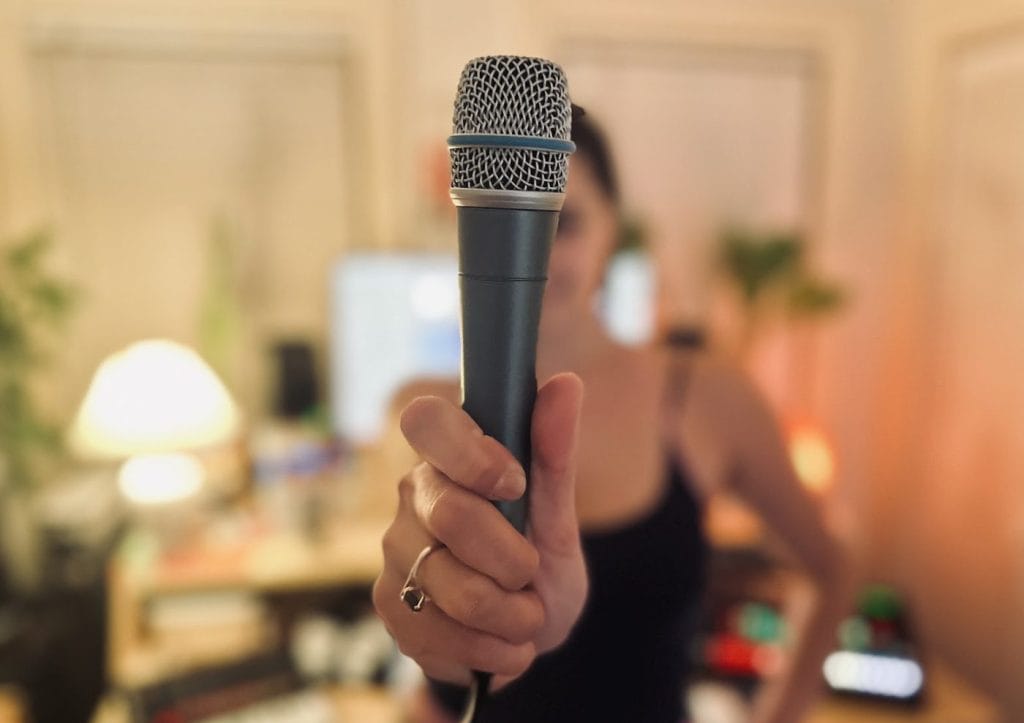
My voice! Lars and I wrote the vocal hook for this track together over a bottle of wine on our balcony, and we recorded it the same night in his studio using a Shure Beta 57A microphone (I might have even done some of the takes in the bathroom just to see if we could get a cool reverb tone from the reflections off the tiles). Since we had the music first, I think we did a good job of having the tone of the vocals fit the late-night vibe of the instrumental. The lyrics are a love letter to nights spent clubbing.
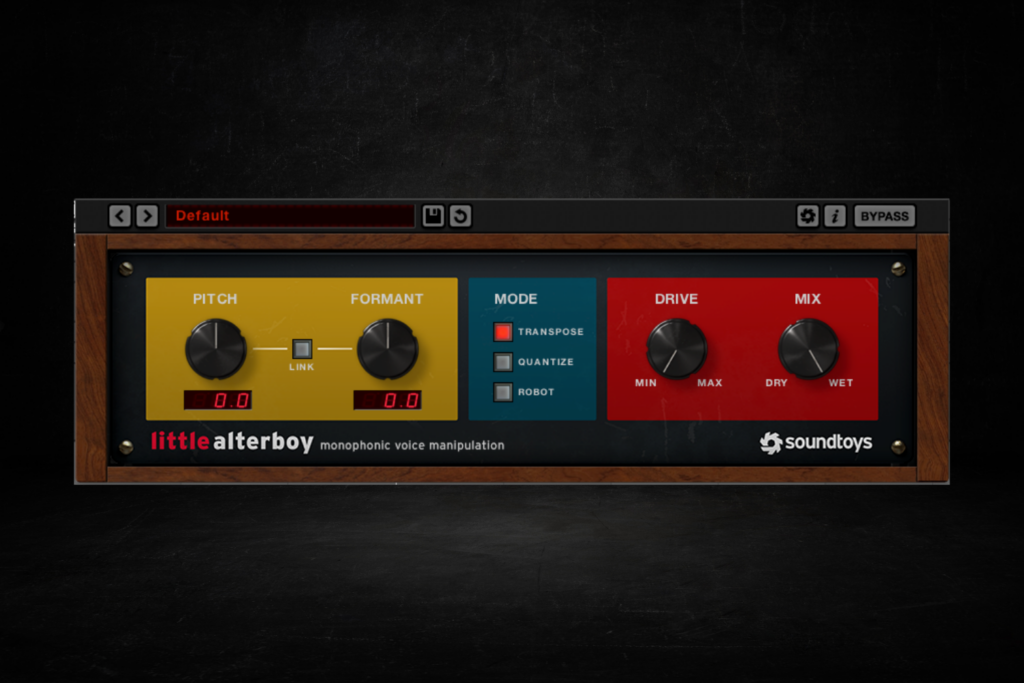
The main vocal take has some processing on it. There is some formant shifting throughout the arrangement using Soundtoys’ Little Altar Boy. We also used Valhalla Vintage Verb’s “smooth plate” setting for reverb as well as Valhalla Delay on its “tape” algorithm for some delay.
The more eccentric fun, however, came by running my original vocal though the Korg Kaoss Pad 2, which is a multi-FX hardware unit that just spits out really weird audio from anything you throw at it (in this case, my voice). We recorded a bunch of different takes using a variety of settings on the Kaoss Pad before going back through and choosing our favorite bits. We used these parts to accent the main vocal in places.
Your voice is totally unique. Nobody else has it, and you can use that to your advantage. Whether it’s singing, spoken word, ad libs, or something else, there is really no limit to what you can do with your voice. It’s fun to even turn my voice into a pad with some creative processing (reverbs, delays, resampling, etc.). You don’t even need a fancy mic. I record a lot of my vocals directly into my phone’s mic.
Quick Fire Hot Takes on the Scene
Hot Take 1: Tune out the voices that are always complaining about the industry, how hard things are now, how much better things used to be, etc. Trust that you will pave your own path and don’t be discouraged by the jaded pessimists.
Hot Take 2: Instead of reaching for Splice or Loopcloud for a vocal, ad lib, or a spoken word, try using your own voice. You won’t have to worry about hearing the same sample in a bunch of other producers’ tracks.
Hot Take 3: Artists (and really everyone) should pay attention to how they use their social media presence to connect with their people. Using your platform as a personal diary or a trauma dump on a consistent basis is not artistry. Go to therapy instead.
Hot Take 4: Learn what you enjoy about other artist’s music, then add your unique touch. Your favorite artists can be a great starting point for finding your own voice and sound.
Hot Take 5: Female producers and DJs are still not getting the recognition or opportunities they deserve, but some labels are trying very hard to change that. I salute you.
The post How It Was Made: Swanya & LARSa- Postcards from the Club appeared first on Magnetic Magazine.