




Recently, we spoke about digital merchandise. Now, let’s talk physical.
You may not think it, but physical merch is still one of the easiest ways to get your artist brand out there. Have you ever gone to a show and bought a shirt (two years ago I went to a PRAANA show and got a shirt – I still wear it to this day)? Have you considered that now, whenever you wear that shirt, you’re advertising that artist to anyone you may come across that day? Now, imagine if that was your brand being advertised to hundreds of people.
Case in point, making the most of physical merch (whether it be clothing, vinyl, CDs, posters, or anything else) is a great way to market yourself. But, there’s a misconception out there that it’s really hard to get into the physical merch game. I am here to tell you that it’s not – and here to show you just where to start.
There are a ton of great merch platforms out there in today’s day and age. Take a read through our following recommendations, and pick the one that’s right for you. Hopefully, I’ll see someone out there wearing a hat with your name & logo on it very soon.
Table of Contents
Printful
Printful has become one of the most trusted print-on-demand platforms for artists, musicians, and creators who want high-quality physical merch without inventory risk. Built around reliability, production quality, and seamless integrations, Printful handles everything from printing to shipping so creators can focus on design and promotion. Here’s why you should know about it:
- Incredible Quality
Printful is known for consistent, high-quality prints across apparel, accessories, posters, and home goods. Multiple printing techniques, including DTG, embroidery, and all-over print, ensure professional results across product types.
- Global Fulfillment Network
With fulfillment centers across North America, Europe, and beyond, Printful is able to reduce shipping times, lowers costs, and improves the customer experience for international fans.
- No Inventory, No Upfront Risk
Products are printed only after an order is placed, allowing artists to test designs, drops, and limited runs without investing in stock.
- Powerful Branding & White-Label Tools
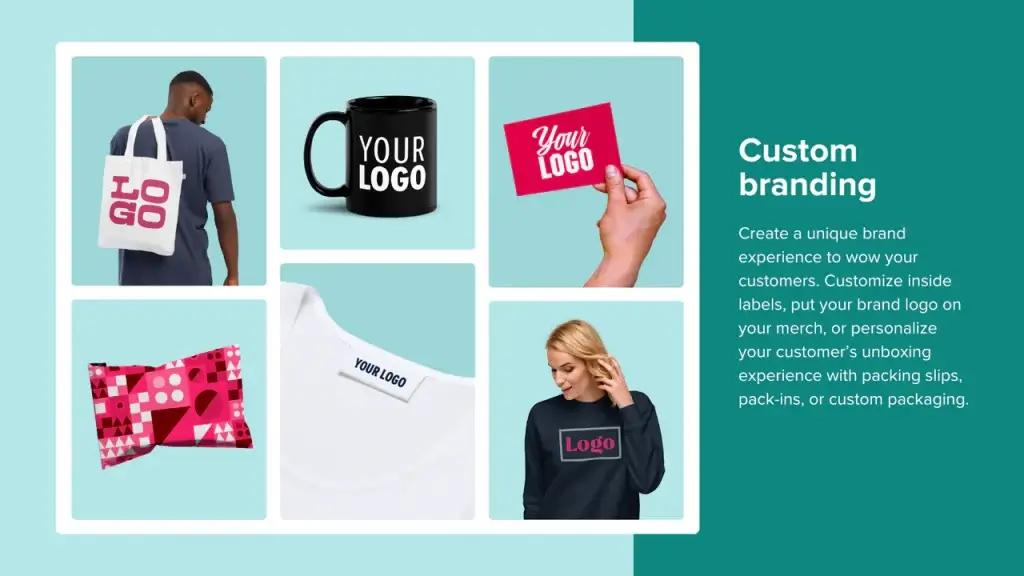
Custom packing slips, branded labels, and packaging inserts help creators deliver a polished, brand-forward unboxing experience.
If you want a reliable, high-quality merch partner that scales effortlessly, from your first merch drop to global stardom, Printful remains one of the strongest print-on-demand platforms available.
Printify
Printify approaches print-on-demand differently: by acting as a marketplace of print providers rather than a single in-house fulfillment operation. This model gives artists, musicians, and brands more control over pricing, product selection, and production locations. Here’s what makes Printify a quality merch platform:
- Massive Product Selection
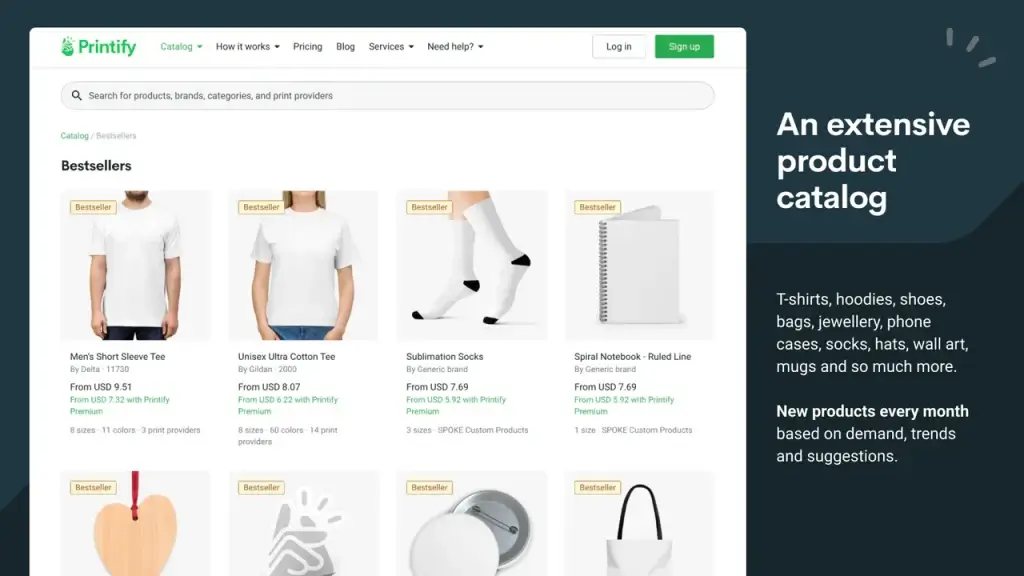
Printify offers one of the largest catalogs in print-on-demand, spanning apparel, accessories, posters, home goods, stickers, and more. It’s ideal for artists who want to experiment with diverse merch formats or seasonal drops.
- Multiple Print Providers, Your Choice
Instead of being locked into one production partner, you can choose from a global network of print providers, optimizing for price, quality, location, or turnaround time on a per-product basis.
- Competitive Pricing & Margin Control
Printify’s marketplace model often results in lower base costs, allowing creators to set healthier profit margins or run more aggressive promotions.
- Premium Features for Scaling Brands
Printify Premium unlocks discounts across providers, custom branding options, and faster support, making it a strong option for growing merch businesses.
If you want maximum flexibility, broad product choice, and pricing control in a print-on-demand platform, Printify delivers a versatile, creator-friendly merch solution.
Merchbar
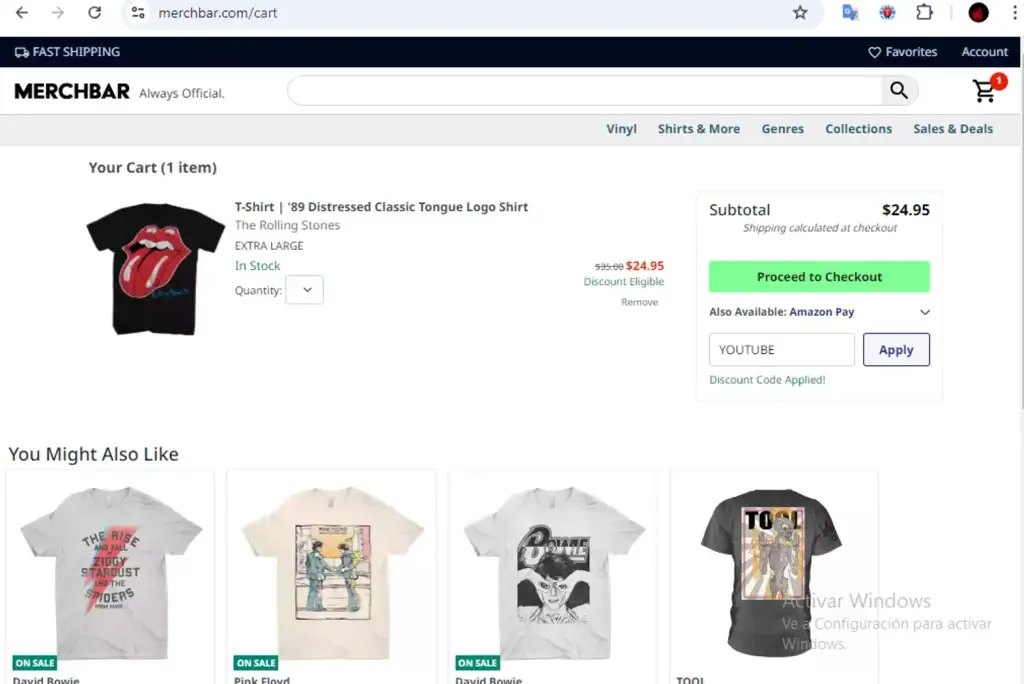
Merchbar operates less like a traditional print-on-demand service and more like a global merch marketplace, one that places artist merchandise directly where fans already listen to music. Used by artists, labels, and distributors worldwide, Merchbar helps creators sell physical products without building a standalone store from scratch. Here’s what makes it unique:
- Native Integration With Streaming Platforms
Merchbar is known for its deep integration with Spotify, where official artist merch can appear directly on artist profiles. This turns passive listeners into potential buyers at the exact moment of discovery.
- Marketplace Exposure Without Storefront Overhead
Instead of driving all traffic to your own site, Merchbar lists your merch in its marketplace, giving artists additional visibility and organic discovery through search and platform integrations.
- Physical Merch, Vinyl, and Exclusive Drops
Merchbar supports apparel, accessories, physical media, and limited-edition releases, making it especially valuable for artists selling vinyl, CDs, and collectible items.
- Fulfillment and Logistics Support
Artists and labels can either self-fulfill or use Merchbar’s fulfillment services, reducing the operational burden of shipping, inventory, and customer service.
If you want merch sales embedded directly into the music discovery experience, especially on streaming platforms, Merchbar offers a powerful, exposure-driven alternative to traditional merch stores.
Bonfire
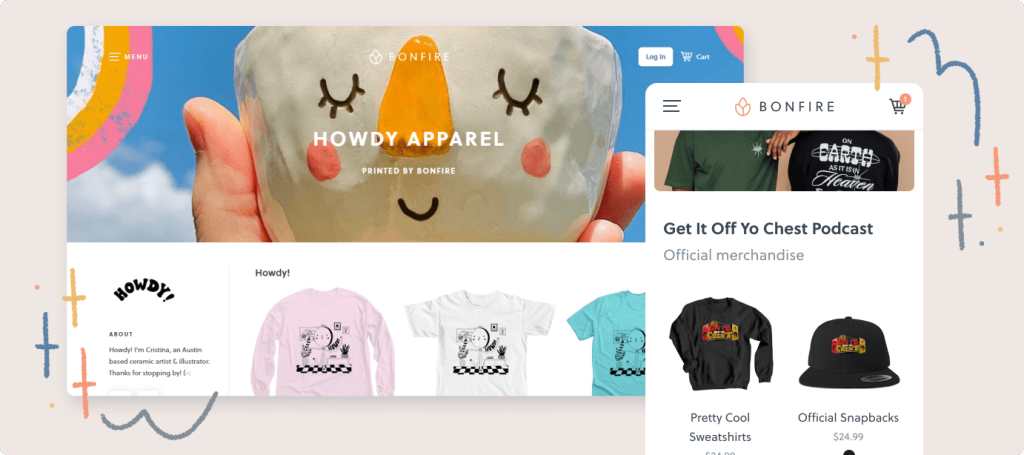
Bonfire has carved out a distinct niche in the merch ecosystem by focusing on campaign-based selling, making it a favorite for artists, creators, and organizations running limited drops, tours, or fundraising initiatives. Instead of maintaining a permanent store, Bonfire excels at creating urgency and community momentum. Here’s why it’s worth using:
- Campaign-Based Merch Drops
Bonfire’s core model centers on time-limited campaigns. Creators launch merch with a defined end date, driving urgency and reducing unsold inventory risk.
- Zero Upfront Costs or Inventory
All products are printed on demand after the campaign ends, meaning there’s no financial risk for creators and no leftover stock to manage.
- Built-In Fundraising Tools
Bonfire shines for benefit merch and cause-driven campaigns. You can set profit goals, highlight causes, and transparently show supporters how their purchase contributes.
- Simple Storefronts and Checkout
Campaign pages are clean, focused, and designed to convert quickly: perfect for social sharing and email blasts.
If you want a merch platform built around limited drops, fundraising, and community-driven sales, rather than permanent storefronts, Bonfire offers a focused, effective approach to selling physical merch.
Spring
Spring, previously known as Teespring, has evolved into a full-fledged commerce platform designed around creators, communities, and social media-driven sales. Rather than focusing purely on print-on-demand logistics, Spring emphasizes discovery, integration, and fan engagement across major platforms. Here’s what sets it apart:
- Native Social Platform Integrations
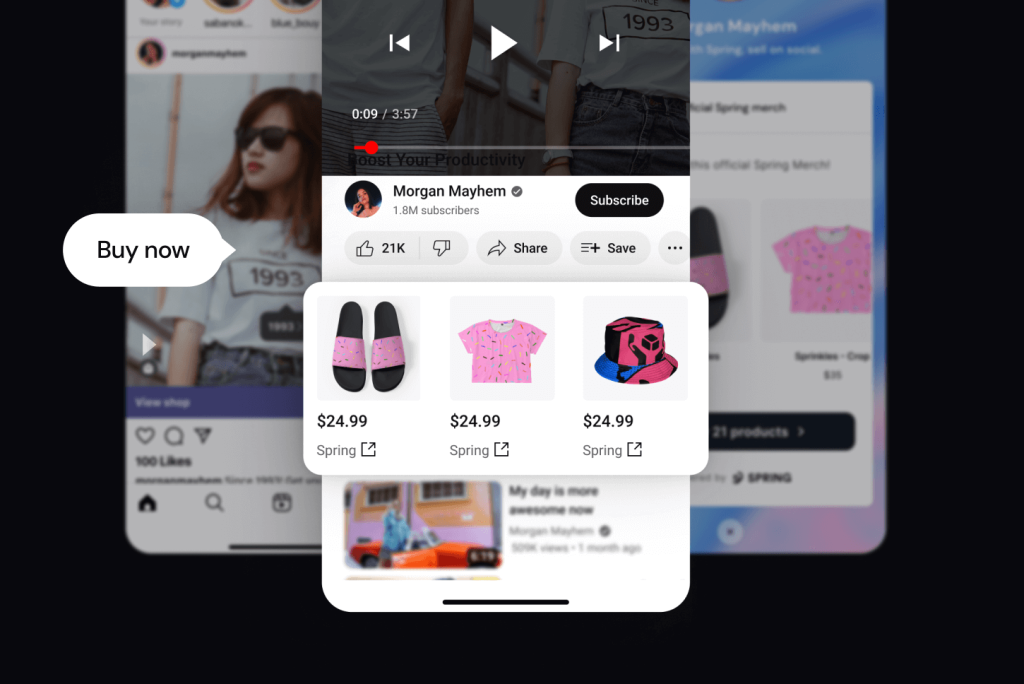
Spring integrates directly with YouTube, Instagram, TikTok, Twitch, and other creator platforms, allowing merch to appear directly under videos, streams, and profiles. This tight connection turns engagement into sales without forcing fans off-platform.
- Always-On Merch Stores
Creators can run permanent storefronts instead of time-limited campaigns, making Spring ideal for long-term brand building, evergreen merch, and consistent drops.
- No Upfront Costs or Inventory Management
Spring handles production, fulfillment, customer service, and returns, letting creators launch merch with zero risk or logistics overhead
- Built-In Marketing and Promotion Tools
Spring offers discount codes, sales events, email tools, and analytics to help creators optimize launches and track performance.
If you want a merch platform designed for social-first creators, where merch lives directly alongside content, Spring delivers one of the most integrated and scalable solutions available.
Everpress
Everpress has built its reputation around high-quality, limited-run apparel that prioritizes design integrity, ethical manufacturing, and intentional drops. Positioned at the intersection of merch and independent fashion, Everpress is a strong fit for artists and creators who want their merch to feel considered, collectible, and responsibly made. Here’s why you should use it:
- Limited-Edition, Pre-Order Drops
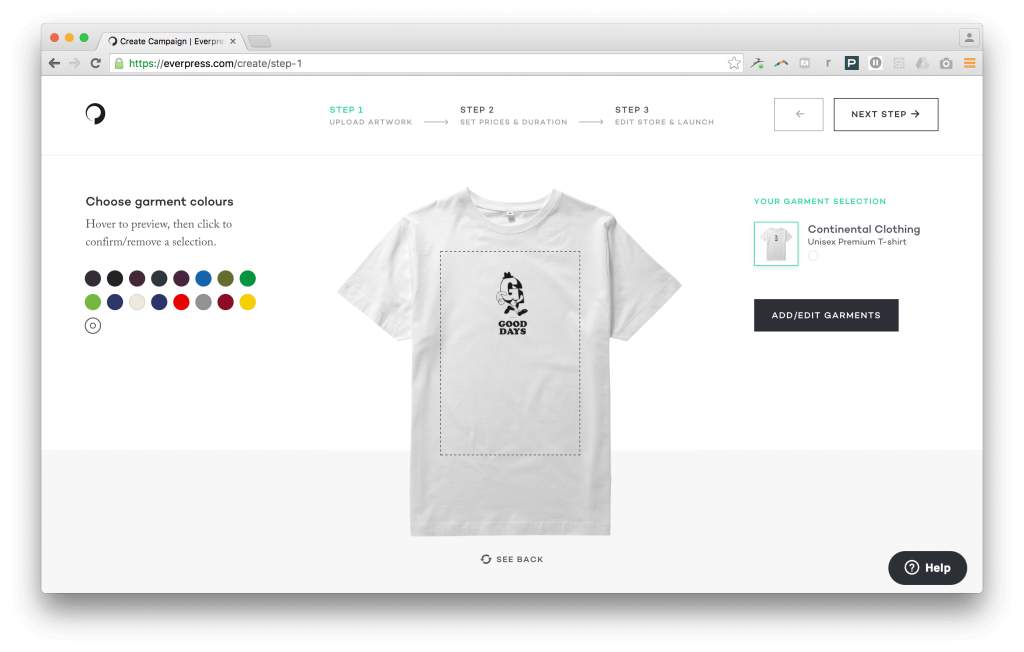
Everpress operates on a pre-order model, meaning products are only made once a campaign hits its goal. This eliminates waste, avoids overproduction, and creates built-in exclusivity.
- Premium, Ethically Sourced Garments
The platform emphasizes sustainable materials, ethical labor practices, and high-quality blanks, making it ideal for creators who care about values as much as visuals.
- Design-First Presentation
Everpress treats merch like fashion. Campaign pages spotlight artwork, concepts, and storytelling, helping designs stand on their own rather than feeling purely promotional.
- No Inventory or Upfront Costs
Creators can launch drops without risk. Everpress handles manufacturing, fulfillment, and customer service once orders are confirmed.
If you want merch that’s intentional, ethically produced, and collectible, Everpress offers a platform built around quality, sustainability, and limited-edition appeal.
FAQ About Selling Physical Merchandise
What is the best way to make & sell merch?
Trick question. There is no best way. Every single producer is going to want to do this differently – which is why it’s so great that there are so many good options out there.
What kind of merch sells the most?
Again, depends on the artist. With that being said, t-shirts & hoodies are always popular (and simple) options.
Do I need an LLC to sell merch?
No! While LLCs are good to have if you’re a professional in the music industry, you can sell merch whether or not you have one. However, if you do have one, you could include whatever you pay to have merch printed as a potential business expense – which means you can write it off your taxes.
How much money do musicians make from merch?
It depends on how you price it. A good rule of thumb is to aim for a profit margin of 20% to 40%. That is, if a shirt costs you 10 bucks to make, you should sell it for 12-15 dollars.
How can I get people to buy my merch?
If you have a strong brand, produce a high quality design, and price it reasonably, then you should have no problem getting your fans to buy merch.
The post 6 Physical Merch Creation Platforms Producers Should Know About in 2026 appeared first on Magnetic Magazine.