


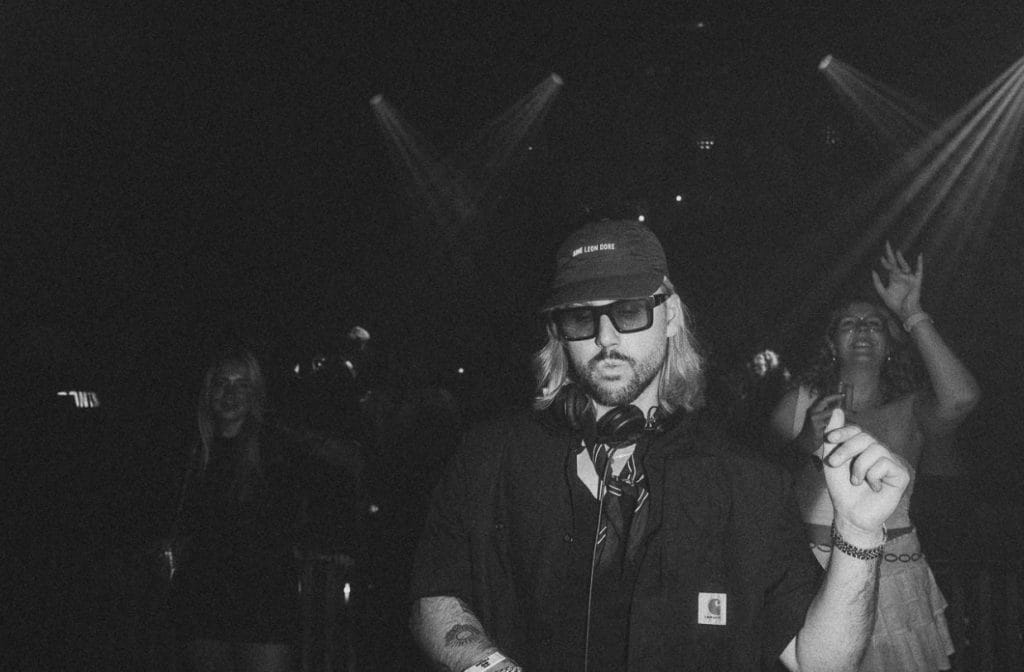
Behind every headline slot and peak-time set is a structure most people never see. For Wave Wave, a gig does not start when he steps into the booth – it begins days earlier in the studio, testing new records, digging for overlooked cuts, and building USB folders that leave room for spontaneity while maintaining control.
As his profile has grown, so has the responsibility to promote shows, protect creative time, and manage the psychological weight that comes with being visible in 2026, which keeps his momentum flowing as he ascends to the global stage as one of dance music’s fastest rising stars.
This conversation arrived alongside his latest late-night statement of an EP titled “Feel The Pressure’ which features Franco BA and Primed, which just dropped on Dark Roast Records.
He breaks down how he checks mixes before a show, how he separates admin from studio time, and what he learned from nights where the mental side of the booth took over. The result is a practical look at the infrastructure behind modern touring life.
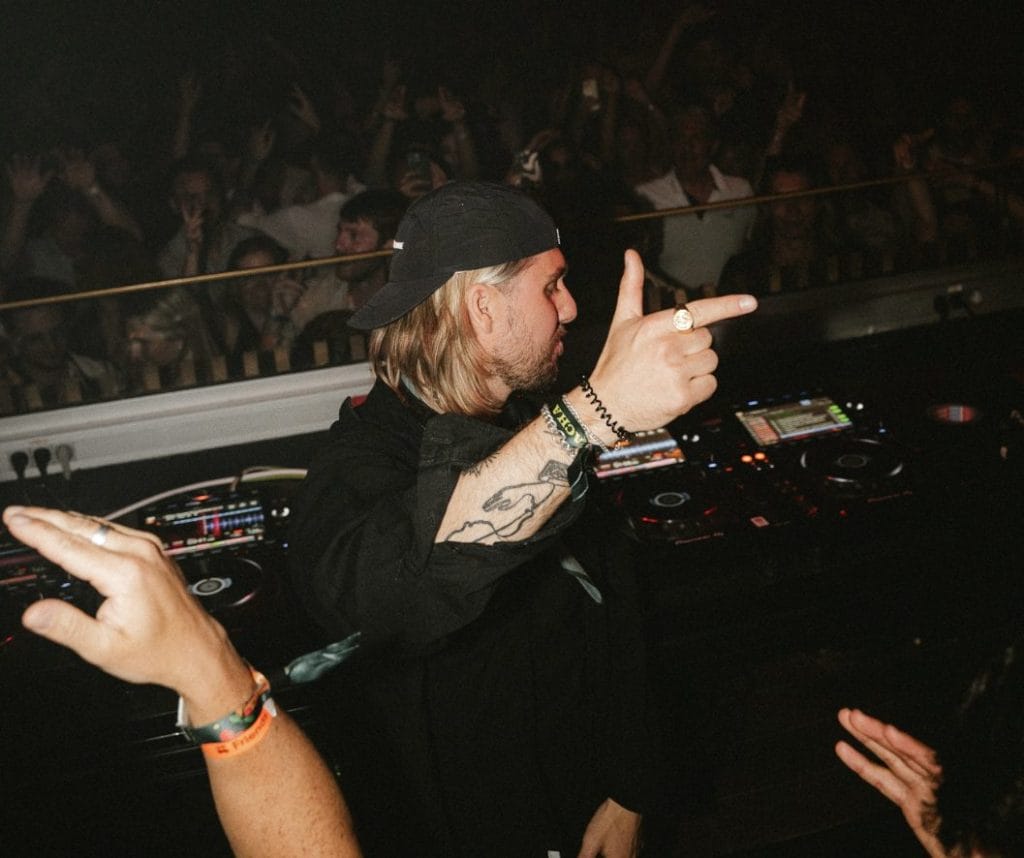
Photo Cred: JVK Footage
Interview With Wave Wave
What does the average week of prep look like for you before a gig—and what parts of it are totally invisible to the outside world?
Before a gig, the first thing I do is check which new tracks of my own I’ve been working on during the week and see what might fit the vibe of the upcoming show. On top of that, I spend a lot of time digging for hidden gems from other artists.
For every show, I prepare a folder on my USB with more than 100 tracks that I feel could work for that specific crowd and venue. It gives me structure, but also the flexibility to play completely in the moment. What most people don’t see is that behind the scenes, I also produce for many other artists.
That’s a big part of my day-to-day life in the studio, even if it’s not always visible to the outside world.
Do you enjoy the process of editing, organizing, and testing tracks before a set? Or is it a necessary grind?
It’s crucial to double-check the mix and master of a new record before you play the show.
The track doesn’t have to be 100% finished, but it does need to meet a certain sound standard; otherwise it won’t sit well in a venue, especially one with a great sound system. I don’t really organize my sets in advance, but I do check whether a track sounds good in the studio.
How much time do you spend promoting gigs, and how has your approach changed as your profile’s grown?
Promoting your own gigs should be one of the biggest priority for every artist. It isn’t just the promoter’s job.
They book you because of your sound and live performance, but also because they believe their crowd knows you and your music. So it’s important to engage with your fans that you’ll be performing near them, otherwise they might never know about the show.
What do you wish people understood better about the logistical side of being a DJ in 2026?
It’s so much more than just playing shows and seeing the world.
It can be a hard job and a rollercoaster of emotions. After a weekend of shows, I’m in the studio on Monday, working on new music. I understand why many DJs switch to ghost production to get some time off to relax, but that’s not why I started all of this.
Do you have systems or workflows that help you stay sane across the chaos of travel, scheduling, and promo?
I have a dog and a girlfriend that I love more than anything. I really need these two when I’m back home to stay sane and grounded. And when I’m on tour I just need a good hotel with SPA because I love to go into the sauna before or after a gig.
How do you balance creative time with the sheer admin of the job?
Creative work and admin work use completely different parts of your brain.
If I try to answer emails, organize files, plan releases, and then jump straight into the studio, my creativity feels filtered. So I protect my creative time. I most of the time get up very early so I try to start with music before the world gets access to me before emails or messages.
Can you share a time when the behind-the-scenes work totally changed how the night went?
I’ve actually had two moments that will stay with me forever.
They weren’t technical issues they were mental ones. And those can change a lot: One night at Pacha, a group of people started booing right after the DJ before me stopped playing. I had no idea what had happened, but I immediately took it personally which was completely wrong. Still, it got into my head. I became insecure, overthought everything, and ended up playing one of my worst sets, full of small mistakes.
That night taught me how powerful the mind can be especially in a booth. The other lesson was more physical. I’ve learned that I can’t eat certain local foods before playing. I have a very sensitive stomach, and if my body feels off, my focus disappears. It affects my energy, my confidence, everything.
The post Wave Wave on Touring Reality in 2026 – Promo, Pressure, and Routine appeared first on Magnetic Magazine.