





In the world of boutique analog mixers, there are only a handful of names that command instant respect. Union Audio is one of them. Founded by Andy Rigby‑Jones—best known for his pivotal role in designing legendary mixers for Allen & Heath (think Xone:92 and its peers) and PLAYDifferently Model series with Richie Hawtin—Union Audio has quietly but confidently become the go‑to for purists and audiophiles who demand nothing but the best. Based in Cornwall, UK, their reputation has grown through high‑caliber collaborations with MasterSounds and from professionals who demand and respect high-quality analog mixers.
With the Elara.6, Union Audio steps out into the spotlight with a world-class club mixer with a six‑channel analog powerhouse that screams refinement, intention, and obsession. We teamed up with Junior Sanchez to get his thoughts alongside our review to give you two points of view. Sanchez knows his way around a mixer, has played on just about eveything and doesn’t mince words or hold back from sharing his opinion, and the Elara.6 catches some serious praise.
We also got the man himself, Andy Rigby-Jones, to chime in, so here is a very lengthy review with two different takes and thoughts from its creator. This mixer is what you would call a Mercedes AMG-class machine; it is not for amateurs, it is built by hand, and it will put a dent in your wallet. If any of these things cause you to pause, this mixer is not for you, and you can stop reading now.
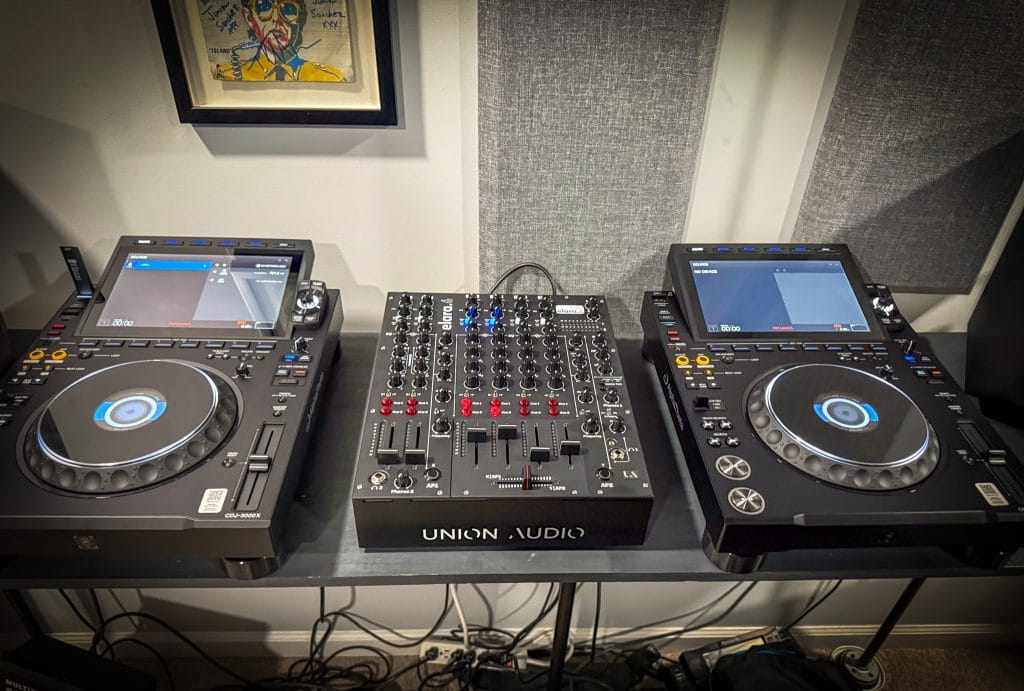
On the Magnetic side, I’ve spent over 40 hours playing on the Elara.6 with every genre, on vinyl and CDJs. I used both linear faders and rotary, and ended up sticking with the rotary because I like that slow-burn mixing style and the exactness of the control. The Elara.6 is now a centerpiece of my primary DJ setup, and the Union Audio two.valve rotary mixer is holding court in my kitchen with two Pioneer DJ PLX-1000s. So you might say I’m a Union Audio convert, let’s go. Here is why the Elara.6 is getting the Editor’s Choice Award for 2025.
Magnetic Magazine Review by David Ireland
More Info / To Buy Elara.6 check out www.UnionAudio.com
Who is the Elara.6 For?
As I eluded to earlier, this isn’t a mixer for beginners—or even intermediate DJs looking to upgrade from plastic jog wheels and blinking VU‑meters. The Elara.6 is for DJs, producers, audiophiles, and sound designers who want their music to sound exceptional. Whether you’re spinning records in a sweaty booth or building immersive audio experiences in a gallery space, this mixer is for those who want precision, flexibility, and the kind of tone you only get from elite‑level analog circuits.
Build Quality: Every Detail Counts
From the moment you lift the Elara.6 out of its flight case or box, you sense something different. The faceplate is fully machined alloy—a brushed, smooth finish that gives zero hint of cheap shortcuts. The knobs feel confident. Each turn is precise with no wobble. The faders are weighted, silky, and linear—no dead zones, no sudden jumps. The rotary knobs are equally as strong, although some might argue they are a bit cramped, but I didn’t find that to be a problem.
During a recent breakdown video, Andy Rigby‑Jones explained that the fader modules are mounted on thick steel plates and that the internal chassis uses anti‑vibration mounting. Posted above for reference.
This build isn’t just about looks—it’s about engineering for longevity, stability, and sound integrity. Even the internal power supply is a universal, internal module (no bulky external bricks), which means cleaner routing and fewer compromises. Routing that kind of power quietly through analog circuits without introducing hum or interference is no small feat.
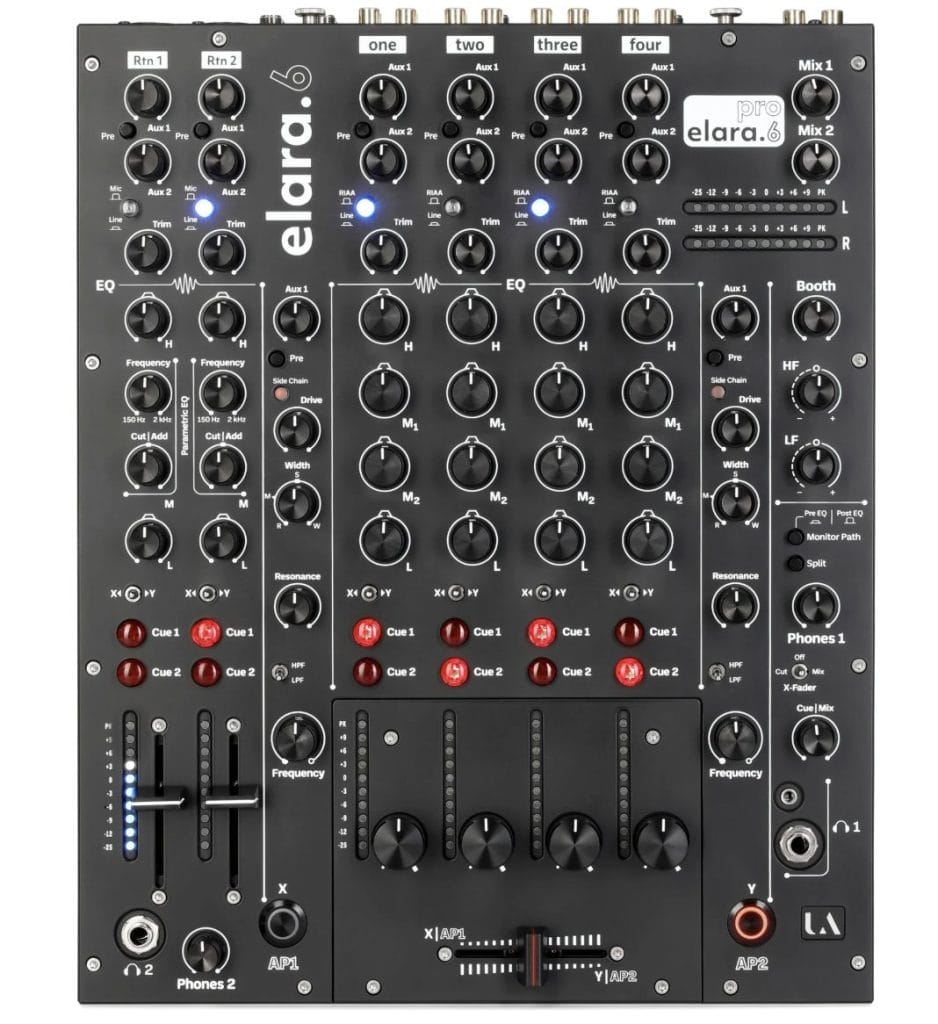
The faceplate presents a minimalist aesthetic—no flashing LEDs screaming for attention. Instead, you get a calm, confident look that whispers, “I know you know what you are doing, let’s do it.” The layout is thoughtful: each channel strip is spacious, ergonomically placed so you don’t accidentally bump the gain while adjusting the EQ. The 4‑band EQ knobs, filter controls, width/drive controls, and fader plate—everything is there with breathing room.
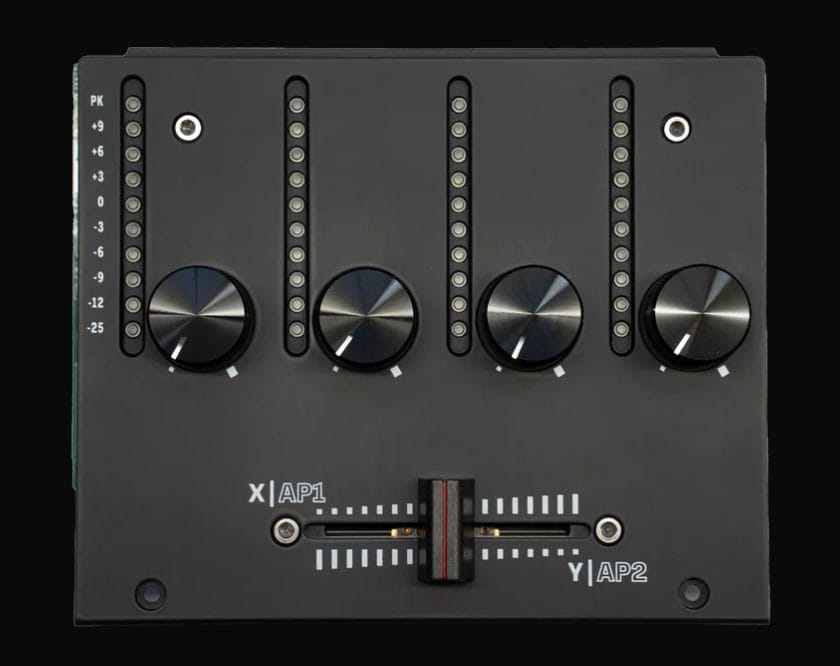
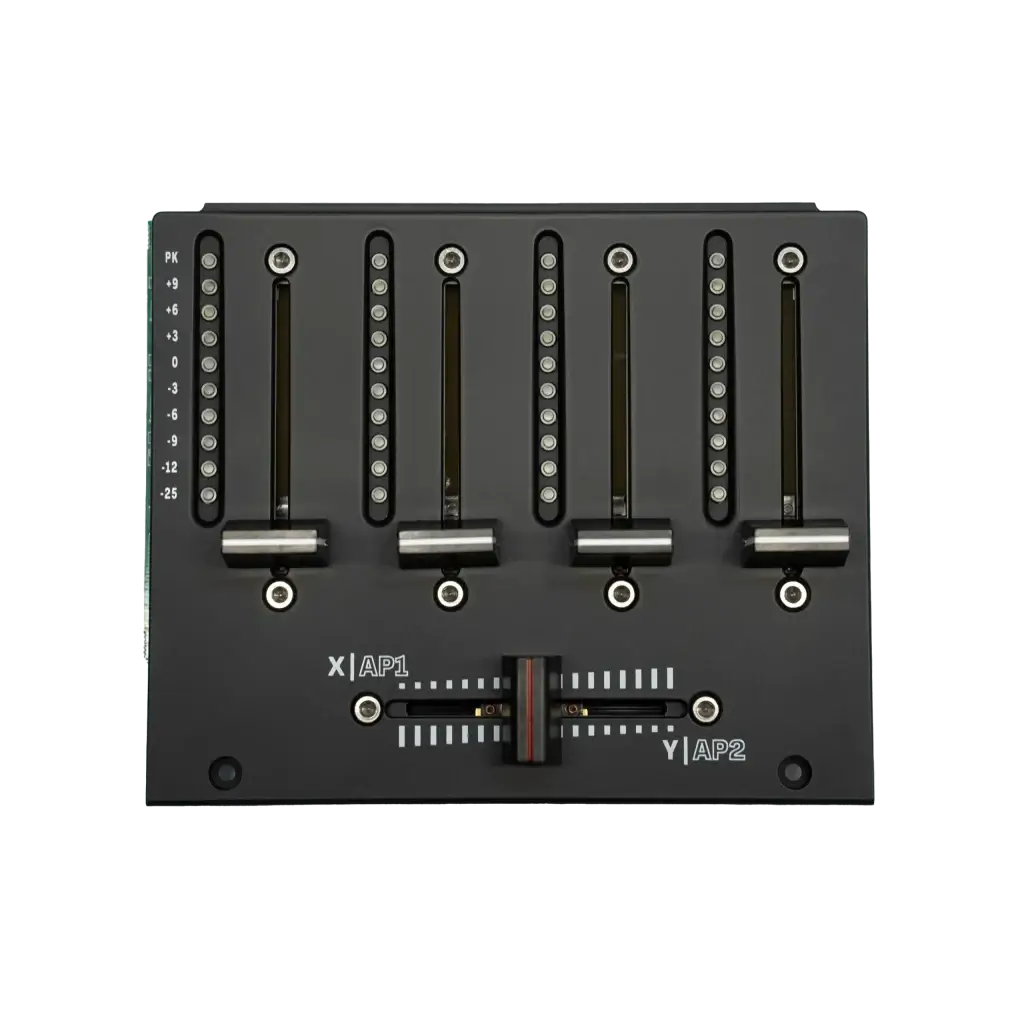
One standout detail: you can swap the line‑faders for rotary faders in under a minute by switching out the fader plates. That modular flexibility shows that Union Audio didn’t just build for today—they built for multiple styles of DJing. Again, the only complaint might be if you are using the rotary knobs vs. the linear faders; some have found the rotary version too cramped.
In short: The Elara.6 is expensive and feels that way—but not precious. It’s built to survive club use, travel, and time, while also delivering the tactile satisfaction of a hi‑end studio console. You sense you’ve used it before because everything responds exactly as you expect.
Features and Interface: Intentional Design, No Gimmicks
What makes the Elara.6 so addictive is its layout that opens into a universe of sonic sculpting. I got super nerdy with this, especially with old Tech House records. Each of the six channels features a musically‑tuned 4‑band EQ—not just for cutting or boosting frequencies in a generic way, but for sculpting. Sweep the high mids to bring out vocal grit or push the low band and feel your subwoofers purr with warmth and punch.
Then there’s the AP Strip (Analogue Processing) on each channel:
- Drive knob: ranges from subtle harmonic warmth to full‑blown saturation with clarity retained.
- Filter: toggle between high‑pass or low‑pass, with resonance and frequency controls—you can gently sweep or dive into full-on “sculpted” filtering.
- Width: an unexpected gem. The stereo image starts in normal stereo, then you can shift into mono, and then further into a reverse/stereo warp that bends space and width while keeping bass centred. This is a wild feature, and when used well, has the potential to melt people’s minds on a dance floor.
Routing is next‑level flexible:
- Want to send the AP Strip to Aux Send 1, either pre‑ or post‑AP ON switch? You can.
- Want to route a stereo return (with its own 4‑band EQ and dual aux sends) directly into the crossfader and treat it like a full channel? You can.
- Want to send your mic input through the filter circuits, loop it into an external reverb, choose to put it back via Aux/Return and crossfade it live? It’s all built in.
Note: I did not hook up an effects box or use these channels in practice, but I did research all the use cases and will eventually have an effects unit hooked up.
On the front panel you’ll also find dual headphone cueing (perfect for B2Bs and handovers), and a booth output section (balanced XLR) with pro routing in mind. All the outputs are top‑tier: balanced/unbalanced, low impedance, high headroom. Specs under the hood: e.g., +27 dBu balanced output, noise down to ‑92 dBu, dynamic range >114 dB.
Whether you’re cutting, blending, or performing elaborate FX‑driven transitions, the user interface never gets in your way. It’s clean. It’s intuitive. And it invites you to explore and take some risks.
Sound Quality: Analog Royalty
Let’s cut to it (pun intended), this mixer sounds extraordinary. The analogue circuits are so clean, so refined, that your music feels richer—records feel deeper, digital sources feel alive. The residual noise floor is essentially negligible, and the headroom generous. From deep sub lows to shimmering highs, nothing is lost. The dynamic range gives you space to breathe, the crosstalk is minimal (Inter‑channel <-100>
In live use—I’ve only used this on my home system, which I recently upgraded to Two KRK V8 V4s and a JBL 12 sub. It’s hard to leave my basement now; I’m pulling out records I haven’t played in years, and they sound quite good. Hearing this on a big pro system like an L-Acoustics, Funktion One, or Void would be a treat, but something I’ve not experienced yet.
Effects, Routing & Live‑Use Flexibility
Speaking of routing: the Aux sends, returns, AP strips, and width controls give you enormous flexibility. The Aux sends let you plug in external FX boxes or pedals. The returns have full 4‑band EQ and dual sends. Want to build an ambient loop from the return channel and then bring it in via the crossfader? With the elara.6 you can. “The filter slightly saturates at high resonance but not in a bad way—more like it encourages you to break it.” was one note in a review.
For performance:
- Double headphone cueing = seamless B2B transitions, no awkward waits.
- Changeable fader plates = switch from line‑fader to rotary‑fader style in seconds—great for those who alternate styles or rotation setups.
- Booth out balanced XLR, internal universal PSU—travel friendly.
- The width/drive/filter controls let you sculpt transitions, breakdowns, and rises that feel alive, not just pre‑programmed.
It’s rare to find a mixer that treats the channel strip like an instrument in itself—and the Elara.6 does.
Competitors & How the Union Audio Elara.6 Stands Out
In the high‑end analogue DJ mixer space, a few models stand out as direct or near‑comparative contenders to the elara.6. Here’s a breakdown of top competitors and how the elara.6 differentiates itself.
Key Competitors
- Allen & Heath Xone:96: A 6+2 channel analogue mixer with built‑in interface and high‑level professional club credentials.
- Pioneer DJ DJM‑A9: More focused on digital connectivity, live streaming, and hybrid setups rather than pure manual analogue routing.
How the Elara.6 Stands Out
Here are the ways the Elara.6 differentiates and adds value, especially in relation to the above mixers:
- Analogue purity + boutique build: While the Xone:96 already offers high‑level analogue sound and filtering, the elara.6 brings a hand‑built, UK boutique ethos (via Union Audio) with machined alloy faceplate, premium knobs, faders, and a layout that feels like a studio console. This level of tactile and material investment is rarer in larger brand club mixers.
- Modular fader flexibility: The elara.6 allows a rapid swap of the line faders for rotary faders “in under a minute”. That kind of flexibility is rarely built into big commercial mixers which tend to fix one layout. For DJs who alternate between line‑fader and rotary styles (or want the option), this is a big plus.
- AP (Analogue Processing) strips on each channel: The elara.6 integrates a full AP strip per channel: drive, filter (HPF/LPF), width control. This gives creative sculpting on every channel in a way not matched by every competitor. While the Xone:96 boasts legendary filters, the Elara.6 places that level of processing tight in each channel’s strip.
- Routing flexibility tailored for performance and installation: With dual headphone cueing, balanced XLR booth outs, internal universal power supply, and comprehensive aux send/return architecture, the Elara.6 is built for both club‑installation and live performance environments. Some larger mixers add digital features but may sacrifice the tactile or modular design the user wants.
- Sound quality and build as a combined statement: In the boutique domain, build quality and sound quality go hand‑in‑hand. Many reviews of the Xone:96 cite “built like a tank” and excellent audio fidelity. The Elara.6 takes that standard and amplifies it with ultra‑premium components, top‑tier dynamic range, and lower noise floors.
- Designer heritage: The story behind Union Audio—founded by Andy Rigby‑Jones and built in Cornwall—adds a narrative that appeals to gear lovers who care about provenance, detail, and craftsmanship. Many mainstream mixers don’t carry that boutique origin story.
Where Competitors Might Still Have Edge
- Digital connectivity/interface integration: Mixers like the DJM‑A9 are built for today’s streaming, multi‑DJ setups, software integrations, etc. If your primary workflow is heavily digital or controller‑based, that field might lean more toward those options.
- Channel count and output bus features: The Xone:96 offers 6+2 channel routing and a very deep set of sends/returns and I/O. Depending on your setup, the extra channels or flexibility might matter.
- Brand ubiquity/service network: Large brands like Allen & Heath or Pioneer often have broader service/support networks in clubs, and having gear that many venues already know may reduce risk or installation friction.
Competitor Summary
If you’re looking for “ultimate analogue DJ mixer built with obsessive attention to detail,” then the Elara.6 stands out in its class. It may cost more, and it might require more manual creative engagement than some digital‑hybrid mixers, but that’s precisely the point: it’s for the DJ or sound‑designer who feels every knob, and wants the mixer itself to be an instrument. The Elara.6 doesn’t just compete—it arguably raises the bar for what an analog DJ mixer can be in 2025.
Summary: Why This Wins Editor’s Choice
Union Audio’s Elara.6 isn’t just a piece of gear—it’s a statement of intent. For those who take DJing seriously—not just as a skill, but as a craft—this mixer delivers an immersive, analog‑rich experience that’s rare in today’s world of touchscreen shortcuts and disposable gadgets.
It’s an instant classic, hand‑built with heart, and designed with the needs of real DJs in mind. You don’t use this mixer—you play it. If you value build quality, sound integrity, routing flexibility, and tactile control, then the Elara.6 will become your centerpiece. – Editor’s Choice Award 2025, Magnetic Magazine
Who Should Buy It:
Serious DJs, vinyl selectors, live performers, audiophile venue owners, and anyone looking to elevate their analog game to the highest level. If you know, you know—and if you don’t yet, the elara.6 will teach you.

Junior Sanchez Review
As someone who’s been in the booth for years, what excites me about the Elara.6 is how it blends precision with creativity. It’s not just a mixer — it’s a sound design instrument. When I’m playing techno, house, or anything in between and I want to add character, color, and emotion to transitions, the AP strips are my secret weapon.
If you’re a DJ or producer looking for a high-end, analog mixer that doesn’t just let you blend tracks but lets you sculpt sound, Elara.6 is one of the most compelling tools out there right now.
Alright, here’s my take on the Union Audio Elara.6 DJ Mixer, from the perspective of DJ.
Sound & Build
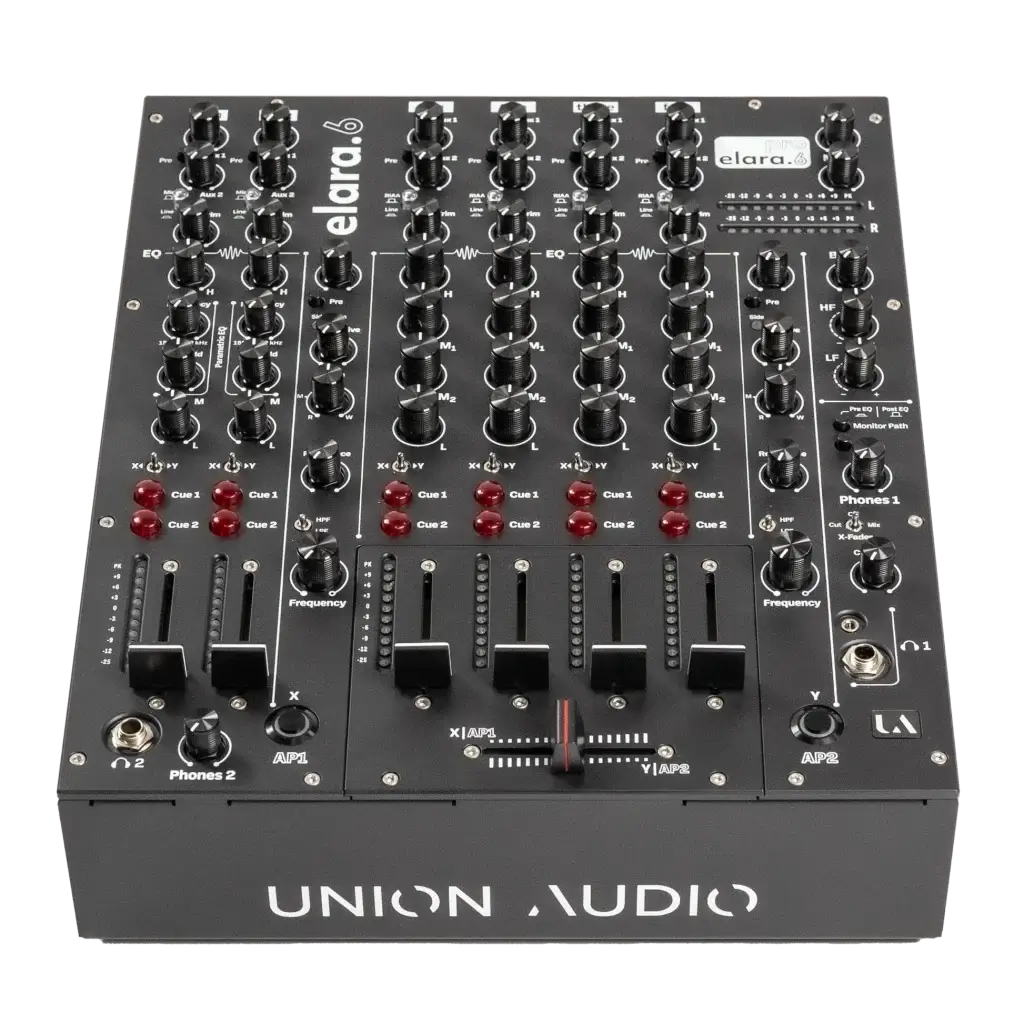
The Elara.6 is a premium analog mixer — no compromise, built like a tank but with the finesse you’d expect from high-end gear. It’s got four dual-input channels, each with a 4-band EQ. That gives you a ton of control over your tone, and it feels very musical.
The output headroom is seriously impressive: according to the manual, it supports up to +27 dBu on the balanced outs. That means you’ve got clean, powerful signal delivery — perfect for club systems.
Creative Processing — the AP Strips
This is where the Elara.6 shines. On the sides of the main channels are two Analogue Processing (AP) strips, loaded with creative tools.
• Filter: You can flip between a switchable High-Pass and Low-Pass filter. Plus, you get full control of resonance and frequency.
• Drive: There’s a drive knob with an active side-chain — soft character when you want it, or full-on distortion when you crank it. It doesn’t kill your highs or smear your stereo image.
• Width Control: This is really cool — a Mid-Side (MS) stereo width control that lets you morph from mono → reverse stereo → extra wide. Using it with the filters and drive opens up crazy creative transition options.
And if you want to run external effects, the AP output can be routed to Aux Send 1, either before or after the AP strip. That’s smart for live or studio setups.
Flexibility & Routing
• Dual Cue per Channel: Every channel has two cue buttons — super handy for back-to-back DJ sets or handing off to another artist.
• Aux Sends: There are two aux sends. That gives you more routing flexibility if you want to send certain channels to FX or fold in external gear.
• Mic/Stereo Returns: It’s not just inputs — you get stereo/mic returns with full 4-band EQ, two aux sends, and even the option to route these returns into the AP or crossfader.
• Configurable Fader Type: You can choose linear faders or rotary — and swap between them by changing the fader plates, which takes less than a minute.
Sound Quality & Specs
• Dynamic range is more than 114 dB — super clean.
• Distortion is very low: THD + N around 0.03% (Line In to Mix Out)
• Frequency response: 10 Hz to 50 kHz ±1 dB.
• Very well-built: the front panel is fully machined alloy, and the internal PSU is universal.
What Works Really Well
1. Expressive Transitions: Those AP strips — especially with the width control and drive — let you sculpt your transitions in a way most mixers don’t even touch.
2. Pro-Level Signal: High output, low distortion. Perfect for serious club rigs.
3. Versatility: Whether you’re doing back-to-back DJ sets, live production, or using external effects — Elara.6 handles all of that.
4. Build & Feel: The knob feel, the weighted faders (or smooth rotaries) — it’s just a joy to mix on.
Things to Consider / Possible Drawbacks
• Price: This is a premium mixer. You’re investing big, and it’s meant for people who really care about high-fidelity and creative processing.
• Complexity: With all those AP controls, there’s a learning curve. If you’re used to simpler mixers, it might take some time to master all the knobs.
• Size / Layout: Some users on Reddit say it’s compact, but depending on your hand size and workflow, the space could feel tight.
Elara.6 vs the Other Heavyweights
Against the Xone:96
The Xone:96 has been a club standard for good reason. It’s flexible, has that signature analog warmth, and the dual soundcards make it easy for hand-offs and hybrid setups. It’s a workhorse.
The elara.6 feels more refined. The AP strips alone put it in another lane. The drive circuit has more character, the width control opens up tricks the 96 can’t touch, and the filters feel a bit more expressive. If you want reliability, the 96 is still great. If you want a creative instrument, the elara stands out.
Against the PLAYdifferently Model 1
The Model 1 is all about precision. It’s surgical, fast, and built for artists who ride filters and EQ like instruments. The drive on the Model 1 has a certain bite, but it can get harsh if you’re heavy-handed.
The Elara’s processing has more soul. It reacts in a smoother way, and the MS width control gives you space-shaping tools the Model 1 doesn’t have. Model 1 is a scalpel. Elara.6 is a sculpting tool that still has teeth when you want them.
Against a Classic Rotary (Bozak, ARS, Condesa)
Classic rotaries have a vibe. The glide of the pots, the warmth, the big musical EQ… they make you play differently. But they’re limited. You don’t get modern routing, you don’t get creative processing, and you definitely don’t get AP strips. Elara.6 feels like the future version of that philosophy. It has the smoothness and the musical EQ, but it also gives you filters, drive, width control, and modern I/O. It keeps the feeling of a rotary mixer but pushes it into a far more creative space.
Where the Elara.6 Wins
• The AP strips are the biggest differentiator. No other mixer gives you that combination of drive, filter, and stereo width in such a playable layout.
• The headroom is massive, so it stays clean and punchy even when you’re pushing it.
• It works equally well for DJing and production setups. Most mixers tilt toward one or the other.
Where Others Might Fit Better
• If you want digital connectivity and tight DAW integration, the Xone:96 wins.
• If you want extreme precision and love the filter-as-fader style, the Model 1 still has its own lane.
• If you want pure old-school rotary warmth, a Bozak or an ARS still gives a different kind of magic.
Junior Sanchez’s Bottom Line
The Elara.6 feels like a mixer built for people who don’t just blend records but want to shape a moment. It keeps the hands-on, musical feel of a rotary, but adds modern power that opens many creative doors. In a booth full of great mixers, it stands out because it lets you sound like yourself.

Q&A with Andy Rigby-Jones
The Elara.6 is a purpose-built beast of a machine. Who was this mixer designed for, and what were the essential elements and features?
Andy Rigby-Jones – Primarily, it was designed for EDM DJs as a high-quality alternative to the established brands, with the high-end Hi-Fi styling helping to showcase their sets on online media. Obviously, the mixer had to be easy to use and intuitive, which is why the layout follows a convention I set twenty years ago with the Xone:92. Four-Band EQ was an essential feature, as were dual filters and two Aux send/returns. Other features, such as twin Mix outs, and Booth EQ were all needed to ensure complete compatibility for DJs/producers with existing setups. Additional features are unique to the elara.6 in this format, such as Booth Outputs on fully balanced XLR, the Stereo Width control, and the ability to feed the Analogue Processors to the Aux Outputs, which is a very powerful feature when used in combination with an FX unit.
Unlike some of your competitors, the Elara.6 does not have on board digital fx – what is the thinking behind this and the advantages. Tell us about how DJs/Performers might use external fx units like your LE fx unit.
Andy Rigby-Jones – We wanted to keep the Elara.6 as a purely analogue product, which ruled out onboard soundcards and FX processors, and at this level, I think it’s better to add more routing flexibility and allow DJs to add their own choice of external gear rather than cram it all into one box.
A signature Andy Ridgby-Jones feature is the four band Eq, can you tell us a bit about this philosophy and the advantages of this feature?
Andy Rigby-Jones – Four-band EQ on a DJ mixer can trace its roots back to the Allen & Heath MixWizard 20S of the mid-90s, a product I was working on just prior to developing the first Xone DJ mixer. I liked the way four bands of EQ could manipulate the audio, especially the low-end, so a modified version of this feature found its way onto the Xone:62, which was then further refined for the Xone:92. Having four band of EQ allows you to set the LF control frequency low, essentially to take out the low bass, while setting the mid-control between 100-200Hz allows you to sculpt the kick, which is great when mixing Deep House ,Techno, DnB etc.
Can you tell us a little bit about the materials and internal components that make the Elara.6 a cut above the rest?
Andy Rigby-Jones – As on all our DJ mixers, we use 16mm metal-shafted potentiometers throughout, primarily from Alps on the Elara.6, which is what gives them the high-quality feel and ruggedness of operation. All our mixers are also fully internally modular for easy of servicing. The Elara series also feature Cerakoted 4mm alloy CNC machined front panels, and turned alloy control knobs, which takes them to the next level aesthetically. Electronically we use (mostly FET) high-quality op-amps from Texas Instruments and Nisshinbo, with mix summing carried out by the MUSES01 on the Elara.6, which is one of the finest sounding op-amps every produced. Add in high-quality film capacitors, resistors etc. and you end up an analogue mixer that sounds every bit as good as it looks.
The post The Awe Inspiring Union Audio Elara.6 – Review By Magnetic and Junior Sanchez appeared first on Magnetic Magazine.