





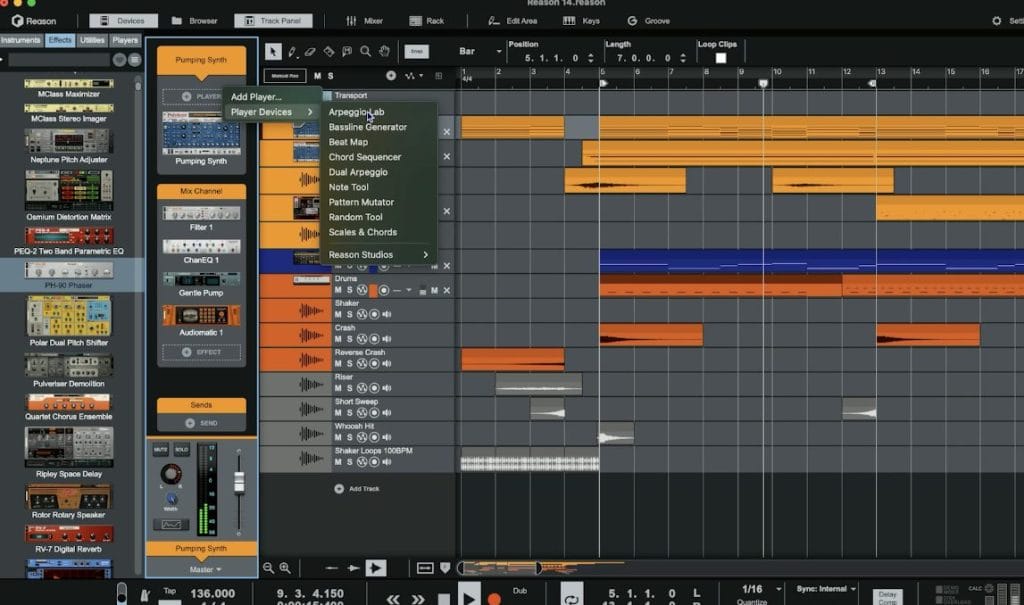
Reason Studios is treating Reason 14 like a real reset, and from the look of this update, that is the right move. For a long time, Reason has had a loyal audience because of the Rack, the routing, and the way it invites experimentation. At the same time, that same identity could slow people down as projects grew and the workflow required too much back-and-forth between views. Reason 14 looks like the version where the company finally decided to deal with that head-on.
The biggest change is the move to a track-centric workflow. That may sound simple on paper, but in practice, it changes how producers move through a session. Instead of forcing users to constantly jump between the sequencer and deeper Rack views to keep track of what is happening, Reason 14 brings key track information into a clearer working space. The idea is straightforward. Keep the user focused on the music, not on hunting through the interface for what should already be visible.
That feels like a smart direction because it brings Reason closer to how a lot of producers already work today. People want immediacy. They want visibility across the signal path, effects, sends, and panning without losing the modular side of the software that made Reason different in the first place.
A stronger workflow built around tracks and visibility
At the center of Reason 14 is the new Track Panel, which gives users a fuller overview of the selected track, including devices, signal chains, send levels, and panning. Paired with Rack per Track, which gives each track its own dedicated Rack column, the workflow is much easier to read and navigate during active sessions.
That is probably the most important part of the update. Reason has always been powerful, but power on its own does not guarantee speed. This redesign looks aimed at reducing friction so users can stay in a creative headspace longer. The new floating Rack window also helps there, since it gives producers a plugin-style way to work when they want it, without stripping out the modular framework the platform is built on.
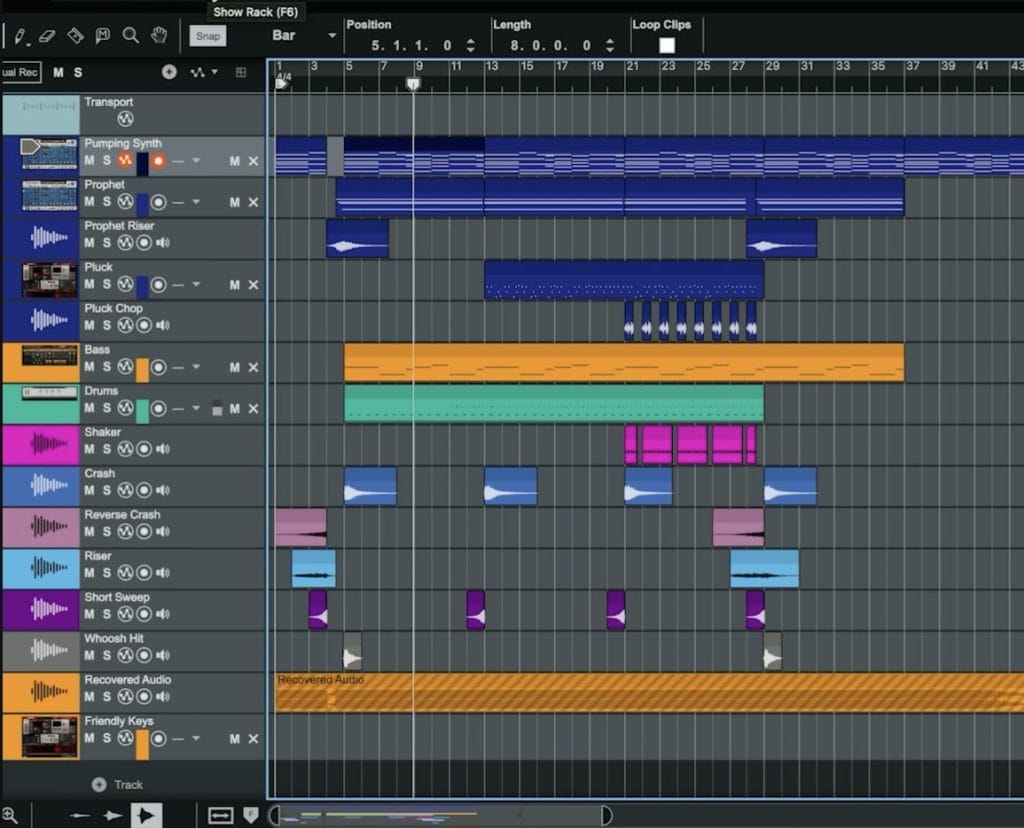
The sequencer changes support that same goal. Track folders should make larger sessions cleaner to manage, looped clips should speed up arranging, and improved piano roll editing with velocity handles should make note work less clunky.
RV-9 and the rest of the update push Reason forward
The other major addition is RV-9 Reverb Station, which steps in as the successor to RV7000 MkII. Rebuilt from the ground up, RV-9 combines algorithmic and convolution approaches, and it adds shimmer, ducking, integrated EQ, and a wider set of spatial options. That is a real update, not a cosmetic rename, and it gives Reason one of the clearest feature highlights in the whole release.
Beyond that, the remaining additions all point in the same direction. Dark Mode Mixer keeps the visual language consistent, MIDI note chase improves playback accuracy, automatic tempo detection helps imported audio fall into place faster, and the updated Factory Sound Bank adds over 900 new drum samples plus new patches.
Reason 14 looks like a version focused on removing obstacles. It keeps the parts of Reason that people care about, but it presents them in a way that feels better aligned with modern production habits. If the public beta holds up, this could be one of the strongest updates the platform has had in a long time.
The post Reason 14 Reworks the DAW Around a Faster Track-Centric Workflow appeared first on Magnetic Magazine.