


R-TRYBE’s RETREAT 001 is the first release connected to the R-TRYBE Retreats, a Various Artists compilation that sets the tone for the wider project.
R-TRYBE operates as both a label and creative platform founded by Huxley, Ramin Rezaie and BAKKIS. Built around a music-first philosophy, the project connects producers through education, feedback and collaboration, combining an online community with in-person writing retreats.
Compiled in-house, the record brings together forward-leaning club music shaped by shared time and collaboration during the retreat environment. From deeper, rolling material to late-night hypnotic cuts, the focus is on cohesion and functionality across different settings.
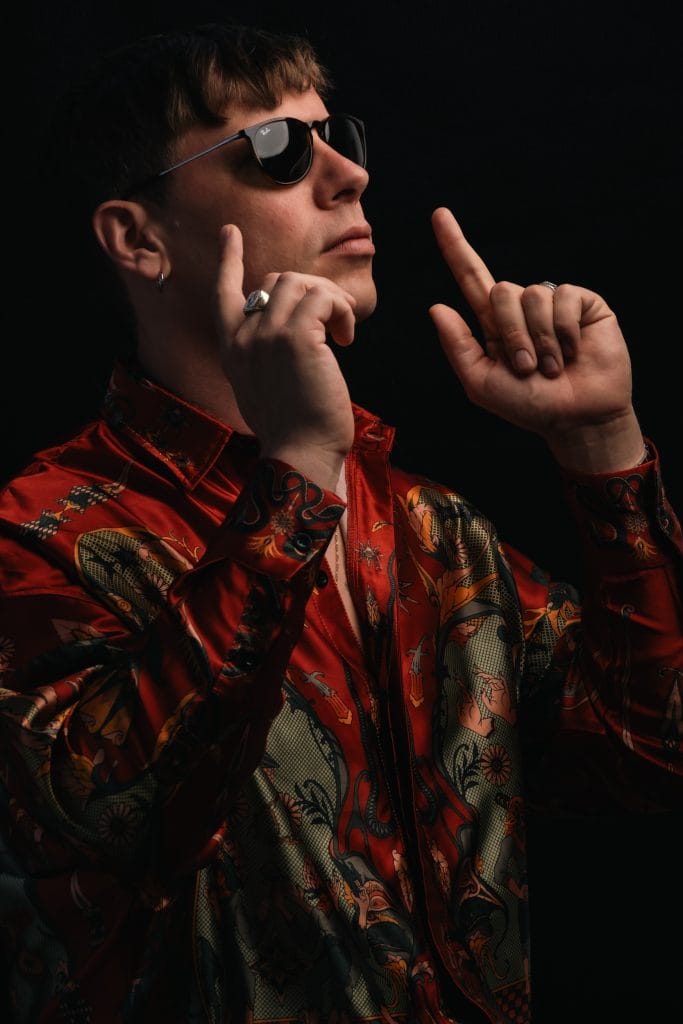
Karjala is one of the artists involved in the project, and his single, Conspiracy 002 (The End of Summer), is a exceptionally accomplished track. We get the lowdown on how it came together with him here.
Conspiracy 002 (The End of Summer) has a title that suggests atmosphere and narrative as much as club function. What was the initial idea behind the track, and how did that idea evolve while you were working on it during the retreat?
I’ve always been a big hip hop fan, and the sound of the mid-to-late ’90s in particular has a special place in my heart. Producers like RZA, DJ Shadow and DJ Premier were huge influences on me growing up.
For a while I had the idea of making a house track inspired by that era. I didn’t want to remix or flip an old hit, but rather try to capture some of the atmosphere and production techniques from that time. I experimented with different sample ideas, but I wasn’t really happy with the results.
During the retreat I decided to give the concept another try, and this time it started coming together. The track is built around vocal samples from an old VHS recording featuring conspiracy theorists Jordan Maxwell and Anthony J. Hilder discussing the American Illuminati. I’m not personally a believer, but I’ve always enjoyed the aesthetic of the occult, and here it created an interesting contrast with the more laid-back, almost tropical feeling of the music.
Interestingly, while looking into Hilder’s background afterwards I discovered that he actually produced surf music in the 1960s, which felt like a strange but fitting connection given the summery atmosphere of the track.
The R-TRYBE retreats bring producers into the same physical environment for a week of studio sessions and discussion. From your perspective, how did being in that setting influence the way you approached production compared to working alone in your usual studio?
For me the main difference was focus, speed, and overcoming obstacles.
In my own studio I can sometimes get bogged down in very small decisions or spend too long trying to perfect a tiny detail. The line between writing new ideas and finishing a track can become blurry, which slows everything down.
At the retreat I challenged myself to move as quickly as possible and work on a new idea each day — to stay mainly in the creative mode and leave the nitty-gritty for later. I’ve always been more interested in the vibe and feeling a piece of music projects rather than its technical perfection. So I think it’s important to capture the essence quickly and without overcomplicating it, and then round things out and polish them a bit later.
Another big advantage was having experienced mentors around. Being able to ask someone to listen to your track for five or ten minutes and give you quick feedback, can really speed up the process compared to sitting alone at home.
A compilation like RETREAT 001 reflects multiple artists working within the same timeframe and context. When you listen across the record, do you recognise a shared sensibility emerging from the retreat, or does each track feel like a snapshot of the individual producer behind it?
I think each track really reflects the individual producer behind it. Everyone comes from a different place, both musically and culturally.
If anything, the atmosphere at the retreat encouraged people to follow their own voice rather than trying to conform to a shared sound. It felt more like a celebration of everyone’s different musical backgrounds and tastes.
R-TRYBE places a strong emphasis on structured feedback and peer critique. Was there a particular piece of advice or technical suggestion from another participant that ended up shaping Conspiracy 002 in a meaningful way?
Not specifically for Conspiracy 002.
During the week, the feedback that had the most direct influence on my music actually related to a different track. I was already quite happy with where it was, but someone suggested trying an acid bassline on top. At first I was a bit hesitant, but after giving it a try it really pulled the whole track together.
Retreat environments often blur the line between collaboration and individual authorship. Even though this is a solo track, were there moments where conversations, shared listening sessions or late-night studio exchanges fed directly into the decisions you made while producing it?
There were definitely moments where certain musical decisions were questioned during conversations.
A few people asked about the “Bobby, Bobby” vocal sample, which they felt was a bit jarring or perhaps unnecessary in the context of the track. For me, though, it was an important shout out to RZA and his Bobby Digital moniker.
There were also some questions about the saxophone. One person mentioned they’re not a big fan of sax in dance music and tend to find it a bit cheesy. I usually would ten to be in the same bout. But in the context of this track I think it plays an important role.
Those kinds of small challenges can actually be very helpful. Sometimes they make you realize that something doesn’t belong in the track and you remove it. Other times they strengthen your conviction that it should stay. In this case I even decided to double down on the sax moment and emphasize it a bit.
Your track sits within a compilation that moves from deeper material into more hypnotic late-hour territory. When building Conspiracy 002, were you imagining a particular time or context in a club, or was the focus more on creating a piece that could sit flexibly across different sets?
A lot of the music I’ve been writing recently could work either in a warm-up set or in the more hypnotic later parts of the night. That said, I don’t really write with a very specific time slot in mind. I also think it depends a lot on the DJ who plays the track. In the right hands it could easily become part of a longer journey through a set.
In general I’m not a big fan of classifying music too strictly. For me it’s more about mood, and that mood can shift depending on the DJ, the club, the crowd, and the particular night.
Platforms like R-TRYBE aim to create a more transparent and community-driven release process, where members share works in progress and even vote on submissions. From an artist’s point of view, does that model change how you think about releasing music compared to the traditional label route?
In the end the basic dynamic is actually quite similar. You still send your track out and hope someone likes it enough to release it. The difference here is that you know people are actually listening. When you send music to traditional labels it often feels like it might disappear into a void, and many times no-one ever listens to it.
The voting system is interesting because everyone has their own criteria. When you yourself vote, you’re forced to reflect on what actually matters to you in a track — whether that’s genre, technical skill, atmosphere, originality, or something else. At the same time you never really know what criteria other people are using when they vote.
Because R-TRYBE covers a fairly broad range of styles, that diversity becomes part of the process as well. In communities that focus on a much narrower sound the dynamic might be quite different.
For producers who might be considering attending the next retreat in Portugal, what part of the experience surprised you the most once you were actually there, whether creatively, technically, or simply in terms of how people interacted around the music?
Since this wasn’t my first time participating in a music production retreat, there wasn’t anything that surprised me too much.
But what I always enjoy in these environments is the shared love of music. You have people from very different backgrounds — different nationalities, ages, scenes, and musical upbringings.
Some of my favorite moments are actually the evenings, when people take turns on the decks or on the AUX and share the music they love with the group.
RETREAT 001 is out now on R-TRYBE
The post R-TRYBE is nurturing the next generation of house music stars appeared first on Magnetic Magazine.