



Table of Contents
When I first brought the MIXX Revival 55 turntable into my studio (man cave), I tried to approach it the same way I would if a friend asked me whether it made sense for their living room, not whether it could hang with a dedicated hi-fi setup. That distinction matters because this player is very clear about what it aims to be. It presents itself as a portable, all-in-one record player designed for ease of use, visual appeal, and flexibility, not as a component meant to anchor a traditional stereo system designed for audiophiles with $10k+ sound systems.
But once it was out of the box and set down, the immediate impression was that it felt intentional, at least for what it was aiming to do.
The suitcase-style design is not subtle, but it also does not feel flimsy or performative. Picking it up, opening the case, and setting it in place felt straightforward, and nothing about that initial interaction raised concerns. Overall, it seemed super user-friendly (which again, is something necessary for a device of this price point aimed at this corner of the market).
As I started using it regularly, what stood out most was how little it demanded from me. I did not need to rethink where it lived, how it connected, or how I interacted with it. I could open it, play a record, let it run while I was doing other things, and close it again when I was done. That kind of friction-free use is exactly what this category lives or dies on. So let’s dive a bit deeper into everything it can do (…and some things it can’t).
How the design fits into an actual living space
The suitcase form in real use
The Revival 55 is built around a portable suitcase format, and that design choice shapes the entire experience. In practice, that meant I was comfortable moving it from room to room without hesitation. The carry handle feels secure, and the case opens and closes cleanly without feeling loose or awkward. Overall, pretty cool user experience while handling.
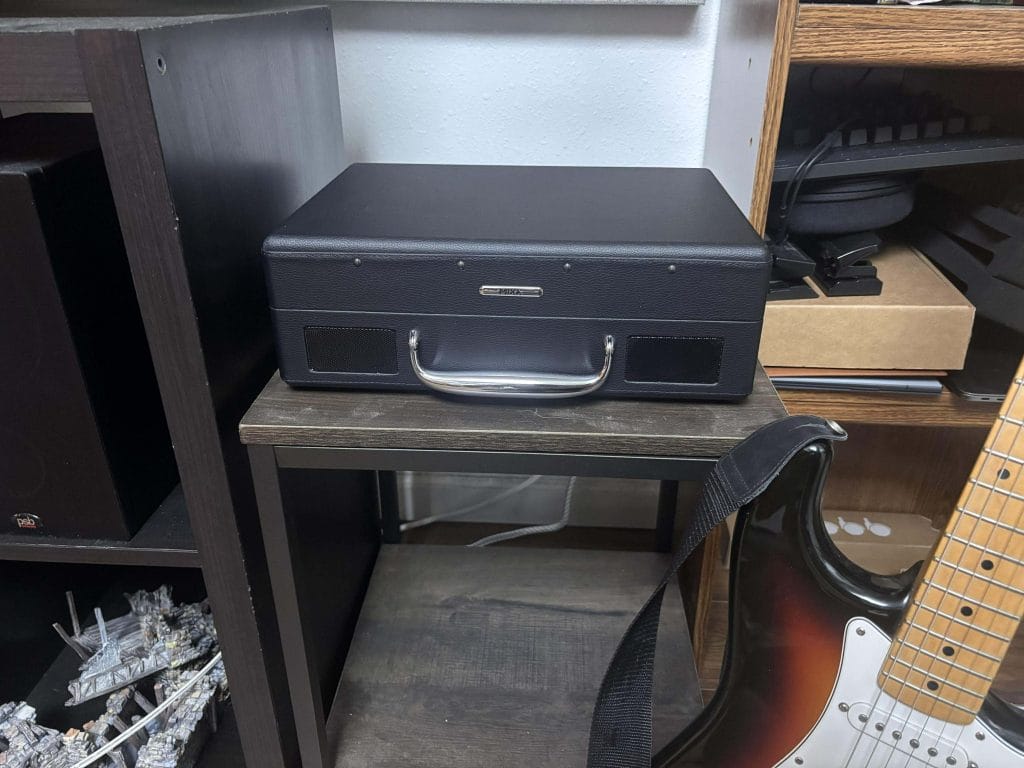
The body has enough weight to feel stable once it is set down, which helps it feel planted rather than entirely toy-like. That last word is italicized because, at the end of the day, this is a budget-level record player, and it can be hard to escape that beginner-friendly feel at the price that it’s at. That being said, I never felt like I had to be overly careful when opening or repositioning the lid, which is important for something meant to be handled and moved. Over time, that confidence matters more than aesthetics alone.
Visual presence when it is not being used
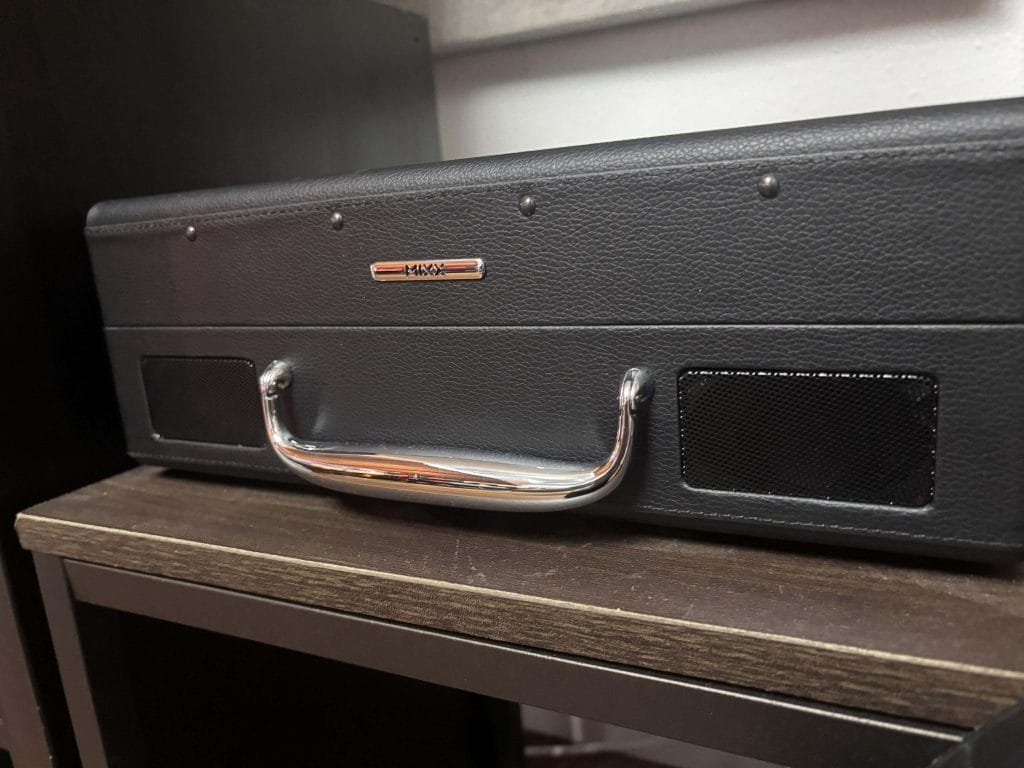
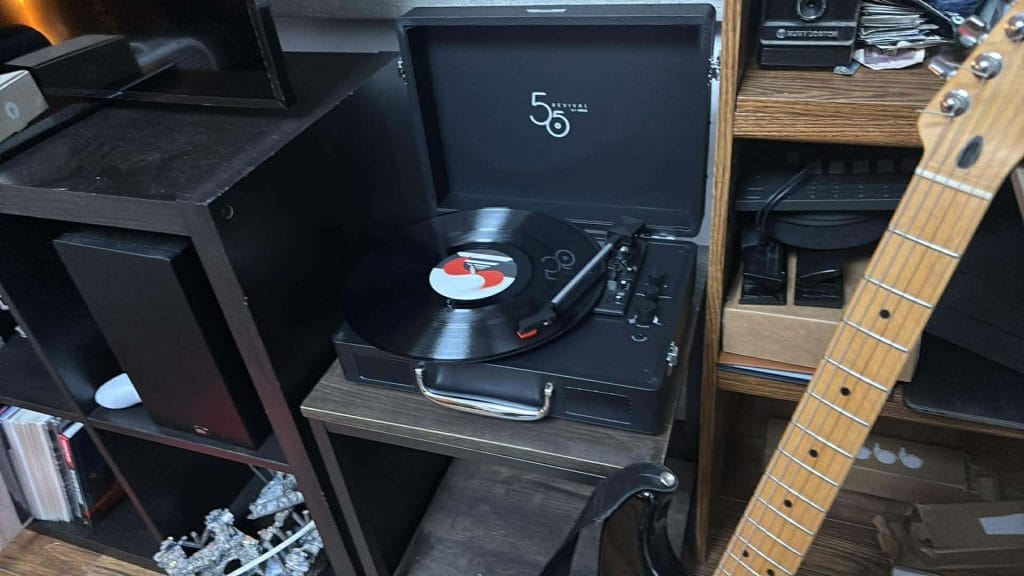
I left the Revival 55 out in the open the entire time I was using it. It sat on a small side shelf next to the TV in my man-cave, and it nestled into this little nook almost as if it was designed to be there (I promise you it was probably the only space left in this packed room of mine). The retro styling is unmistakable, but it does not overwhelm the space. It reads more like a deliberate design choice than a novelty and the color options definetly also play into that too. The version I spent time with blended naturally into the room rather than standing out for the wrong reasons. People noticed it, but it did not feel like something that needed explanation.
That matters if the player is going to live in a shared space rather than a dedicated listening room.
One practical detail I noticed over time is that the power adapter lives outside the case. That means when packing it up, you need to remember where the cable is. It is a small thing, but it is part of the day-to-day reality of using a portable, powered device.
Getting records spinning without overthinking it
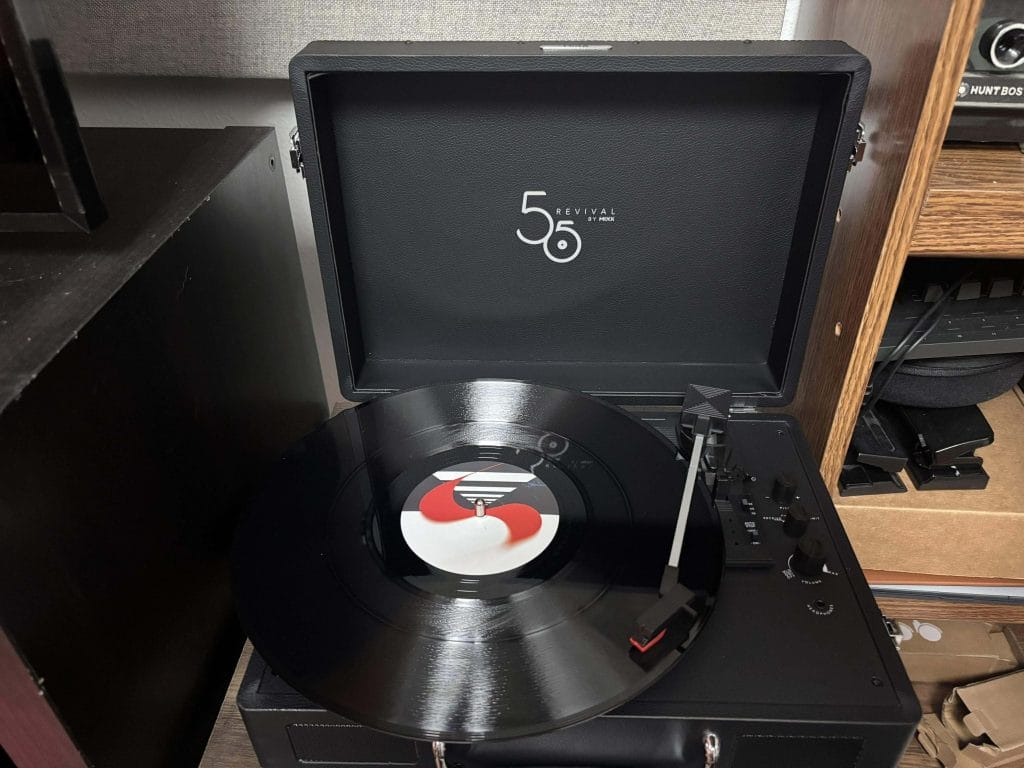
Setting up the Revival 55 took very little time. All in all, unboxing to playing the first record was all of about five minutes. Once plugged in and powered on, everything behaved predictably. Controls are simple, clearly laid out, and easy to understand without referring back to instructions. That ease of setup is one of the strongest arguments for this player.
The Revival 55 supports standard vinyl playback at 33 1/3 RPM and 45 RPM, and it includes a 45 RPM adapter. In daily use, switching between these formats was straightforward, and I appreciated not needing to source an adapter separately. That kind of small convenience reduces friction, especially for people who are newer to vinyl.
Lowering the tonearm and starting playback felt controlled and repeatable. I did not feel rushed or uncertain placing records on the platter, which helped the whole experience feel relaxed rather than technical. That sense of ease is critical for people who want vinyl to feel enjoyable rather than intimidating.
Once a record was playing, the Revival 55 faded into the background in the best way. I could let a side run while working or relaxing without needing to check on it constantly. The experience felt casual and comfortable, which is often what draws people back to vinyl in the first place.
This player encourages listening as part of daily life rather than as a dedicated activity that requires focus and preparation. That distinction is important, because I truly believe it defines who this product is really for.
Bluetooth and how it changed how I used it
Streaming vinyl beyond the built-in speakers
One of the defining bits of the Revival 55 is its Bluetooth connectivity, and in real use, that flexibility made a noticeable difference.Sure, this level of ease when it comes to connectiveity is pretty par for the course these days for vinyl players, but it’s still worth mentioning regardless. Being able to send vinyl playback to external Bluetooth speakers wirelessly immediately expanded where and how I could listen.
Pairing was straightforward, and once connected, the player stayed reliable. This made it easy to enjoy records through larger speakers without changing the core setup or adding complexity. For a lot of people, this is where the Revival 55 makes the most sense.
Using the player as a Bluetooth speaker
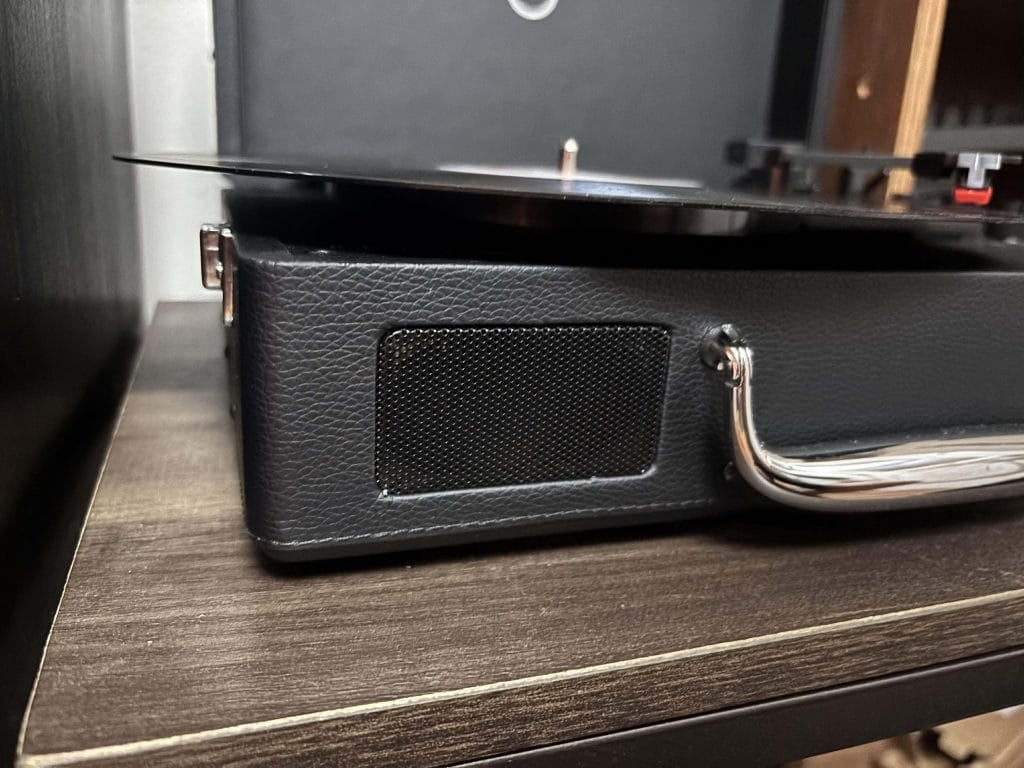
The Revival 55 also works as a Bluetooth receiver so that I can stream music from a phone or tablet through its built-in speakers. While this is not the primary reason to buy a record player, it did make the unit feel more versatile. Personally, I don’t see why I would ever need this, since the record player is in my studio, which has pro-audio-level monitors and everything. Still, for somebody using this in a shared communal space, I could see it being valuable for sure.
Switching between vinyl playback and Bluetooth streaming was simple, and I did not feel like I was navigating different modes or workflows. It behaved like a single, unified device rather than two features stitched together.
This kind of flexibility matters in shared spaces where not every listening session revolves around records.
Built-in speakers and realistic expectations
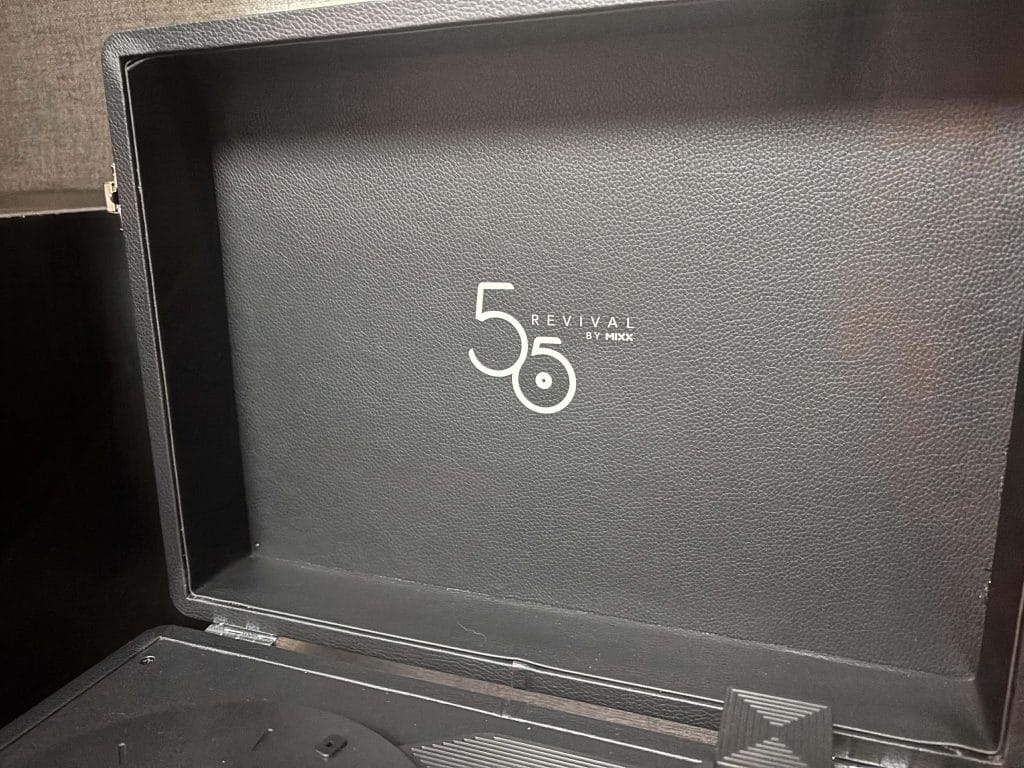
What they sound like in everyday situations
Listening through the built-in speakers, the Revival 55 delivered a clear sound for casual listening. Vocals came through cleanly, and the midrange sounded balanced enough for relaxed sessions. Bass response was limited, which is expected given the size and placement of the speakers but what can you expect from a record player at this price point?
At moderate volume levels, playback stayed comfortable and did not feel strained. This worked well for background listening, shared moments, and situations where convenience mattered more than immersion. I did not find myself fighting the sound or adjusting constantly. But when pushed harder, the sound reached its limits, which is again expected for an all-in-one portable player.
Staying within reasonable volume levels delivered the best experience or getting a better set of desktop speakers would be another way to sidestep the limitations of the smaller speakers.
Choosing how you want to listen
What I appreciated is that the built-in speakers felt like an option rather than a restriction. If I wanted more presence or room-filling sound, Bluetooth made that possible. If I wanted something quick and self-contained, the internal speakers handled it.
That choice is central to how this player fits into modern listening habits. It does not force one way of listening, and it does not require additional gear to be enjoyable.
Portability as an actual use case
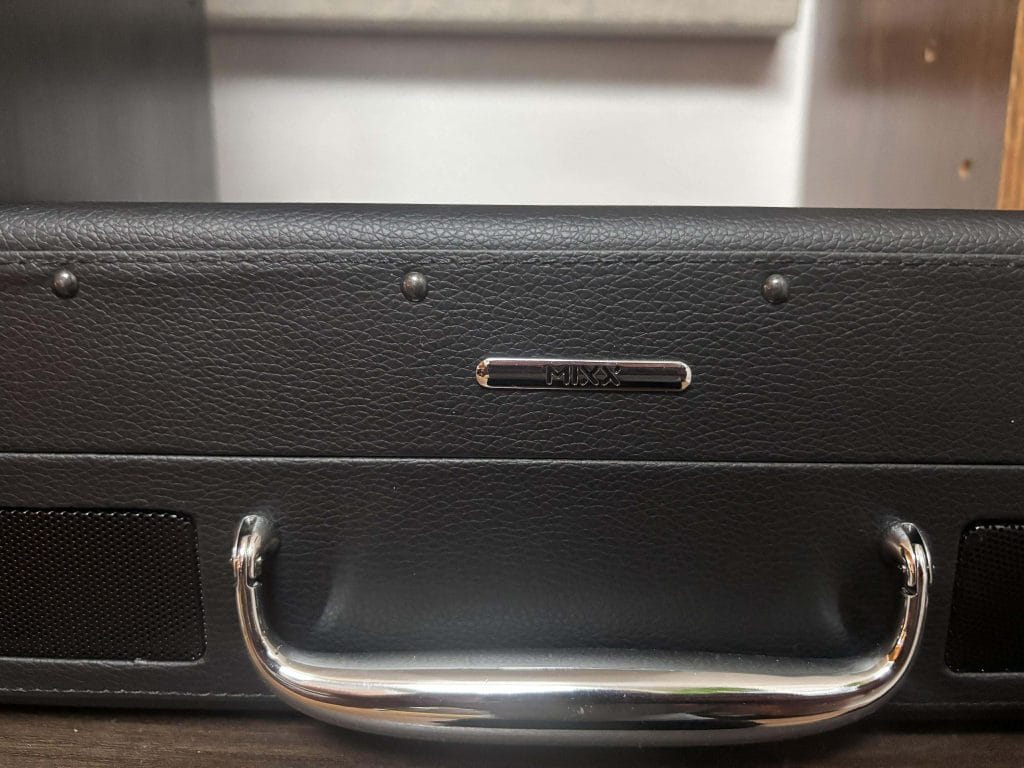
Because of the suitcase design, portability is not theoretical. I moved the Revival 55 between rooms multiple times, packed it up, opened it again, and never felt like I was risking damage. That kind of confidence is important if portability is going to be more than a marketing point.
The case protects the player well when closed, and opening it again feels consistent. Over time, I trusted it enough to treat it like something meant to move rather than something that needed a permanent home. This kind of portability works well for apartments, dorm rooms, shared homes, or anyone who does not want a permanent audio setup. It also makes sense as a secondary player, one that lives outside a main listening space.
It feels designed to adapt to real life rather than demand accommodation.
Who the MIXX Revival 55 Turntable is actually for
After spending time with the Revival 55, its strengths became very clear. It is easy to use, visually appealing, flexible, and approachable. It lowers the barrier to vinyl playback without turning the experience into a project.
For someone new to vinyl, or someone returning to records after years away, it offers a straightforward way back in. For someone who wants vinyl to exist alongside streaming rather than replace it, the Bluetooth functionality makes that transition seamless. This is not a player meant for someone chasing system upgrades or technical refinement. It does not pretend to be that, and evaluating it through that lens misses the point. Its value lies in how smoothly it fits into everyday listening
The post MIXX Revival 55 Turntable Review for Beginners and Casual Vinyl Listeners appeared first on Magnetic Magazine.