



Table of Contents
Above Image: Me DJing at Portland’s 45 East
Music promotion now runs through digital platforms that decide what gets surfaced, what gets repeated, and what gets ignored. That reality changes the job for artists, because promotion does not end when you post a clip or send a pitch. Promotion continues inside the platform after people interact with your song, and the platform keeps reacting to how people behave.
Analytics help you see that behavior clearly, then use it to make better decisions.
Without analytics, you promote in the dark, and you end up repeating the same actions because they feel productive, even when they do not move the numbers that matter. With analytics, you can connect actions to outcomes, then refine your plan without guessing where every track and every marketing cycle you put into your artist profile or music continues to build the foundation of what will, ideally, become a lasting career.
A massive shift here is that reach and real interest often look similar at first glance, then they separate fast once you look closer. A track can get a spike in plays from a playlist add, or a clip can get a spike in views from a trend, and those spikes can still fade with no lasting audience growth.
Analytics give you the tools to tell the difference between “people saw it” and “people cared enough to come back,” especially when you start connecting engagement data with revenue metrics like understanding how much Spotify pays per stream, That context turns numbers into strategy, helping artists build a real foundation instead of feeling like their entire career is left up to luck, when it can be fueled by data so you know exactly what your next move should be, and will be.
A Not-To-Brief Breakdown Of Discovery
How music discovery works now
On streaming platforms, discovery comes from search, playlists, and recommendation systems. On short-form video apps, discovery comes from feeds and sharing behavior. In either case, discovery tends to be driven by algorithmic distribution, meaning platforms respond to signals from listener and viewer actions.
That is why analytics matter beyond curiosity. They show you which signals your content is producing. On Spotify, it helps to separate streams, listeners, saves, and follows, since each metric points to a different behavior. A stream indicates that playback occurred. A listener tells you how many unique accounts played your track. Saves and follows tell you intent, and intent matters because it predicts repeat engagement.
On TikTok, which is absolutely dominating the space for music discovery, the same principle applies, but the signals are different. Views tell you that the video was served and started, while watch time and completion rate tell you if the content held attention. Likes, comments, and shares add detail, since they show which posts created a response strong enough for someone to act. Song uses, meaning user-generated videos that use your sound, point to adoption, and adoption can be a major driver of repeat exposure.
Once you accept that discovery is behavior-driven, analytics become the map. You stop asking “Did my promo work,” and you start asking “Which actions produced the behavior that platforms reward.”
Exposure versus engagement
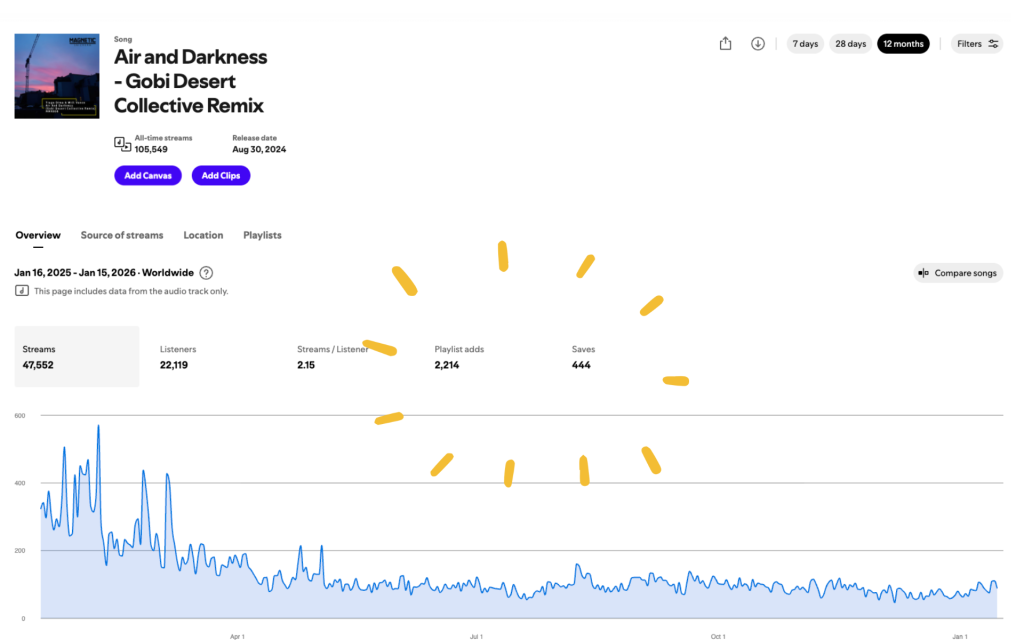
Exposure has value, but it becomes a problem when it hides weak engagement. An artist can keep chasing reach, then wonder why streams do not translate into long-term growth, ticket demand, or merch sales. Engagement metrics help you see the quality of attention.
On Spotify, a high stream count with a low save rate often suggests passive listening. That can still be useful, but it may not convert into fans who return on purpose. A lower stream count with a stronger save rate can be a better foundation for long-term growth, since it suggests the track gave people a reason to keep it.
On TikTok, a high view count with low watch time and low completion can mean the first second got attention, but the clip did not hold it. That kind of reach can disappear the next day because it did not create enough positive signals to keep distribution going. When you see that pattern, your next step changes. You focus on editing, pacing, and hook placement, then you test again. This is where artists often waste time, since they treat every spike as a win. Analytics help you treat spikes as data, then you decide if the spike signals a repeatable outcome.
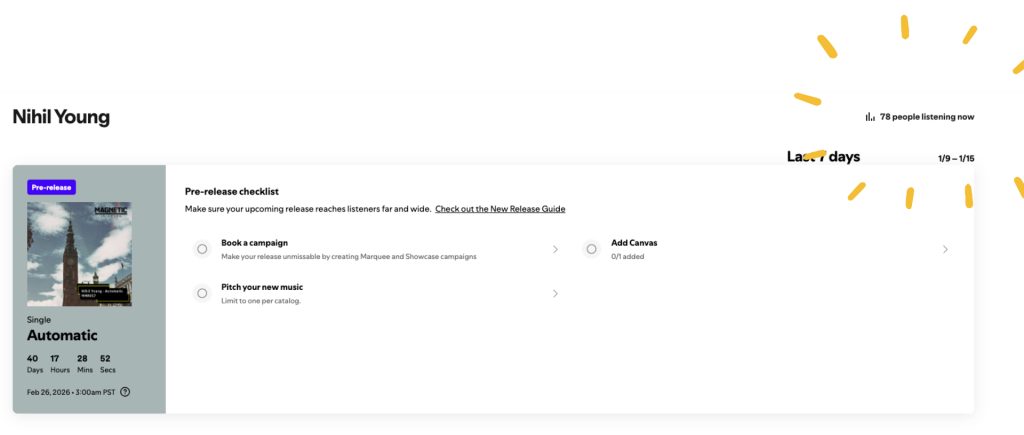
Real-time analytics let you respond quickly when a song starts moving. If you see saves accelerating, or you see a specific TikTok clip outperforming your baseline, you can turn that signal into action that same week. You can make more clips using the same section of the track, you can tighten the edit and re-test, you can pitch to playlists while the track has visible momentum, and you can run a small paid push behind the asset that already proved it can hold attention.
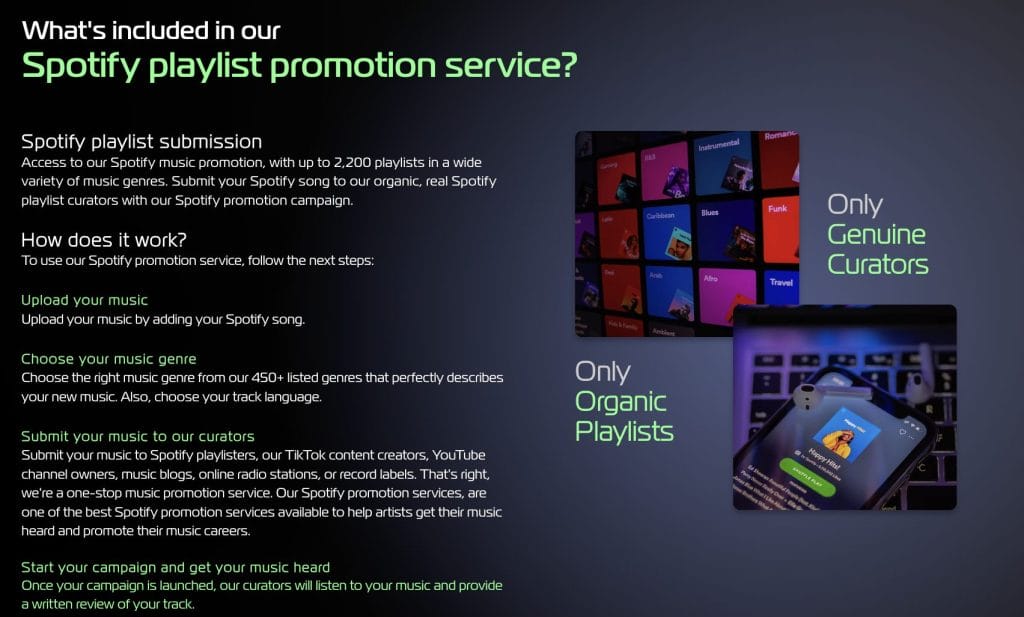
This is also where playlist outreach becomes time-sensitive, and it helps to have a clean workflow. When a track starts performing and you want to submit to curators quickly, One Submit can help you find relevant curators and send targeted submissions without losing a week to research and back-and-forth.
Using audience and location data without overthinking it
Audience data should not turn into stereotypes or forced decisions, and it should not lead you into fake branding. It should help you understand where your attention is coming from, then help you spend your limited time where it matters.
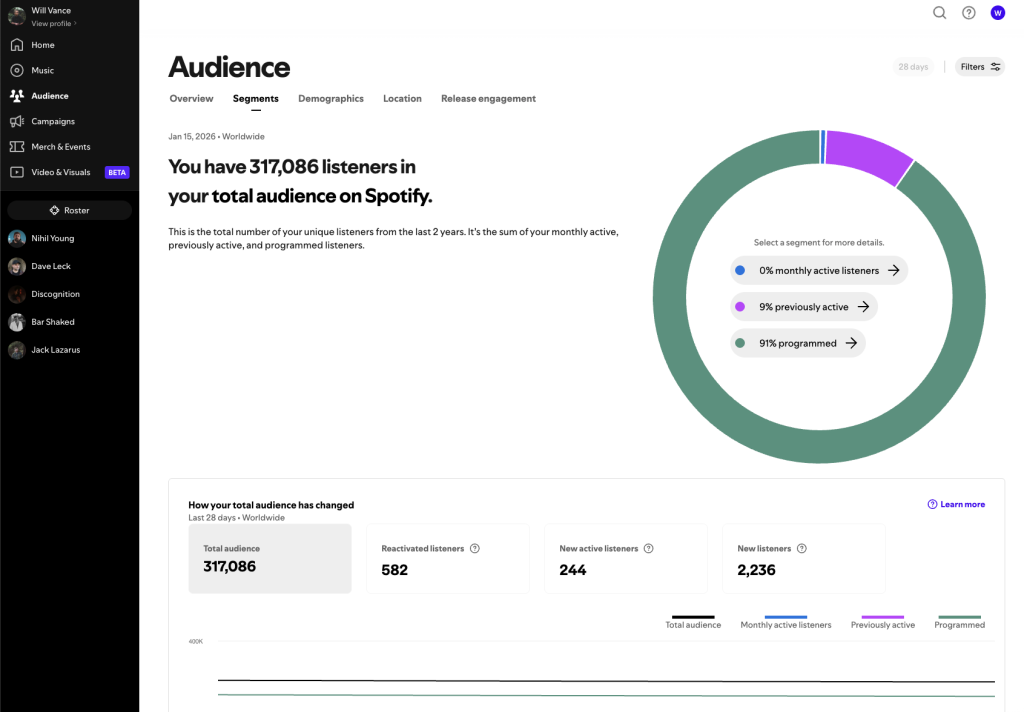
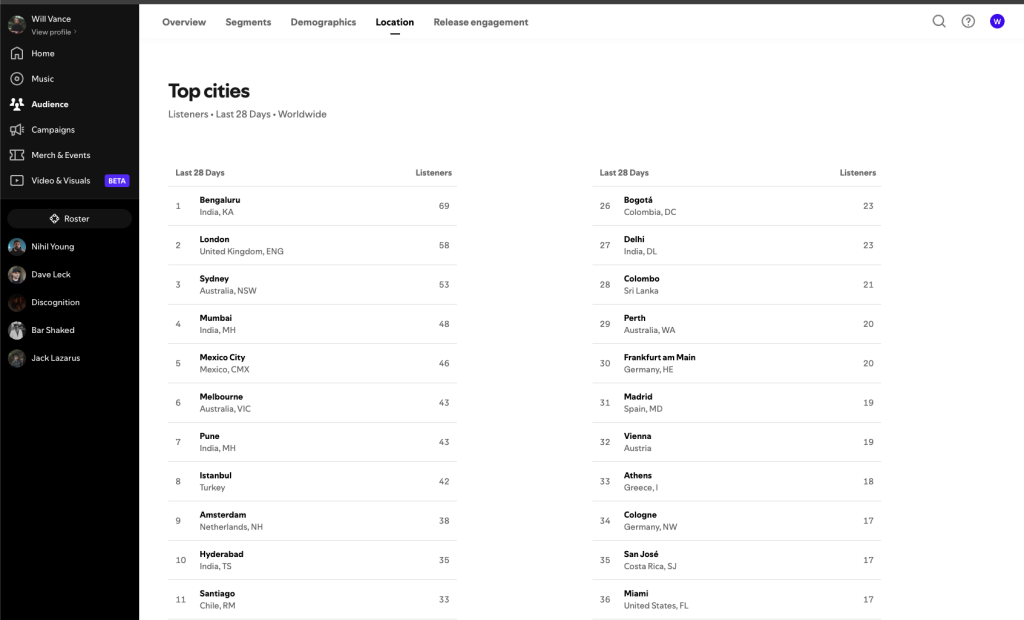
Spotify and similar platforms show aggregated demographics and top locations, and that data becomes useful once you connect it to action. If you see a city showing steady listener growth, you can run localized ads, reach out to local outlets, and connect with creators in that region. If you see a strong pocket of listeners in a market you did not expect, you can time posts to match that time zone and build small partnerships that fit that audience and eventually start positioning yourself to promoters in that market that you might be the right artist to get booked for one of their shows.
TikTok audience location data can support the same work. If a region starts showing up in your view distribution, you can test region-specific content that stays accurate and simple, then you can cross-check if the region also appears in Spotify city data. When those two data sources line up, you have a strong reason to invest in that region.
Turning streaming data into decisions
Spotify for Artists is valuable because it lets you see streaming behavior in context, then convert that context into decisions you can act on. It has a lot of numbers, but the goal stays simple: you want the dashboard to tell you what listeners did after they found your track, then you want to use that information to decide what to push next.
Spotify as a progression
If you treat Spotify metrics like a scoreboard, you focus on streams and you miss the story. A better way to read the observed metrics is to think in steps.
First, a listener hears the track through a playlist, a search, a profile click, or a recommendation. That creates streams and unique listeners. Next, the listener either leaves, or they take an action that signals intent, such as saving the track, following you, or adding the track to a personal playlist. Those actions matter because they increase the chance of repeat listening and future discovery through the platform’s own recommendation mechanisms.
That is why saves and follows often deserve more attention than streams. Streams can come from passive exposure. Saves and follows mean the listener chose to keep a connection.
What your catalog is teaching you
Track-level analytics help you compare songs across your catalog. This matters because a single release may show noisy results, while catalog-level patterns show consistency.
When you look at track-level performance, it helps to sort by the metrics tied to intent, then use streams as context. If one song has strong saves relative to its streams, that song may deserve additional promotion, more short-form content, and more playlist outreach. If another song has high streams but weaker intent signals, that track may be driven by temporary placement, and you may treat it differently in your planning.
This also helps with creative planning. If you see that certain tracks hold attention longer, or lead to more saves, you can ask what they share. It can be tempo range, arrangement pacing, vocal placement, or the length of the intro. You do not need to force a conclusion, but you can use these patterns to make future releases more aligned with how your listeners respond.
Knowing where streams came from
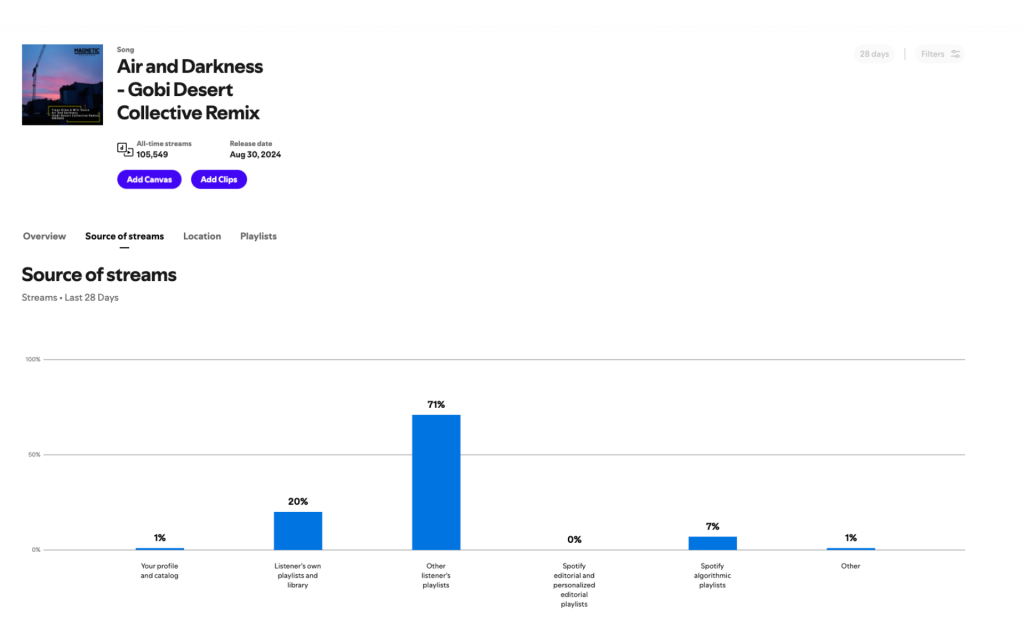
Spotify breaks down streams by sources, including algorithmic playlists, editorial playlists, listener-created playlists, and direct sources like your profile. Each source type implies a different path into your music, and it often implies a different plan.
If a track is gaining streams through algorithmic playlists, your focus shifts to maintaining engagement signals, since the platform tends to keep recommending songs that hold listeners and convert them into repeat actions. That means focusing on content that drives listeners back to Spotify, then watching saves and follows closely.
If listener-created playlists drive a meaningful share of your streams, you likely have community traction. In that case, outreach and relationship building can matter more than short-term ad spend. You can also use the playlist titles and curators as clues about where the track fits socially, then use those clues to guide your content framing.
Editorial playlist streams are often large and fast, then the question becomes retention. If an editorial add creates a spike, analytics help you measure what remained after the spike. If the track converts into saves and followers during that window, then the editorial moment has lasting value.
Listener segments and planning
Spotify audience data becomes powerful once you use it to plan campaigns.
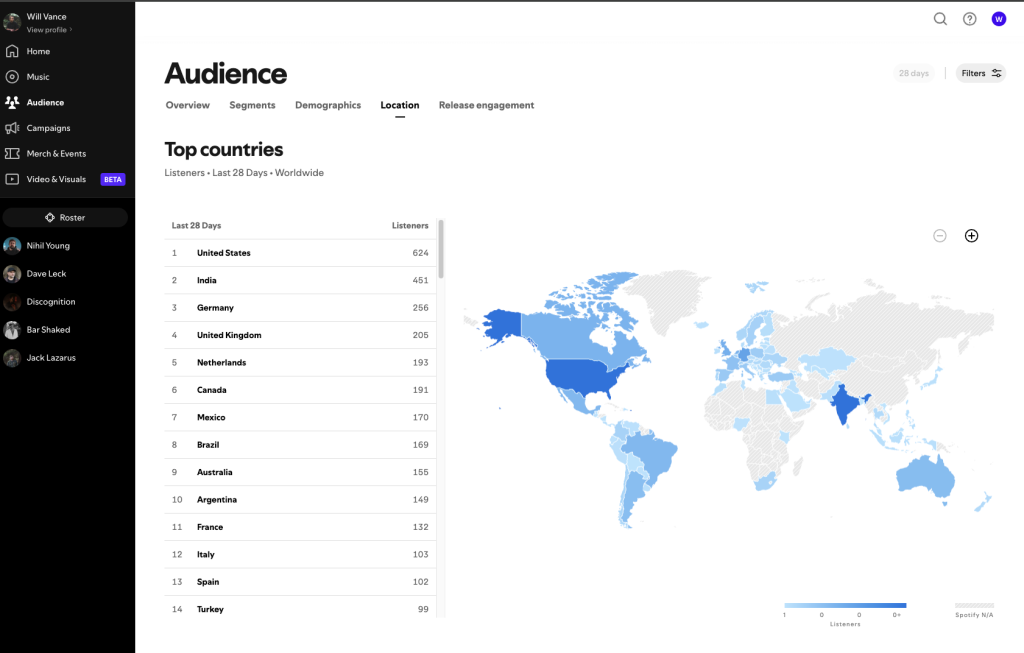
You can look at listener segments, then decide which group you want to influence next. If you see a large programmed audience and weaker repeat actions, you can focus on content that drives repeat listening, and you can plan follow-up releases that keep listeners connected to your profile. If you see a strong base of repeat listeners, you can focus on deeper engagement steps, like driving ticket clicks, selling merch, or growing your email list.
Location data supports the same logic. When you see a city climbing, you can test ads in that city and create content that fits the context, and you can also reach out to creators in that region to build a small wave of local attention. This can be especially useful for artists with limited budgets, because it allows targeted spending instead of broad spending.
This is also where playlist outreach fits cleanly. When you can point to performance patterns like save rate and top cities, your playlist submissions get sharper. You can make a case that the track has engagement signals and geographic traction, then send it to curators who program music in that lane.
One Submit fits well here too, since it gives you a practical way to find curators and submit music based on the lanes your data supports, then you keep your outreach aligned with what listeners already respond to.
Integrating analytics
The biggest improvement most artists can make is building a single measurement habit across platforms, then using it to plan what they do each week. This is how you avoid the feeling of random posting, random pitching, and random spending.
A weekly review that stays practical
A clean weekly review does not need to be complicated. You check Spotify for changes in listeners, saves, follows, top tracks, and top cities, then you check TikTok for follower growth, watch time, completion rate, shares, and song uses.
Then you connect the two. If a TikTok clip spiked on Tuesday, did Spotify show a lift by Thursday or Friday. If Spotify saves rose on a specific track, did your TikTok posts feature that track section, or did you post around another song. These connections help you decide what to repeat and what to stop.
Over time, this habit turns promotion into a plan with evidence. You stop guessing which song to push and which clip style to repeat, and you start letting the data narrow your options.
Acting on signals without overreacting
The goal is not to chase every fluctuation. The goal is to identify signals that repeat, then build around those.
If you see a track gaining saves and holds steady for multiple days, that is a strong signal. You can increase short-form output around that track, you can pitch the track to playlists while the momentum is visible, and you can run a small ad test focused on the cities already responding.
If you see a TikTok format outperform your baseline several times, treat that format as a series, then produce multiple versions that use the same structure while changing the context. This keeps your content consistent without making it repetitive.
This is also where tools that speed up outreach have real value. When a track starts showing intent signals and you want playlist submissions to land quickly, One Submit supports that moment by helping you find curators in the right lane and submit while the track has measurable movement.
Where analytics tools are going

Analytics tools keep evolving toward prediction, aggregation, and tighter links between attention and spending. You do not need to chase every new tool, but you do want to understand the direction, since it affects how promotion works.
Prediction and consolidated reporting
Tools are starting to score unreleased music based on early audience response, which can help artists decide which song to release first and where to concentrate effort. Consolidated dashboards also reduce friction by bringing multiple data sources into one place, which makes it easier to see trends without copying numbers into spreadsheets each week.
Even if you never pay for extra tooling, the mindset still helps. Promotion improves when you treat releases as testable assets and you treat content as measurable distribution, then you act on what the numbers show.
Segmentation, commerce, and privacy constraints
Platforms keep improving segmentation based on behavior, since behavior predicts future actions better than demographics alone. At the same time, platforms keep building commerce features that connect audience activity to spending, like tickets and merch surfaces. As those features expand, analytics will increasingly show you which content drives actions tied to revenue.
Privacy rules and platform policy changes also affect what data you can access, so long-term effectiveness comes from focusing on metrics that are likely to remain available. Engagement actions like saves, follows, watch time, completion, shares, and song uses are core platform signals, and those signals tend to survive policy changes because they are necessary for platform ranking systems.
If you build your promotion around those core signals, then you stay stable even when reporting formats change.
The post How Music Analytics Help Artists Grow on Spotify and TikTok: The Essential Things To Know appeared first on Magnetic Magazine.