


Table of Contents
Most producers already make content all day without thinking about it that way. Session notes, rough bounces, screen recordings, voice memos, half-finished ideas, all of that already exists before anyone opens an app or thinks about posting, which is why I wanted to write an in-depth article about content creation for music producers. The gap between those moments and useful public content really comes down to intention, not so much effort or time allocation.
Where things usually go sideways is when content starts feeling like an obligation and this is what breaks most producers and artists these days. Once it feels like something separate from the work, it pulls focus and starts draining energy. Producers rarely struggle with motivation. The friction shows up when content demands its own time, its own mindset, and its own pressure.
The way I’ve learned to approach this is by keeping content tied to whatever I’m already working toward. If I’m finishing music, prepping a live set, building a sample pack, or helping someone through a mentoring process, that work already has direction. Content fits best when it grows out of those goals instead of asking for a separate creative lane. That keeps it aligned with outcomes that actually matter, like moving tickets, selling products, or bringing people deeper into what I’m doing.
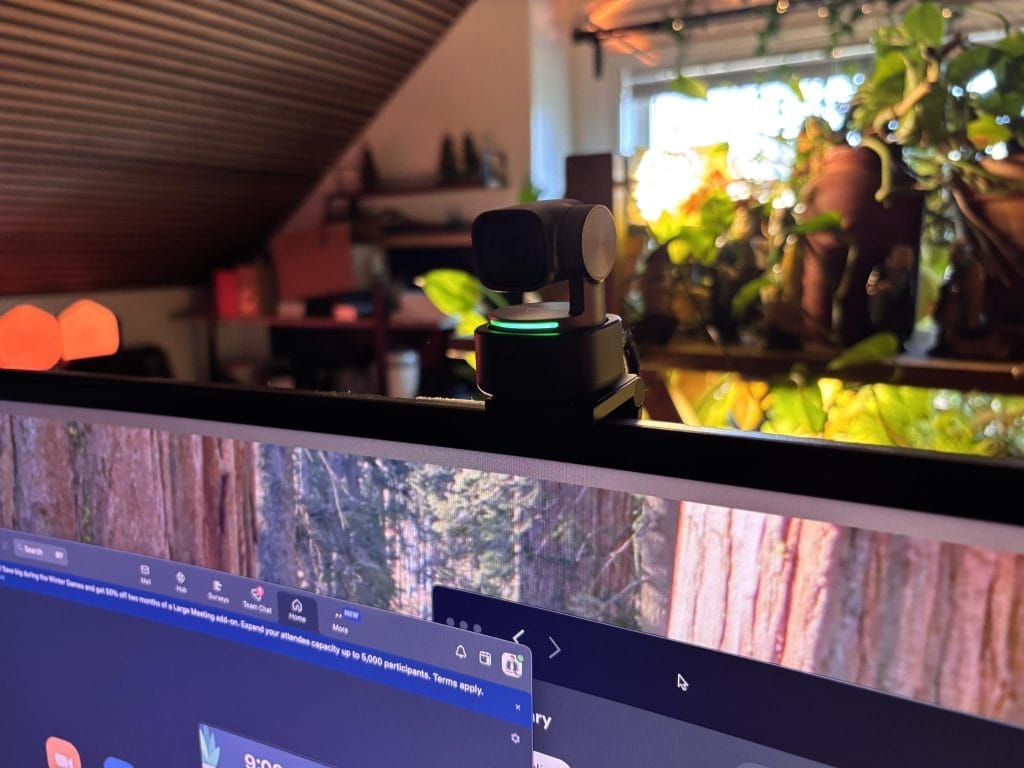
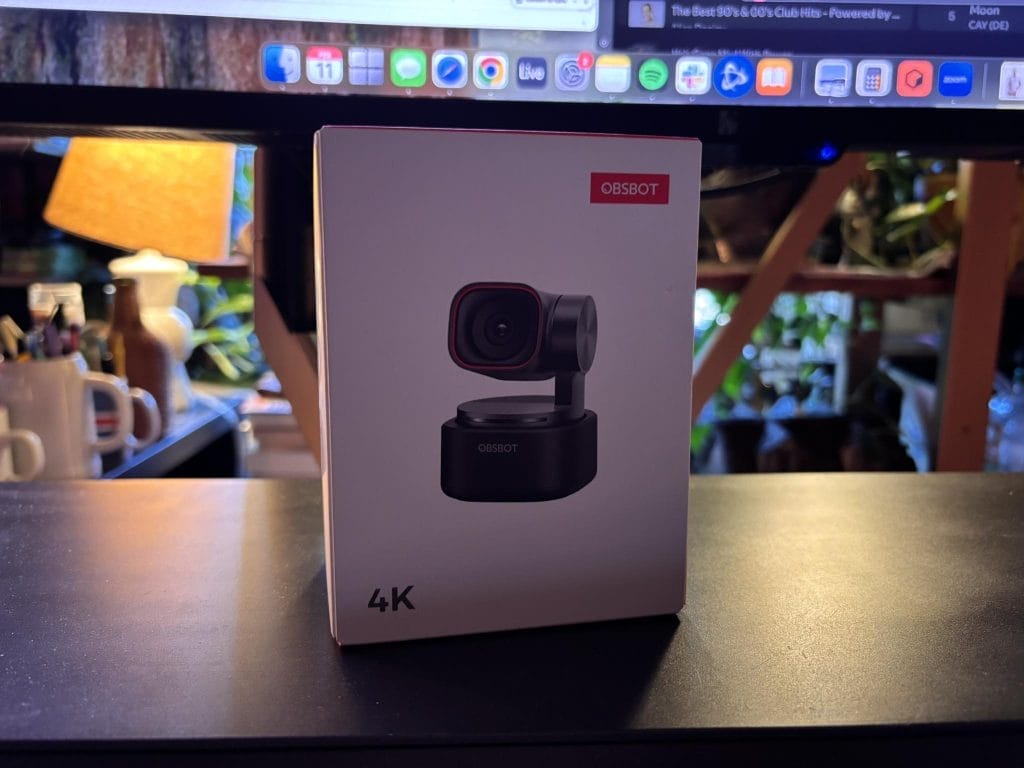
That’s why documentation tends to work better than presentation and trusting in something like the cameras from OBSPOT, who sponsored this article after they saw how much I loved their new Tiny 3 camera but who had no say in what I wrote about or how I used their products in the content creation itself, can make or break your entire content strategy.
I work the way I normally would, then I explain what happened, why I made certain calls, or what problem I was trying to solve. People connect with that because it reflects real decision-making in real time, not something cleaned up after the fact.
Understanding Your Audience and Your Actual Objective
Content tends to fall apart pretty quickly when the audience stays vague, because saying you want to reach other producers or music fans leaves too much open space and that lack of clarity shows up fast in the tone, the pacing, and the kinds of topics you end up circling around.
I mentioned this earlier, but it matters enough to slow down and really sit with it here.
Understanding who you’re talking to and what you want content to do has a direct effect on your stress levels and your outcomes, and a lot of frustration comes from people chasing an idea of success they haven’t actually defined.
People talk about making it as a producer all the time, but they rarely stop and ask what that actually looks like in their own life. Teaching, client work, releases, education, products, or smaller community-driven models all point toward different lifestyles, and none of them require the same audience or the same kind of content. Getting clear on that early saves a lot of second-guessing later.
Once you define what success looks like for you, content decisions stop feeling random.
You know who you’re speaking to, you know what you want the work to support, and you don’t feel pulled in ten directions every time you open an app. That clarity makes it easier to skip things that don’t serve your goals and focus on the conversations that actually matter.
Specificity carries real weight here. You don’t need massive numbers to build something sustainable, and you definitely don’t need to talk to everyone. The clearer you are about who your music, your content, and your career are in service of, the easier it becomes to show up consistently, speak naturally, and let the content act as a facilitator while the music stays at the center of the work.
Audio and Visual Quality Without Overcomplicating the Studio
Producers already understand signal flow, gain staging, and consistency, but a lot of that thinking disappears the second a camera enters the room, and that’s usually where content quality starts slipping. Things improve quickly when capture is treated like part of the studio chain, rather than a separate performance you have to switch into.
Audio comes first, always. If your voice sounds thin, boxy, or inconsistent from clip to clip, attention drops fast and people feel it immediately. Most of the time, that problem has nothing to do with needing more gear. It comes down to picking one microphone, learning how your voice actually sits on it, and placing it the same way every single time so your levels stay predictable and everything downstream becomes easier.
Visuals follow the same logic. Stability matters more than trying to look clever. A locked frame, even lighting, and a background that reflects how you actually work tend to communicate credibility without effort. Over-staging a space you never use usually reads as artificial, especially to other producers who know what a real working studio looks like.
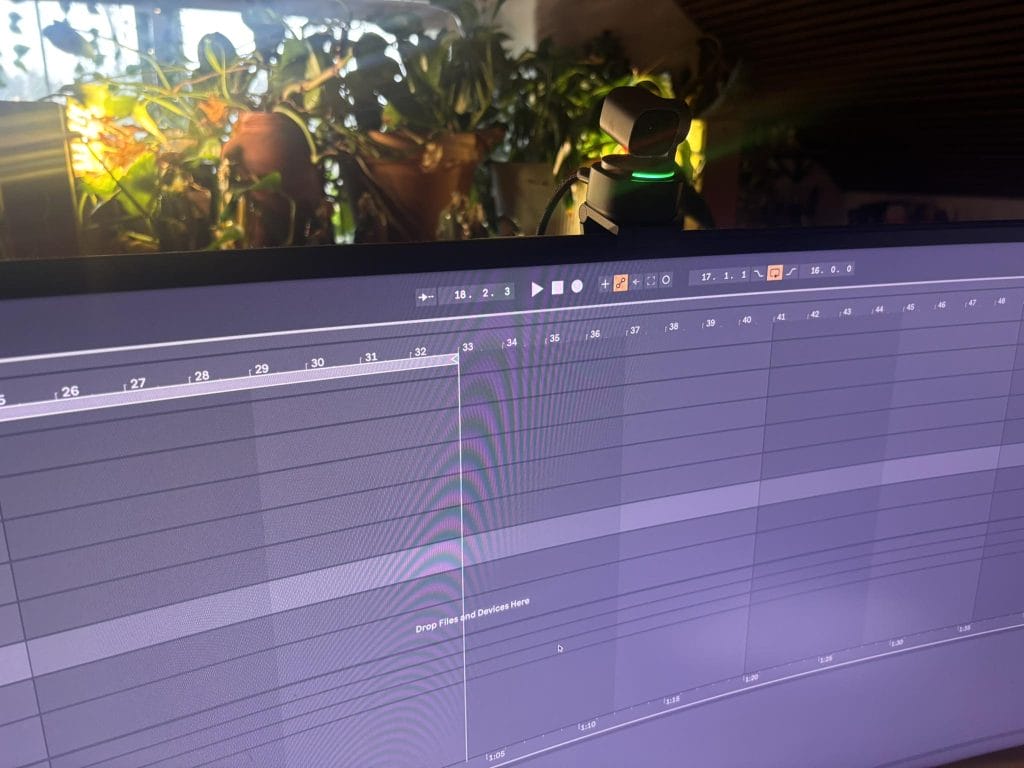
I’ve found setups built around OBSBOT Tiny 3 Series genuinely useful for that reason, because automatic framing and the onboard audio modes reduce small adjustments that normally pull you out of focus. Before doing any audio comparisons or publishing clips, update to the latest firmware so audio gain handling and the webcam’s audio processing behave as intended.
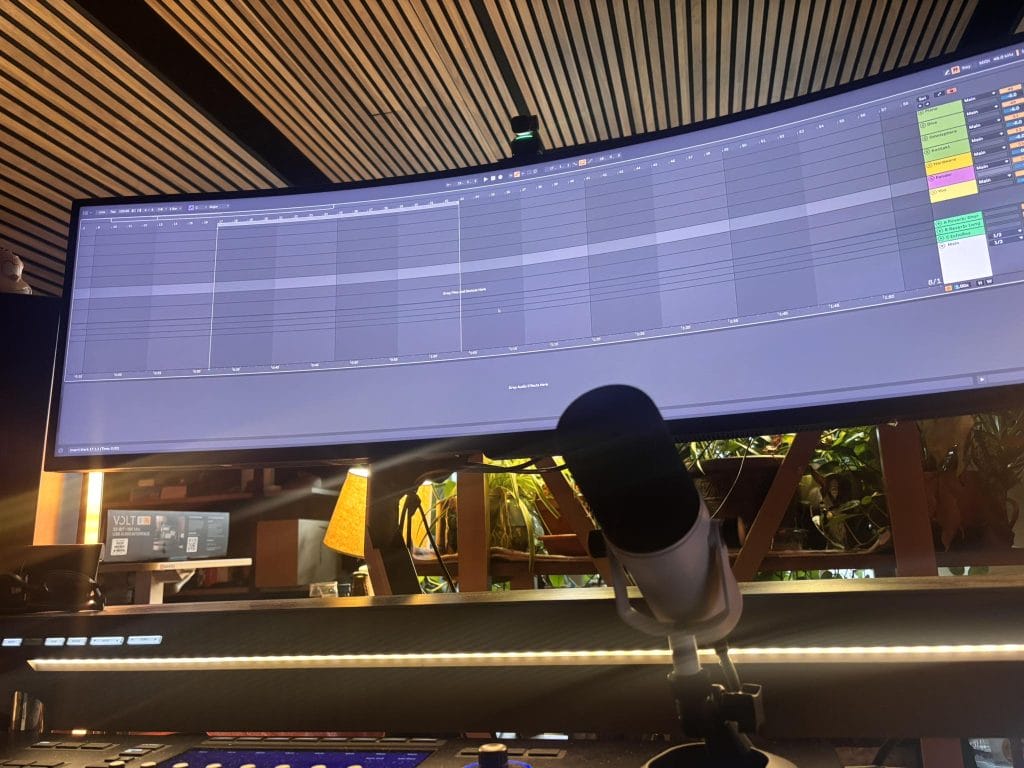
Keeping a camera and mic permanently wired, framed, and ready changes the relationship with recording. You sit down, hit record, and speak, then you move on. The studio starts functioning as its own set without feeling staged, the content stays consistent, and recording stops feeling like an interruption and starts feeling like part of the room.
Choosing Platforms Based on Behavior, Not Hype
Every platform rewards a different kind of behavior, and problems usually start when producers chase reach without thinking about how they actually like to communicate or spend their time. It’s easy to feel like you should be everywhere, but that mindset usually creates more friction than progress.
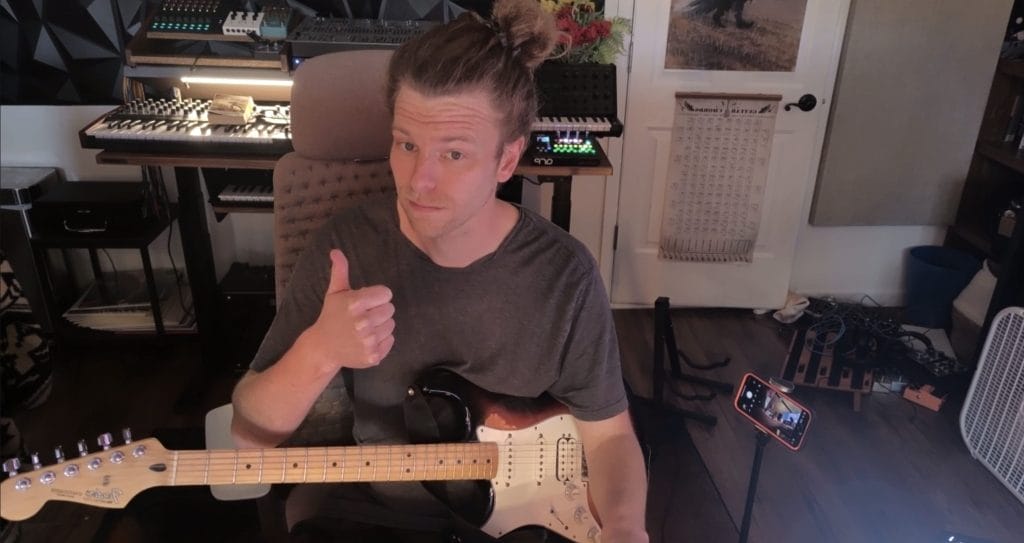
Short-form platforms tend to work best for quick ideas, small process moments, and single observations you can capture without breaking flow. Long-form spaces make sense when you enjoy explaining decisions, teaching concepts, or walking someone through how you arrived at something. Live formats fit producers who think out loud and feel comfortable talking through ideas in real time, especially when the conversation helps them clarify their own thinking.
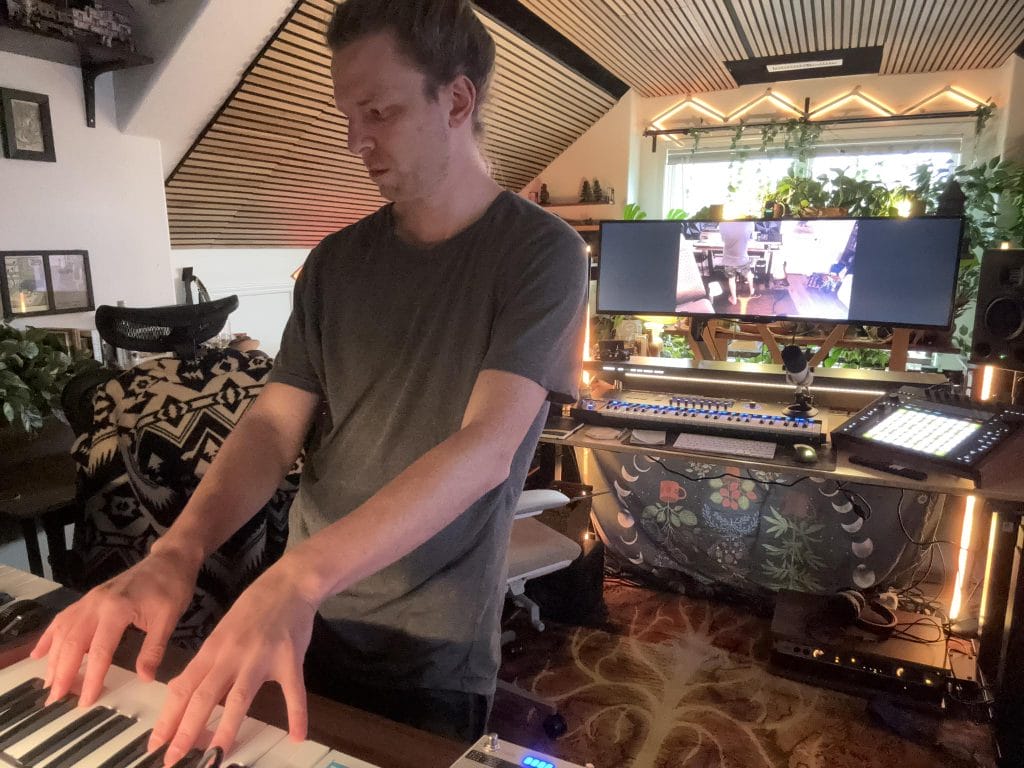
You don’t need to do all of it. In practice, one main platform where you show up consistently and one secondary space where conversations can go a little deeper usually covers more ground than spreading yourself thin. Consistency matters far more than coverage, and it’s easier to stay consistent when the format matches how your brain already works.
Platforms work best when they align with how you naturally think, speak, and process ideas. When the format fits your behavior, posting feels lighter, ideas come faster, and the content starts reinforcing your work instead of pulling you away from it.
Editing – Clarity Over Cleverness
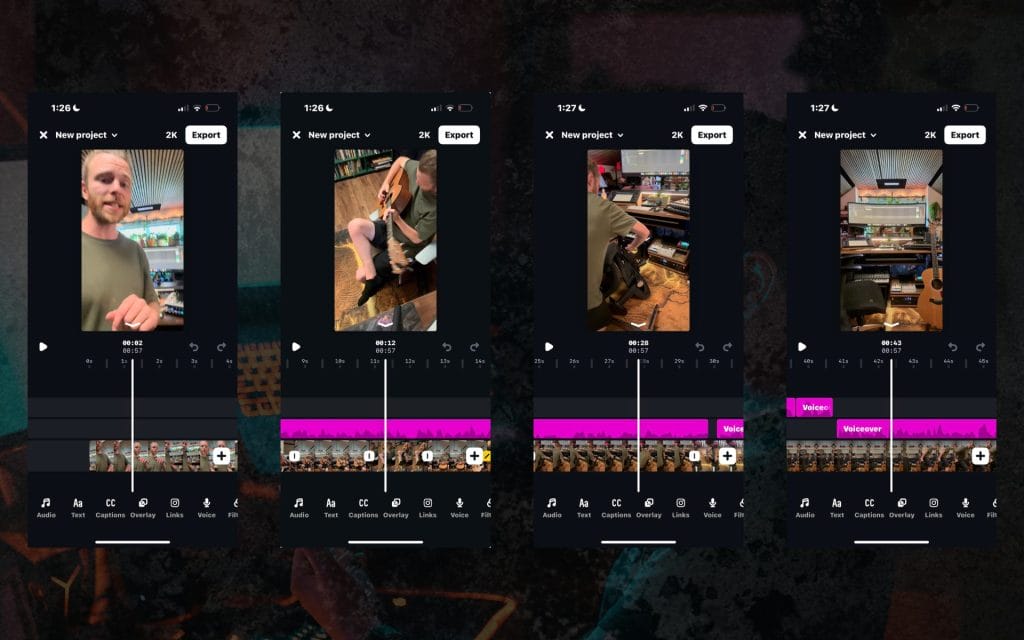
Editing exists to translate ideas clearly, not to impress other editors, and most producer content falls apart when it swings too far in either direction. Some clips get polished until all the personality gets sanded off, while others barely get shaped at all and end up dragging. Neither one serves the work.
With short-form content, pacing matters, but natural rhythm matters more. Cutting every pause flattens delivery and makes everything feel rushed, while leaving everything untouched creates dead space that people feel immediately. The goal sits somewhere in the middle, where conversational timing stays intact and distractions quietly disappear.
Long-form content plays by different rules. Structure carries more weight than speed. Clear sections, logical progression, and consistent audio keep people listening far longer than aggressive jump cuts or visual tricks. When the ideas flow cleanly, editing fades into the background where it belongs.
I usually recommend locking in a minimal editing template and then leaving it alone. Light EQ, consistent loudness, basic color balance, clean cuts. That setup handles nearly everything and keeps you from second-guessing every clip. When editing starts delaying publishing, the system stops working, because content should never compete with making music for attention.
A few months ago, Instagram rolling out its Edits app changed how I approach this almost overnight, especially for video. When you capture high-quality audio and video with OBSBOT Tiny 3 Series, you can move that footage straight to your phone and shape it quickly into social-friendly content without breaking momentum.
Edits gives you templates, filters, text styles, and effects that make fast iteration easy, and that flexibility matters.
It’s easy to fall into copying whatever format or style seems to be performing well, but that pattern usually leads to forgettable output. Everyone has access to the same presets, fonts, and transitions now, and that’s not a disadvantage if you use them intentionally. In the same way your music reflects a combination of influences, your editing choices can reflect how you think. How you pair filters with text, how you cut transitions, how you pace delivery all start forming a recognizable identity over time.
Live Formats, Streaming, and Real-Time Thinking
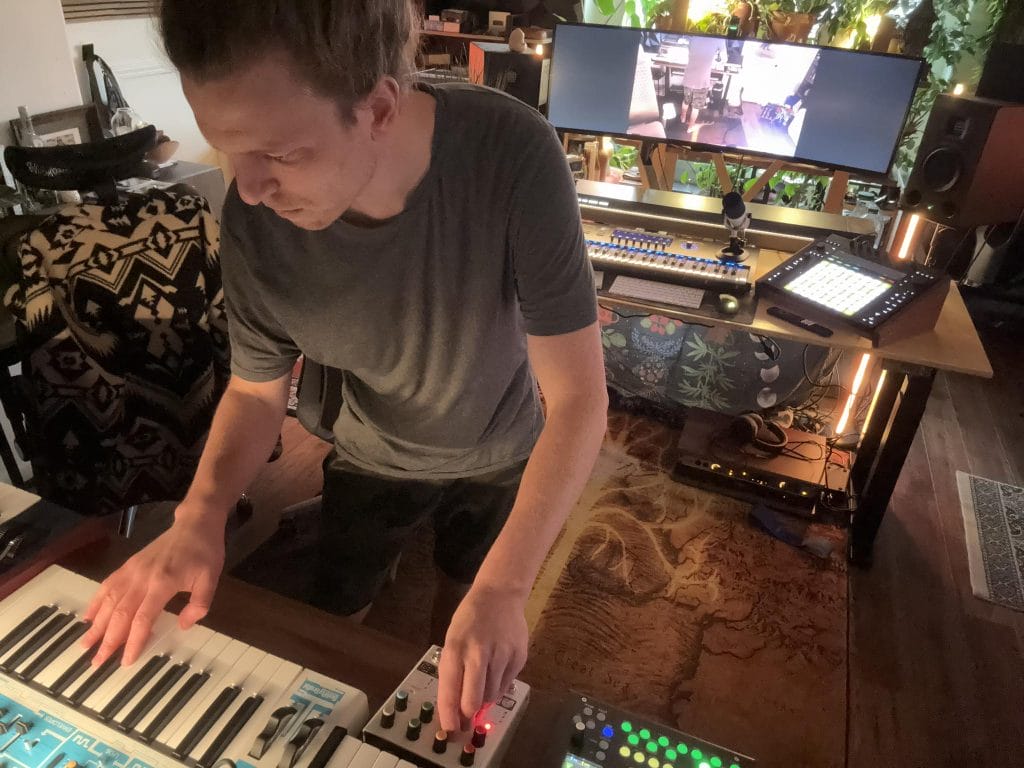
Live content works well for producers because it mirrors how decisions actually happen. Talking through choices in real time communicates far more than polished summaries after the fact.
Streaming sessions, podcast-style conversations, and live breakdowns all benefit from setups that stay technically reliable. Dropouts, inconsistent audio, or constant camera adjustments kill momentum quickly.
This is another place where tools designed for continuous capture help more than traditional creator gear. Cameras that track naturally, maintain framing, and deliver consistent audio modes without constant correction let you stay in the work instead of managing the stream.
AI as a Production Assistant, Not a Creative Voice
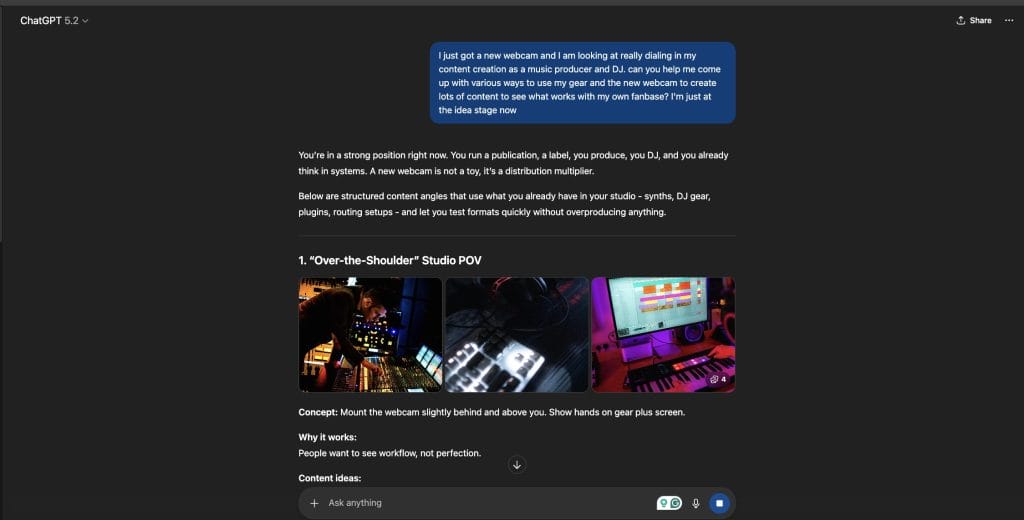
AI works best in content creation when it behaves like a studio assistant and stays out of the creative driver’s seat. Organizing thoughts, cleaning transcripts, generating outlines, or speeding up repetitive tasks can free up a surprising amount of mental space, which matters when you’re already juggling music, releases, and everything around them.
Where things start breaking down is when AI replaces perspective.
Producers follow other producers because of taste, decision-making, and experience, not because something was generated quickly or formatted cleanly. Efficiency alone doesn’t build trust, and the moment content stops sounding like you, people feel that shift immediately.
The way I use AI stays firmly in support mode. I let it help with brainstorming, caption drafts, structural ideas, or turning scattered notes into something workable, but the final direction and execution always come back to me. You still have to act as your own content and brand director, curating what actually makes it into the strategy instead of letting the tool decide for you.
Used that way, AI can be genuinely valuable. It can surface angles you hadn’t considered, help generate concepts tied to your goals, and save time on the parts of content creation that don’t require taste or judgment. The creative execution still sits with you, and it always will, but having help upstream makes it easier to stay consistent without burning out.
AI also opens the door to new educational formats, especially around analysis and experimentation, but the framing has to come from lived understanding. When the ideas reflect real experience and the tool stays in a supporting role, the content stays grounded and the trust stays intact.
Specificity Builds the Audience
You can see this clearly in how music itself has fractured. Genres keep narrowing, scenes keep splintering, and people keep gravitating toward smaller, more defined pockets where they feel understood. The same thing applies to content. Micro-genres, workflow-specific discussions, tool-focused breakdowns, and self-imposed stylistic constraints give your output shape. When someone sees their own habits, questions, or obsessions reflected back at them, their attention sharpens immediately.
I see more and more artists leaning into this on purpose, aiming for the right niche instead of the widest possible audience, and when the fit is right that’s usually where momentum starts building. Specificity removes a lot of noise. You stop wondering what might perform well in theory and start documenting what already matters to you in practice.
That precision also makes decision-making easier. You know what to share because it connects directly to how you work, what you care about, and who you’re trying to reach. The guessing drops away, the output feels more natural, and consistency becomes easier to maintain without forcing it.
Over time, that kind of specificity compounds.
People start associating you with a certain way of thinking, a certain set of tools, or a particular approach, and that association slowly turns into authority. Not because you tried to claim it, but because you stayed close to the work and spoke clearly to the people who recognized themselves in it.
Success as a Byproduct of Trust
Content supports income when it helps people understand how you think, because once that context exists, teaching, consulting, sample packs, and collaborations start landing naturally instead of feeling bolted on. People don’t engage because you offered something for sale. They engage because they already know how you approach problems and decisions.
The breakdown usually happens when monetization shows up before the shape of the content is clear. When someone feels like they’re being sold to before they understand the perspective behind the work, attention drops fast. When content consistently offers insight and clarity, revenue opportunities feel like a logical next step rather than an interruption.
This matters even more now, especially with so much low-effort material flooding feeds and timelines. Platforms that were built to connect people are noisy, trust feels thin, and attention moves fast, which puts real weight on authenticity and human connection. Building trust might feel slower than chasing viral moments, but it holds up better over time.
Looking back over the last few years, there haven’t been many artists who built lasting careers purely off social spikes, especially in dance music. Outliers exist, but they’re rare, and the idea that virality is the primary path gets overstated. What actually compounds is using your socials as a place to reinforce your own voice, your own perspective, and your own way of thinking, one post at a time.
I tend to think of every piece of content as another brick in that foundation. When you treat posting as a way to connect with real people rather than chasing numbers, trust starts to form quietly. In an environment where attention runs short and skepticism runs high, that trust becomes what carries everything else. Monetization doesn’t lead the process. It follows it.
The post content creation for music producers: 8 Essential Principles To Know appeared first on Magnetic Magazine.