





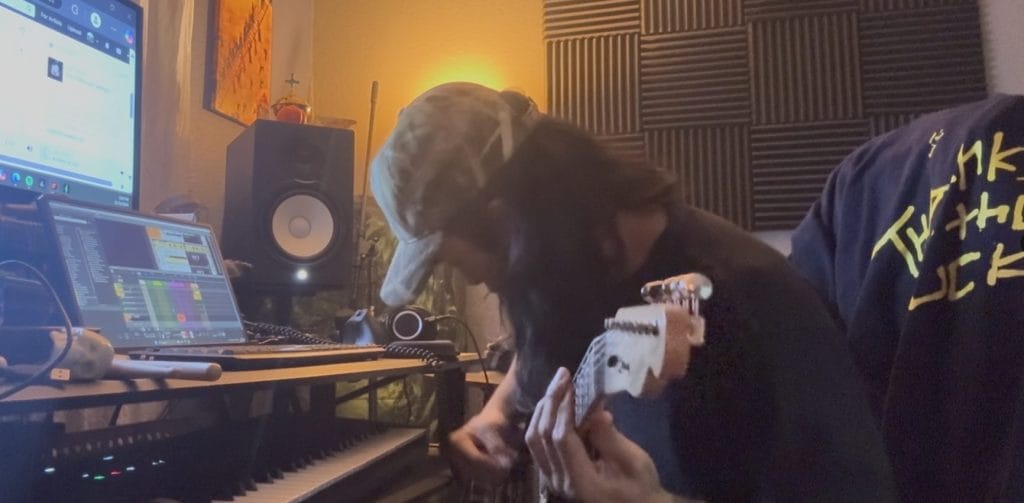
This edition of Magnetic Magazine’s How It Was Made series looks inside the production of Lecx Stacy’s “With You, I’d Be Closer to God,” a track written and recorded in Escondido, California between August and December of 2024. Built around a battered, gifted guitar and produced entirely in Reason, the song grew from an intimate recording into something increasingly fractured and electronic. What began as a simple riff became the foundation for layers of resampling, granular processing, and vocal manipulation that blur the line between instrument and texture.
Rather than separating sound design from songwriting, Lecx treated the guitar as the main character of the track, repeatedly chopping and reprocessing it until it behaved more like a synthesizer than a stringed instrument. Together, these tools reflect a workflow driven less by technical planning and more by exploration and instinct. The track evolved through repeated freezing, chopping, and rebuilding, with effects becoming compositional elements rather than finishing touches.
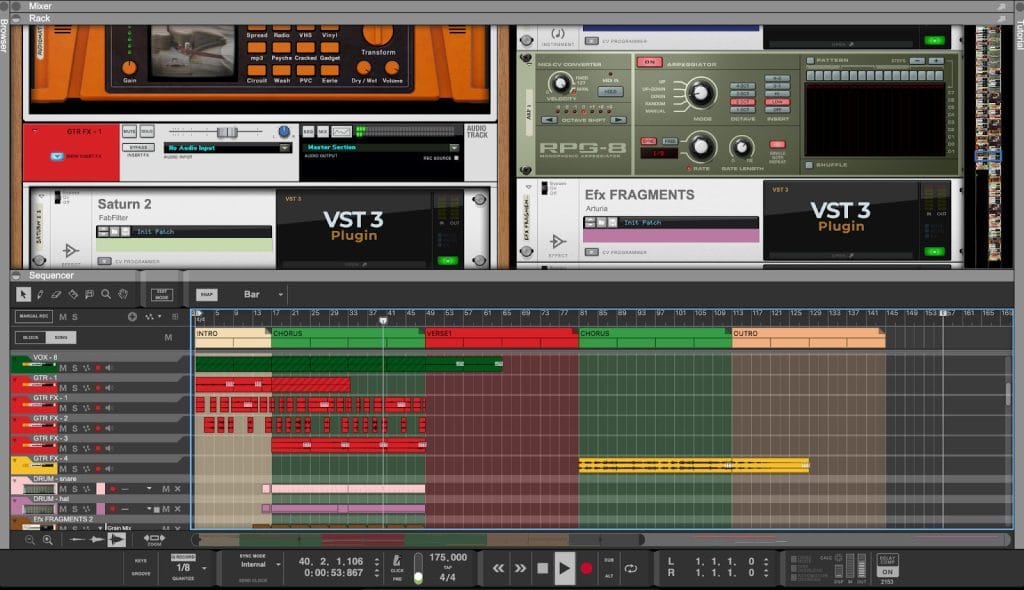
In this How It Was Made edition, Lecx Stacy breaks down how imperfections in both instrument and process shaped the final sound, showing how a single guitar performance became the source material for an entire emotional and textural world.
My Guitar
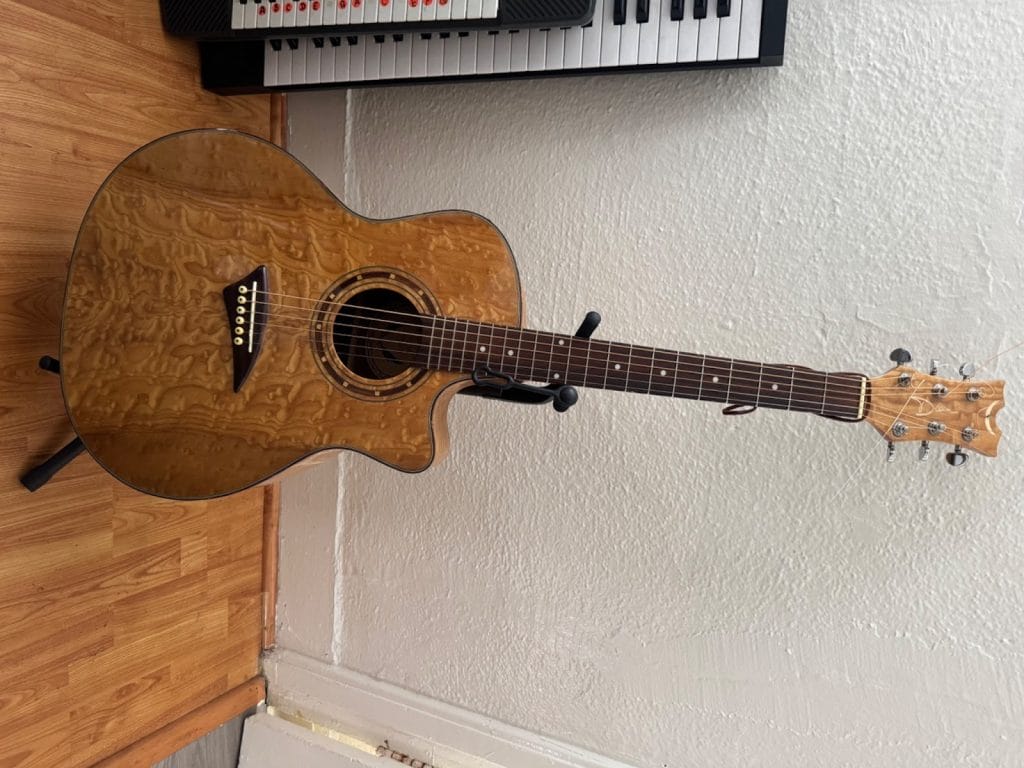
This guitar is really the main character of the song in my eyes. I got it for free from an old friend from Italy who was heading back home to Europe and wanted to lighten his load on his way out. A lot of the sounds, which a lot may not exactly seem like it, come from this guitar. The intro riff was absolutely ripped to shreds, sampled, chopped, resampled, and chopped again (foreshadowing) to achieve the synth sounds. It’s objectively not a good guitar, and is a testament to the idea that “it’s not the tools, it’s how you use it.” It has a pickup built-in which is broken. The tuning pegs rattle. But that’s a part of the charm. I love when you can hear the cracks and imperfections of the guitar in the recording.
EFX Fragments
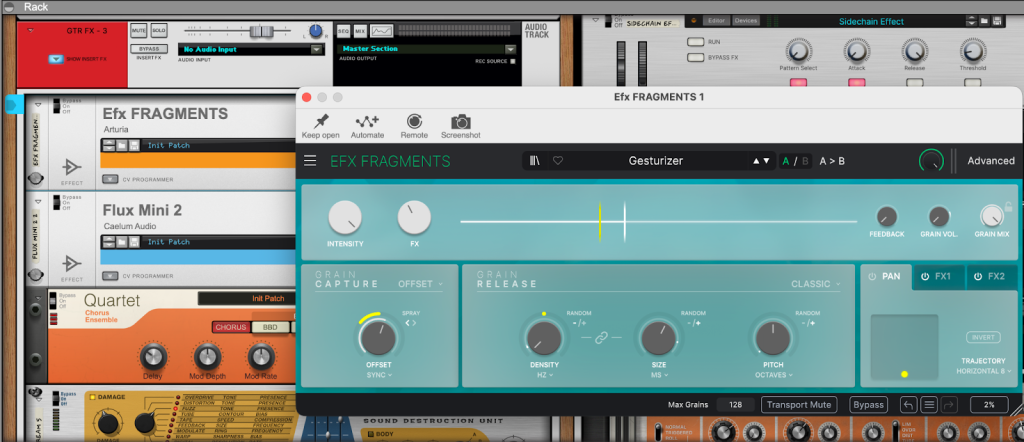
Here’s a plugin I sorta alluded to in the previous paragraph. It’s called EFX Fragments by Arturia. It’s definitely my favorite plugin right now, and honestly, my laptop is probably begging me to find a new plugin to use because of all the CPU I’m demanding from the amount of EFX Fragments I got running. In short, it does granular synthesis. Picks a part of a sound/audio signal, mangles it up, plays different parts of it, overlaps them, and does all this complicated stuff that I actually don’t fully comprehend sometimes, but I love the outcome.
In this track it’s insanely apparent that I love this plugin. You can hear the guitar gradually get more and more mangled, and it’s through this plugin. Sometimes, through 3-4 instances of the plugin, frozen, then chopped, and frozen and chopped again, picking apart the pieces that I actually enjoy most about what it’s doing. I love automating the density and size, as you can get really freaking with how choppy or just atmospherically textured you want the sound to be. In this song, I primarily wanted stabby lil guys jutting from ear to ear. So i have the pan feature getting some movement in the audio while the size at a lower rate gets these crackling mangled up guitar textures and the density dispersing them.
This plugin is often a wildcard. Sometimes I don’t really know what I want out of it until i pop it in and start button mashing through presets and virtually abusing the knobs like a kid in an arcade. It’s like having a conversation with the interface. I know i want something crazy sounding, I load it up, it shows me the possibilities, i bounce it in place, pick a part that i actually wanna keep, then I cycle through the process again until I’m truly satisfied.
Valhalla Supermassive
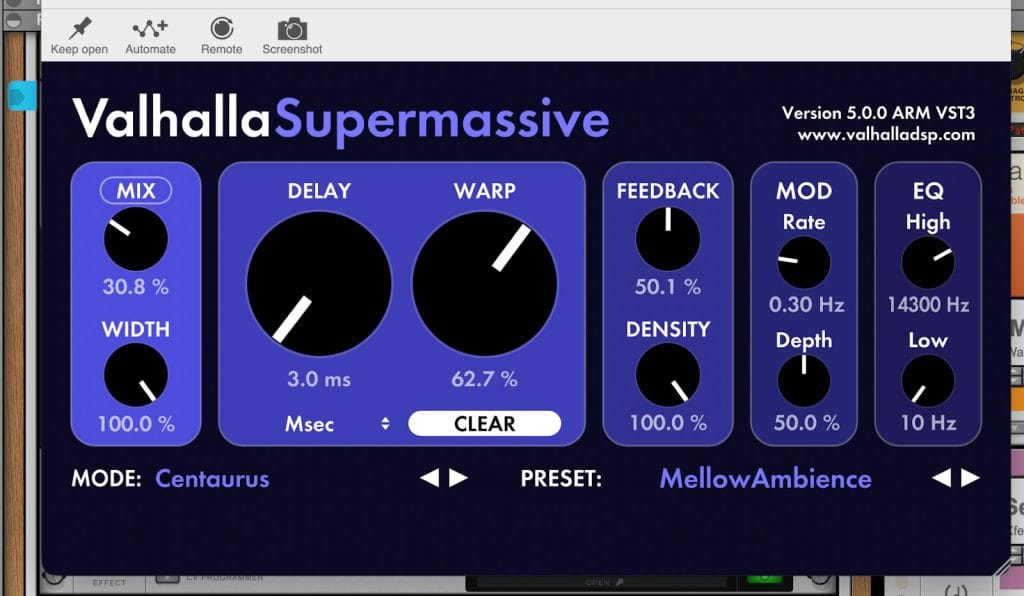
I use this a lot on my vocals. Valhalla Supermassive is a free reverb, echo, delay VST and honestly is worth more than free. It has great, freaky echo and delay presets which can sometimes can get out of control, so use with caution i guess.
I usually use this preset MellowAmbience. Most of my vocals of the past 2 years have an instance of this plug on there somewhere, even if minimal (like having the mix at 5% lol). It provides an air to the vocals that I really like. For example, it spreads it, makes it a bit whispery, and smoothens it out. Depending on the song or part of the song, I’ll use this effect aggressively on the main lead vocal, like in the verse section of this song. It’s quiet, childlike, whispery, and gentle. Other times, it’ll be used sparingly on a background vocal layer just to provide an extra juj to the overall vocal line. It’s sprinkled throughout all the layered vocals of the chorus section on this song.
I think this effect is pretty versatile. I use this technique on the vocals for a song like this, as well as all my folkier-leaning songs. I’ve shown some other producers this technique and have gotten texts months later telling me that they’ve been using it in every vocal session they’ve had.
Saturn 2
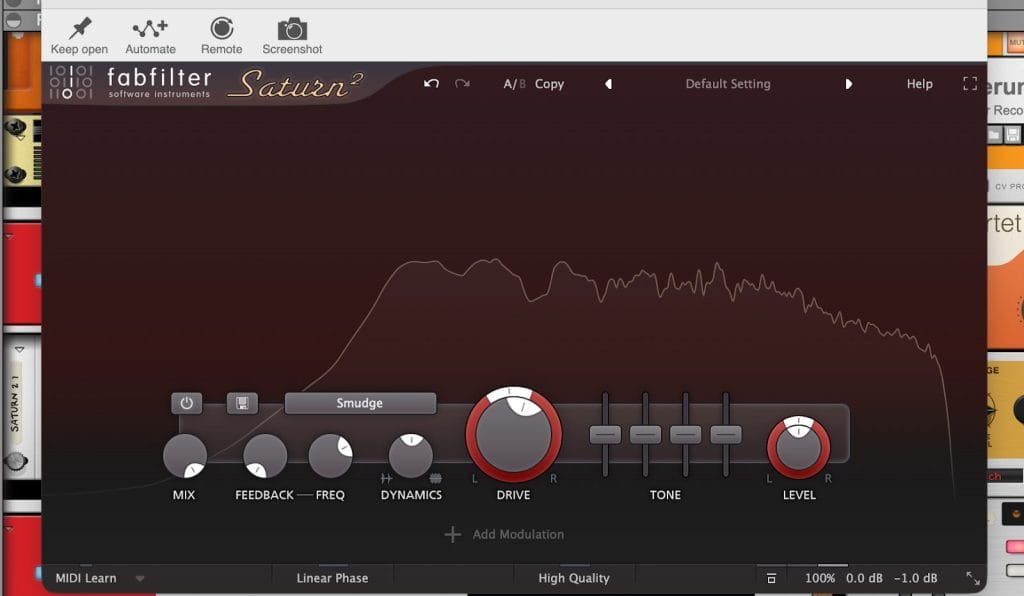
Saturn 2. I think this is a pretty widely used plugin for saturation and what not. It does great at that. Pretty cool transient shaper built in, too, with the dynamics knob. It also has this drop down menu where you can try a bit more destructive approaches. Things like smudge, foldback, breakdown…
I love to use the smudge feature. It does this sort of stuttering effect to sounds. It’s used a bunch in this song during transitional moments. I find it as a cool way to have a synth line fade away and “smudged” into the rest of the sounds going on. I stumbled upon this feature randomly while trying to saturate a guitar. Sometimes the best sounds or effects are hidden little gems in a plugin. This is another go to technique in a lot of my music, smudging sounds as transitions/fade outs.
Hot Takes About Music And The Industry

I don’t have many hot takes tbh, I’m not important, I’m still figuring shit out, and most of what I believe changes day by day. I’m more interested in staying curious than pretending I’ve arrived.
But I hate the word content. It’s killing art and fabricating authenticity…
The post How It Was Made: Lecx Stacy – With You, I’d be Closer to God appeared first on Magnetic Magazine.