





Jump To These Sections
Every producer hits moments when ideas slow down and progress feels blocked. These periods can create pressure, frustration, and doubt if you treat them as isolated problems that need instant solutions.
A more effective way to Overcome Creative Block comes from building a lifestyle that supports your work long before you enter the studio. When daily habits, listening practices, and intentional resets are part of your routine, your creativity gains a healthier baseline. You spend less time fighting stalled sessions because your mind has the conditions it needs to stay active.
The goal is to give yourself tools that run quietly in the background. These tools shape how you think, how you listen, and how you approach each session. Over time, you create a steady environment that strengthens your workflow and lowers the friction that often leads to creative fatigue. This article outlines practical methods that help you maintain that environment so your ideas can move with more consistency and your sessions feel clearer and more productive.
Take a Break With Intention
Creative block often shows up when your mind has taken in too much stimulation. A productive break gives your brain quiet space to process information in the background. Activities that create calm give your subconscious the chance to resolve ideas that feel tangled when you stare at a screen for too long.
Many producers step away from a session only to fill the break with social media scrolling or fast-paced games. Those activities increase stimulation and give your brain no room to settle. A better approach involves a walk, light stretching, meditation, or sitting quietly for a few minutes. These activities slow your thoughts and support the unconscious problem-solving that often drives new ideas.
Research supports this too!
A Stanford University study found that walking increased creative thinking by about 60 percent compared to sitting. This shows how gentle physical movement can support idea generation. Another study from the National Institutes of Health found that during rest after learning a new task, the brain replays and strengthens related patterns. This suggests that intentional rest helps your brain connect recent work in a more efficient way.
Set a clear time frame before you step away.
A short, intentional break avoids drifting into avoidance and keeps your workflow predictable. When you return to the studio, you often find that the idea you were searching for appears quickly and naturally, because your subconscious had space to do its job.
Shift Your Focus Inside the Session
Creative block often intensifies when you zoom out and start thinking about the entire track at once. The full structure, transitions, mix, and arrangement can feel overwhelming. That level of pressure can freeze your decision making. A more productive approach is to shift your focus to smaller tasks that you can complete in a short session. These micro tasks often lead to breakthroughs that unlock the direction of the larger track.
Build a drum loop from a small set of samples
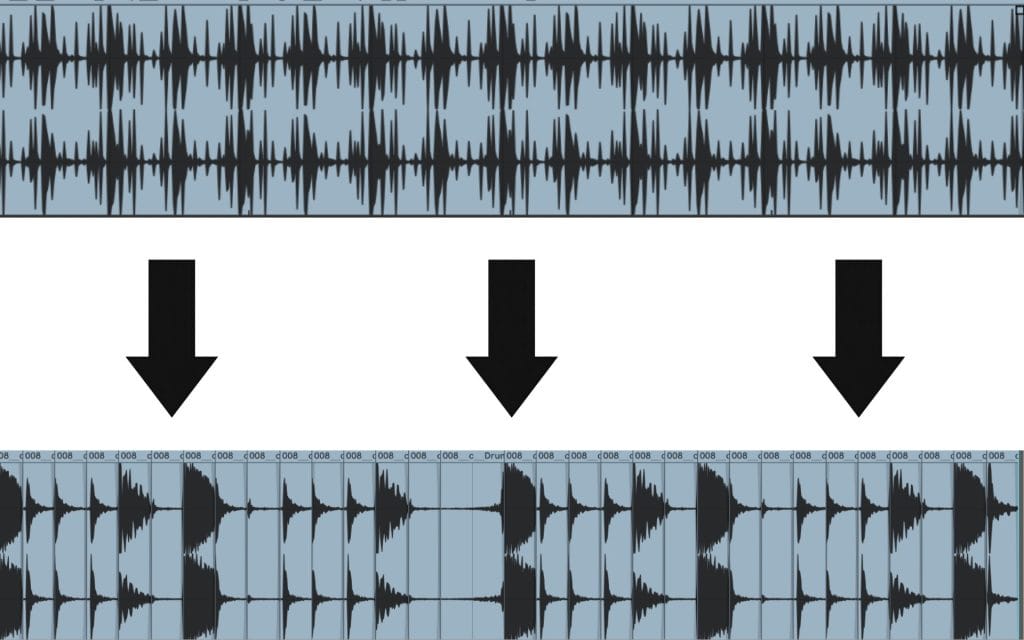
Limiting your sample choices can sharpen your focus. Pick a very small set of sounds and build a four or eight bar loop. Adjust the pitch of snares to create variation. Shape the velocities of a single shaker sample to add movement or human feel. These small adjustments can shift the entire groove of the track and reveal a direction that felt hidden before.
Native Insturments did a fantastic article about the essential drum pattens all rpoducers need to know, so use htese as a foundation and make minor tweaks from here
Create a pad or bass preset to save for later
Scrolling through preset folders can drain time without leading to commitment. Instead, pick one preset and go deep into its parameters with the single goal of saving a custom version. This kind of focused sound design often sparks ideas that were not accessible when you were browsing options. The preset you build can become the missing element in the track that felt stalled.
Record simple percussion layers from objects around your room
You do not need studio-grade tools for this. An iPhone or laptop microphone works fine for these textures. A few recorded hits from items on your desk or kitchen provide material that feels personal and unique. The slight lo-fi quality often sits well in a mix. This practice also pulls you out of the habit of relying on massive sample packs and encourages you to listen to your environment as a tool.
Organize and refine your sample library
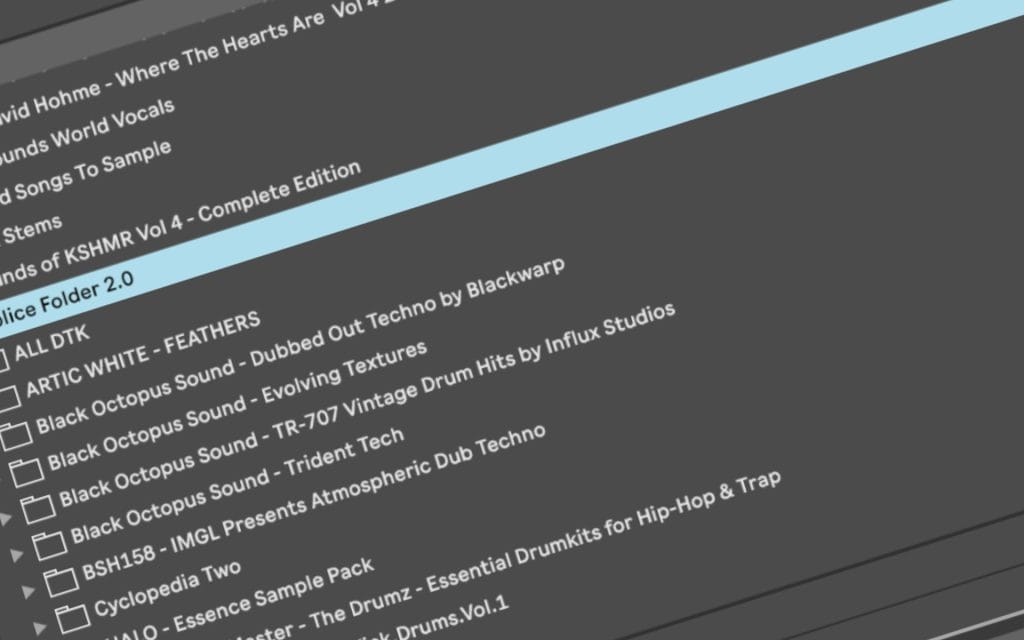
Housekeeping in your sample library can move your creative process forward in surprising ways. Label your favorite sounds. Remove the packs you never use. Build a smaller, curated folder that reflects your taste and workflow. The next time you open your DAW you will move faster because you know the exact tools you can rely on.
This reduces friction and makes it easier to start a new idea.
Deconstruct a Track You Admire
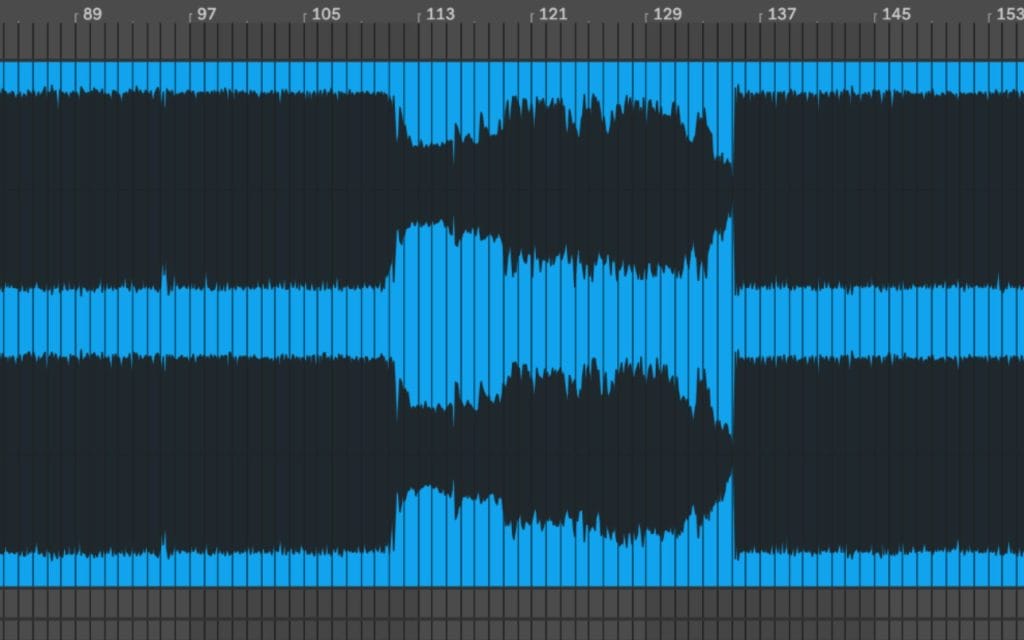
A reliable way to move through creative block is to study the music that inspires you.
Critical listening reveals details that you miss when a song plays in the background. When you slow down and pay attention to specific choices, you begin to understand why the track works and how those decisions create the impact you respond to.
You might notice how an artist handles a filter sweep that leads into a drop. You might hear how white noise moves in the background and how it fades out at key points. You might catch a tremolo effect that adds subtle motion. You might notice how a synthetic pad sits under a layer of acoustic strings and how that combination shapes the emotional tone of the track. These details often go unnoticed during casual listening, yet they hold the information that helps you understand the methods behind the work.
The next step is to ask why these choices appeal to you. If a blend of acoustic strings and synthetic pads feels meaningful, identify what draws you in. Maybe the strings carry the emotional weight while the pad fills the space under them. Understanding this helps you shape similar ideas in your own work with intention.
After that, shift your attention to the how.
How would you recreate these moves in your own DAW. How would you shape the filter. How would you set up the tremolo. How would you layer instruments in a way that captures the same energy without copying anything directly. When you go through this process, you train your brain to think like a producer long before you sit down to create.
The best part is that you do not need a studio for critical listening. You can do it during a walk or on your commute. By the time you return to your project, your mind has already processed the decisions you want to try. The moves feel natural because you performed the mental work ahead of time.
Collaborate With Another Producer
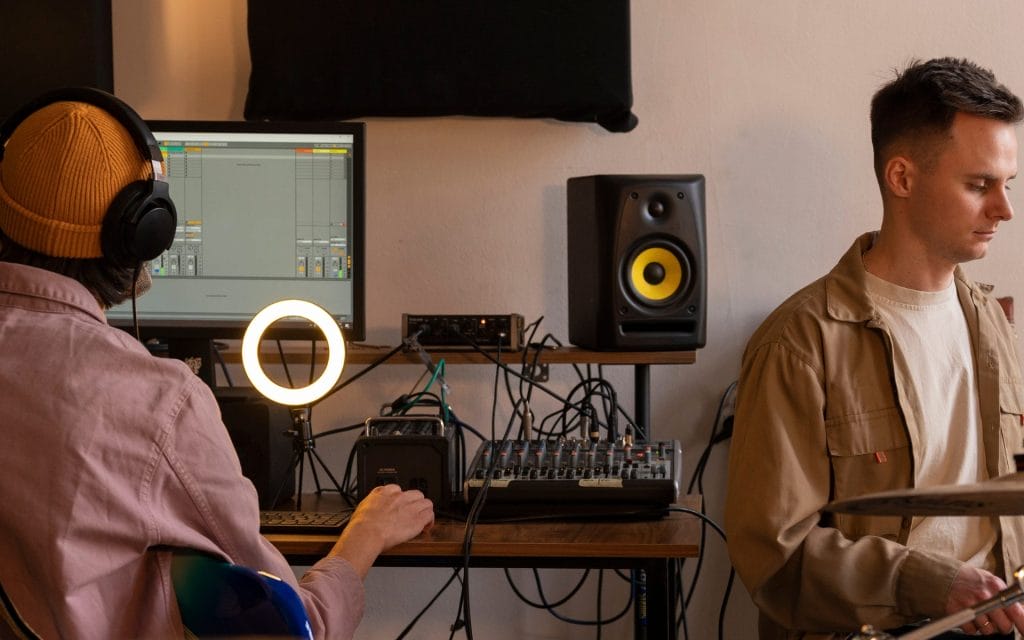
Collaboration exposes you to new approaches and pushes you out of familiar habits. Even a short session with another producer can introduce workflow tricks, arrangement ideas, or processing methods that you can carry into your own work.
“I feel honored to be making music with some of my favorite people.” — Andrew Emil
This kind of mindset shows that collaboration can bring personal meaning as well as creative insight.
Another artist, ASA 808, describes collaboration as a way to inject fresh energy into the creative process. According to them, “Collaboration, whether through guest mixes or working with other artists, is an important part of my work as it brings new perspectives and energy into the process.”
You control how involved the collaboration becomes. It can be a single exchange of stems, a focused session dedicated to a specific song section, or a full project developed together. Each format offers outside input that may help you move forward when your own ideas feel stuck.
Use Listening Sessions as Input
Producers often pull ideas from familiar workflows and habits, which can narrow creative options over time. A broader listening practice shifts that pattern. You become a summation of your influences, so the material you study has a direct impact on the options that appear in your sessions. When you listen with intention, you give your mind new shapes, new progressions, and new rhythms to draw from.
The process starts with critical listening that goes deeper than casual playback.
Pay attention to genres that sit outside what you produce. If you work on dance music, spend time with jazz, hip hop, folk music, or anything that feels structurally different from your normal references. Look closely at the decisions that make those songs work. The chord progression in a folk track might be the missing piece in your current idea. The transition between verse and bridge in a singer-songwriter record might reveal a timing pattern that fits your arrangement. The rhythmic phrasing in a jazz or hip hop track might unlock a more interesting drum pattern in a house record.
This approach functions as a stylistic limitation that drives creativity.
You intentionally work inside the structure of another style and use its techniques as a guide. By focusing on these elements, you break away from the habits that feel automatic and introduce ideas that you would not reach on your own. This gives you a clear path forward when you feel stuck in your regular workflow. Listening becomes another tool that supports progress because it fills your mind with new possibilities before you enter the studio.
Additional Methods That Strengthen Your Creative Routine
Here area. couple more quick-fire ways you can also build up your creative resiliance or get you out of a creative funk when it rears it uninspiring head in the studio. These are all things I lean on every once in a while, though not as consistently as the points mentioned above (which is why I’m just blowing through them quickly with a bunch of bullet points below.
Hope it helps though; take what you dig and ignor the rest 
Create Low-Pressure Drafts
Many producers freeze because they aim for a finished track too early. Lower the expectation at the start. Build rough versions, unfinished loops, or simple chord sketches. Save anything that feels usable without judging it.
The goal is to keep the session active. When you treat early ideas as drafts instead of results, you remove unnecessary pressure. This makes it easier to reach the point where strong ideas appear. If it works for Skrillex, it can work for you!
Limit Your Tools to Reduce Decision Overload
Too many options slow down your process. If your sessions feel scattered, set a constraint before you start. For example:
- Use only three instruments.
- Use one drum kit for the entire idea.
- Pick one key and tempo and stick to it.
Constraints create a clear boundary around your choices. This speeds up decisions and helps your ideas move forward without hesitation. Many producers use this method to narrow sessions that feel unfocused.
Build a Personal Idea Library
Keep a folder of your loops, presets, unfinished projects, vocal phrases, field recordings, and rhythmic ideas. Add to it often. Browsing your own material during a block introduces sparks that come from your past sessions rather than outside pressure.
This library becomes a long-term creative resource. When a session feels empty, open the folder and pull one idea into your project. This simple step can restart momentum.
Schedule Light Creative Exercises
Set aside time during the week for short sessions that do not aim for a finished track. Examples include:
- designing a single synth patch
- building a simple melodic pattern
- recording ambient textures
- practicing chord progressions in your preferred scale
These exercises strengthen your skills and keep your creative muscle active. When it is time to produce a full track, you have more technical confidence and a wider range of starting points.
How To Build a Routine That Reduces Creative Block
The ideas in this article are not meant to act as quick fixes. You will find plenty of one-time solutions in other guides, but that approach only works in short bursts. The purpose of these methods is to create a foundation that supports you every day. When you take these practices and integrate them into the rhythm of your life, they stop feeling like separate tasks. They become part of how you operate as an artist.
Over time this creates compounding effects. You may notice that creative block shows up less frequently because your mind is already receiving the recharge it needs through daily habits, small moments of rest, critical listening, and intentional creative exercises. You start to look forward to these reset points because they keep your sessions steady. These routines work behind the scenes even when you are not aware of them. They help you avoid the kind of buildup that leads to long periods of frustration.
This is the goal.
You build a creative life that supports your work rather than drains it.
The activities you pursue outside of music become sources of renewal. They soften the edges of stress and give you a productive outlet when you return to the studio. When these behaviors are part of your regular life, your sessions become smoother. You do not feel the same resistance because you have already given yourself the conditions that make creativity easier. The process feels less like effort and more like a natural extension of who you are as an artist working in electronic music.
Conclusion
Creative block signals that you need a shift in pace, focus, or direction. Instead of waiting for inspiration, guide yourself with structured actions that keep you engaged: small tasks, focused breaks, listening sessions, collaborations, and consistent low-pressure exercises.
These steps support momentum across your sessions and help you stay connected to your craft even when motivation feels thin. Over time, you build a workflow that supports steady output, stronger ideas, and a healthier relationship with your studio.
FAQ On How To Overcome Creative Block
How can a music producer Overcome Creative Block during a session?
A producer can Overcome Creative Block during a session by shifting attention to small tasks that remove pressure. Building a short loop, adjusting a preset, recording simple percussion, or organizing sounds all count as low-friction actions that support progress. Research supports the idea that creativity benefits from switching to manageable tasks, since this gives the mind room to process ideas in the background.
Can daily habits help me Overcome Creative Block?
Daily habits support long-term creative stability.
Regular creative engagement paired with restorative routines helps maintain cognitive flexibility and reduces stress. Both factors support consistent creative output and lower the conditions that lead to creative block.
Do listening sessions help producers Overcome Creative Block?
Listening sessions help producers overcome creative blocks by exposing them to new structures, rhythms, and patterns.
Studies show that listening to music with positive emotional tone can increase divergent thinking, which directly supports creativity.
What role does collaboration play in helping artists Overcome Creative Block?
Collaboration introduces new ideas and methods that expand your creative options.
Research on musical collaboration shows that group work creates a shared creative field that helps participants reach ideas that are harder to reach alone.
How long does it take to Overcome Creative Block?
There is no fixed timeline.
Recovery depends on mental load, stress, workflow habits, and the tools you use to support your creative life. Producers who integrate intentional breaks, listening practices, and light creative habits often experience shorter periods of creative block because the conditions that cause it appear less often.
Can sound design help me Overcome Creative Block?
Sound design exercises can help you Overcome Creative Block because they provide clear technical goals. This structure supports creative thinking and reduces internal friction. Research on structured creative tasks shows that low-pressure constraints encourage idea formation.
Does stepping away from the studio help me Overcome Creative Block?
Yes.
A study showed that walking can increase creative thinking by approximately sixty percent compared to sitting. This supports the idea that quiet physical movement helps the mind reorganize information and generate new ideas.
The post How to Overcome Creative Block Through Daily Habits That Support Your Art appeared first on Magnetic Magazine.